Enea and Krajowa Grupa Spożywcza will build six biomethane plants at sugar factories
Enea and KGS signed a cooperation plan: six biomethane plants at seven sugar factories, about 60 MW in total and about 1.2 TWh of biomethane per year (about 18.2 million m³ per installation). Feedstocks: sugar beet pulp, potato pulp and manure.
Other language versions: polski.
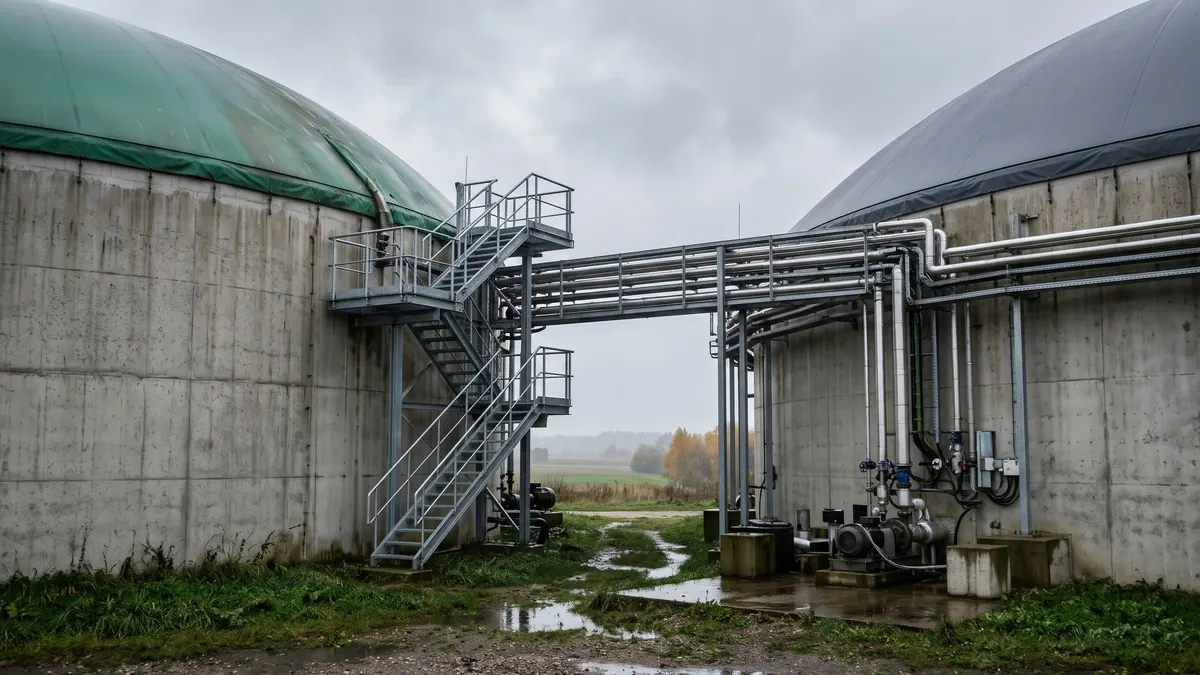
Enea and Krajowa Grupa Spożywcza (KGS) announced on 28 October 2026 cooperation on building biomethane plants on the sites of sugar factories. A framework cooperation plan was signed that sets the direction of the project. Six new biomethane plants are envisaged, to be built at seven sugar factories belonging to KGS, which will supplement Enea's biomethane portfolio.
Scale and parameters
The total installed capacity is to be about 60 MW, and production about 1.2 TWh of biomethane per year. Both figures are consistent only if 60 MW is the equivalent electrical capacity within the meaning of the Act on Renewable Energy Sources (conversion at 41% efficiency): 1.2 TWh per year is on average about 137 MW of biomethane energy capacity, that is about 56 MW after conversion (our own calculation, not information from the announcement). Preliminary estimates per installation are about 18.2 million m³ of biomethane per year, that is about 200 GWh of energy. The installations will be hybrid: besides biomethane they will produce electricity and heat for the sugar factories' own needs. The feedstocks are agricultural and agri-food substrates, including manure, potato pulp and sugar beet pulp. Enea's contribution is knowledge from the energy sector, financing and delivery of infrastructure projects; KGS's contribution – agri-food experience, substrate supplies, cooperation with growers and management of the biomethane plants' by-products. The partners do not rule out biogas for cogeneration or transport, or the participation of other entities.
The inauguration was attended by the Minister of State Assets Wojciech Balczun, the Minister of Energy Miłosz Motyka and Deputy Minister Grzegorz Wrona. Minister Motyka said that the potential of biomethane in Poland is billions of cubic metres per year.
Why sugar factories
Sugar factories have a steady seasonal stream of residues (beet pulp), their own infrastructure, buyers of heat and energy, and relationships with growers who can supply additional substrates. The first Polish biomethane plant injecting gas into the grid was built precisely at the Südzucker sugar factory in Strzelin. The seasonality of the beet campaign (a few months a year) is a challenge: the installation must be fed outside the season as well, e.g. with manure and crop residues.
Significance for the industry in Poland
The project links two state-owned groups and has a scale not seen before in Polish biomethane: 1.2 TWh is more than the assumptions of the draft KPEiK (National Energy and Climate Plan) for 2030 for individual investors. For the industry it means large demand for upgrading technologies and for servicing, for grid operators – a connection challenge in agricultural areas, and for farmers – new substrate contracts. Delivery depends on auctions, which will only begin to be organised after the act enters into force, and on connections.
For gas buyers it is a signal that biomethane may appear in the industrial contracts of large buyers in regions where sugar factories are located.
What to watch
This concerns a framework plan, not concrete investment decisions: no locations, deadlines or capital expenditure have been given. The estimate of 18.2 million m³ per installation is preliminary. It is worth following environmental proceedings and connection conditions, which will show the real pace.
Sources
Related articles