BiomethaneEvent
MOL launched its first biomethane plant in Hungary: Szarvas and meat industry waste
The MOL Group started up its first biomethane plant in Szarvas, Hungary: an expansion of a biogas plant with an upgrading module will replace more than 7 million m³ of natural gas per year. The feedstock is meat industry waste and animal manures.
Other language versions: polski.
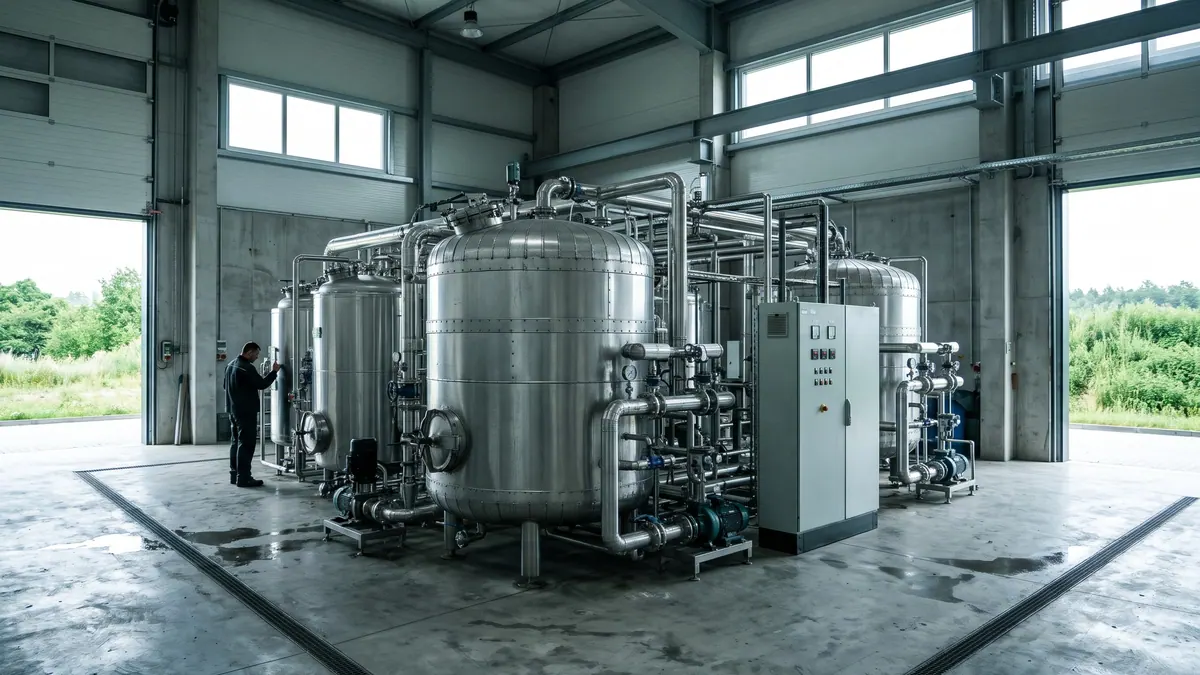
The Hungarian MOL Group announced the start-up of its first biomethane plant in Szarvas. The announcement was published on 21 October 2026. It is the third installation of this type in Hungary. It was created by expanding an existing biogas plant, which MOL bought in 2023, with a module for upgrading biogas to biomethane; the technology supplier is the Italian company Gruppo AB.
Parameters
Until now biogas in an amount of about 11–12 million m³ per year was used in cogeneration, delivering almost 24 GWh of electricity and substantial amounts of heat. After the expansion the biogas is cleaned to grid-quality biomethane and injected into the national gas grid. MOL estimates that it will replace more than 7 million m³ of natural gas per year, which corresponds to the annual consumption of about 8.5 thousand average households.
The annual input comprises: more than 40 thousand tonnes of waste from the regional meat industry (slaughterhouse waste), 53 thousand tonnes of other residues, including slurry and turkey manure from nearby farms and meat plants, and about 18 thousand tonnes of agricultural substrates. The cost of the investment exceeded HUF 2.7 billion (more than PLN 32 million at the exchange rate on the day of publication).
Why it matters
An oil and gas company investing in biomethane is a trend also visible in Poland (Orlen, PGNiG BioEvolution). Converting an existing biogas plant is the fastest path to increasing production, and meat industry waste – a feedstock with high gas potential – requires an approved procedure (animal by-products require hygienisation). Such feedstocks also appear in Polish projects: meat and poultry plants are an important source of waste.
Significance for the industry in Poland
Szarvas is a good comparison for Polish projects: the scale of the input (more than 110 thousand tonnes per year) and of production (above 7 million m³ of biomethane) corresponds to the 2–5 MW installations planned in Poland. A similar path – expanding a biogas plant with upgrading – is chosen by Polish investors who buy operating facilities. For equipment manufacturers the signal is demand for upgrading modules and hygienisation systems, and for meat plants – the possibility of managing waste in a way that brings revenue.
For Poland the regional aspect is also important: neighbouring Central European countries are launching further biomethane plants, while the Polish market is only starting with two installations injecting gas.
What to watch
The unit cost (about HUF 2.7 billion) concerns the expansion of an existing installation, not building from scratch, so it cannot be directly compared with the costs of new biomethane plants. The emissions footprint of biomethane from slaughterhouse waste depends on the accounting methodology and on methane emissions across the whole chain.
Practical tips
Designers of installations using slaughterhouse waste should pay attention to sanitary requirements: hygienisation, traceability of origin, handling of by-products of categories 1–3 and occupational safety. Waste with a high fat and protein content yields a lot of biogas, but increases the risk of ammonia inhibition and requires process control.
Sources
Related articles