Law and regulationEvent
"Fit for 55" package: the Commission presents legislative proposals for the −55% target by 2030
On 14 July 2021, the Commission presented a package of proposals to translate the 55% emissions reduction target into law: review of the ETS, RES, energy efficiency, effort sharing and new instruments.
Other language versions: polski.

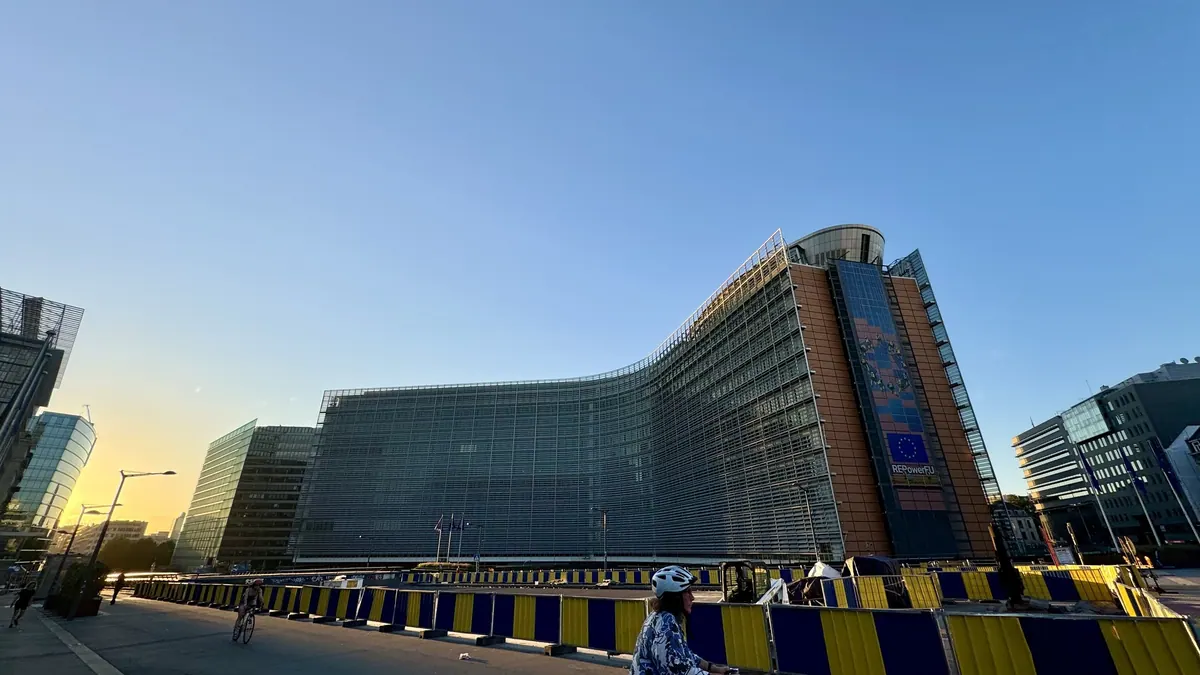
On 14 July 2021 the European Commission presented the "Fit for 55" package (Gotowi na 55) – a set of legislative proposals and amendments to existing rules intended to lead to a net greenhouse gas emissions reduction of at least 55% by 2030 compared with 1990. It is the largest package of climate regulation in EU history and a reference point for all sectors: energy, industry, transport, buildings, agriculture and waste.
Key elements
| Area | Commission proposal |
|---|---|
| ETS | emissions reduction of 61% by 2030 compared with 2005; faster lowering of the allowance cap |
| ETS for buildings and road transport | a new, separate emissions trading system |
| CBAM | carbon border adjustment mechanism for selected goods, including cement, steel, aluminium, fertilisers and electricity |
| Renewable Energy Directive | raising the target to 40% RES in 2030 |
| Effort sharing (ESR) | higher national targets for sectors outside the ETS (agriculture, buildings, transport, waste) |
| Car standards | CO₂ emission reduction of 55% by 2030 and 100% from 2035 |
| Aviation and maritime fuels | ReFuelEU Aviation and FuelEU Maritime initiatives |
| Social Climate Fund | support for households most affected by the charges |
The package also includes changes to energy taxation, to the rules on land use and forestry, and to the Energy Efficiency Directive.
Significance for biogas, waste and agriculture
For the biogas industry the package matters for three reasons. First, the draft of the new Renewable Energy Directive changes the targets in transport, industry and heating and the rules on support and sustainability, which we discuss in a separate entry. Second, higher allowance prices in the ETS and the new charge for heating and transport fuels improve the position of renewable gases relative to natural gas. Third, CBAM covers fertilisers, which may raise the prices of imported nitrogen fertilisers and strengthen interest in organic fertilisers, including digestate.
For agriculture and waste management – sectors outside the ETS – the higher national targets under the Effort Sharing Regulation are important, as they strengthen the pressure to reduce emissions of methane and nitrous oxide.
Poland
Poland, whose economy is heavily dependent on coal, pointed out that the package would involve high costs. Raising the allowance price and bringing building heating into the ETS affect households, and the Social Climate Fund was meant to soften these effects in part. The government announced negotiations to defend national interests.
What next
The proposals went to the European Parliament and the Council, where they were to be negotiated over the following months and years. For investors this meant a period of uncertainty about the final shape of the rules, but also a clear direction: accelerating decarbonisation in all sectors.
Sources
Related articles