BioLNG and bioCNGEvent
PGNiG to produce bioCNG from biowaste: a prototype with the Poznań University of Life Sciences
The Polish Oil and Gas Company (PGNiG) and the Poznań University of Life Sciences are testing a prototype installation digesting the biodegradable fraction of municipal waste into bioCNG. A commercial installation was to be built in 2023.
Other language versions: polski.
The Polish Oil and Gas Company (PGNiG) announced on 14 July 2021 that it was working on producing bioCNG from the biodegradable fraction of municipal waste. The company is cooperating with the Poznań University of Life Sciences, where – in the Ecotechnology Laboratory, which according to reports has the largest biogas laboratory in the country – a prototype installation has been built and experiments have been conducted for several months. According to a company representative, the results are to make it possible to deploy a commercial installation in 2023.
How the installation is to work
The process comprises three stages:
- anaerobic digestion of the biodegradable fraction of municipal waste, producing biogas;
- purification and upgrading of the biogas to biomethane parameters, i.e. removal of CO₂, hydrogen sulphide, water and other impurities;
- compression into bioCNG, i.e. the renewable equivalent of compressed natural gas used as a fuel.
The technology is to be tested in real conditions and only then commercialised. Capacity, costs and the target locations of the installations were not given.
Why municipal waste
The biodegradable fraction of municipal waste is a stream that will grow once the rules on separate collection of biowaste take effect. Directive 2018/851 requires biowaste to be collected separately or recycled at source by the end of 2023 at the latest, so municipalities must look for ways to manage it. Digestion gives an additional energy product alongside compost or digestate. The feedstock is, however, difficult: it requires removal of impurities (plastics, glass, metal), and its composition changes seasonally.
Significance for the market
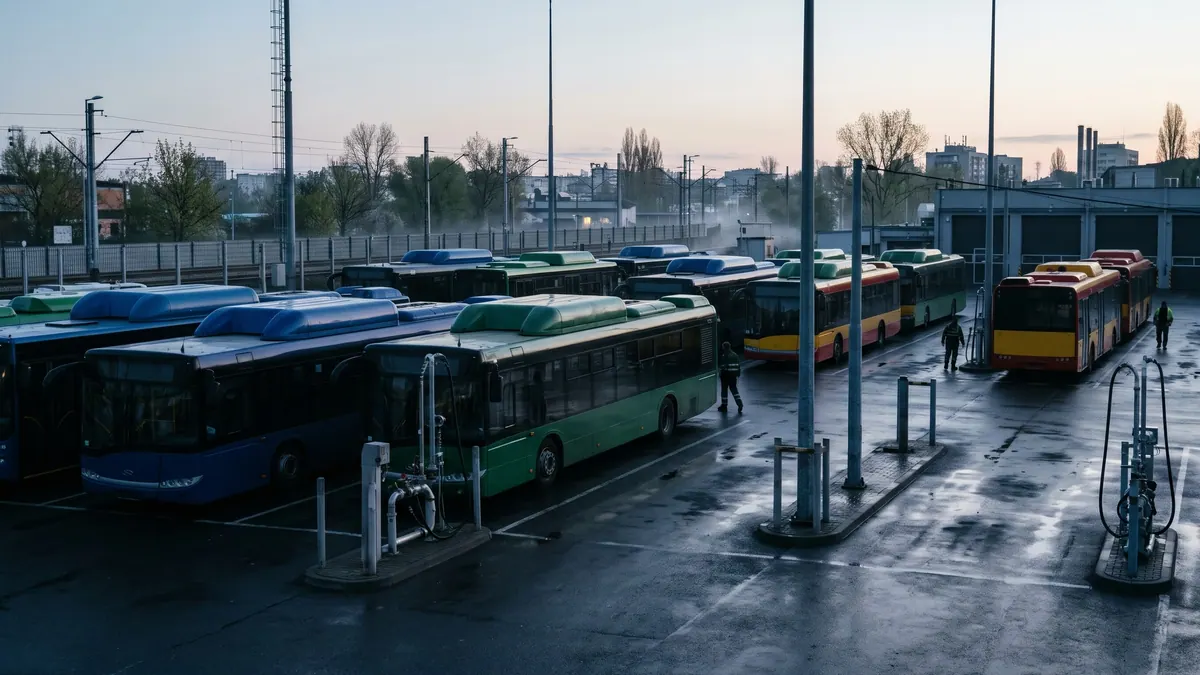
For PGNiG, bioCNG is a path into the market for alternative fuels for public transport, including city buses, which in many Polish cities run on CNG. This combines waste management goals with transport needs: a city that collects biowaste can use the gas produced from it to power its own vehicles. For the industry this means the development of a local circular economy model.
For Polish local governments, the economic conditions will be key: waste gate fees, the fuel price and the availability of a mechanism confirming the origin of biomethane.
What next
After the prototype tests were completed, PGNiG was to prepare the deployment of a commercial installation. Success depends on feedstock quality, upgrading costs and regulations on biomethane as a transport fuel.
Technical challenges
The biodegradable fraction of municipal waste is a variable feedstock: it contains food scraps, green waste and, in mixed waste, also contaminants. Digestion installations of this type usually require pre-sorting, shredding and separation of impurities, as well as treatment of process water. The prototype is to make it possible to collect data on biogas yield, gas composition and process parameters, which are essential for designing a commercial installation.
Why bioCNG and not electricity
Producing transport fuel from municipal waste avoids the problem of heat utilisation, which limits the efficiency of many biogas plants. Compressed gas can be sold to refuelling stations or directly to municipal fleets, which closes the loop: waste generated in the city returns to it as fuel for public transport. The condition is steady offtake and gas quality in line with the standards for vehicles.
Disclaimer
The description is based on a company communication and a press report; capacity, costs and locations were not given. This information may change after the prototype tests are completed.
Sources
Related articles