Gazprom halted gas supplies to Poland. What does this mean for the national gas balance and biomethane?
On 27 April 2022 Gazprom halted gas supplies to Poland under the Yamal contract. Poland says it has stocks and alternative sources, and the debate on domestic gas sources is picking up pace.
Other language versions: polski.
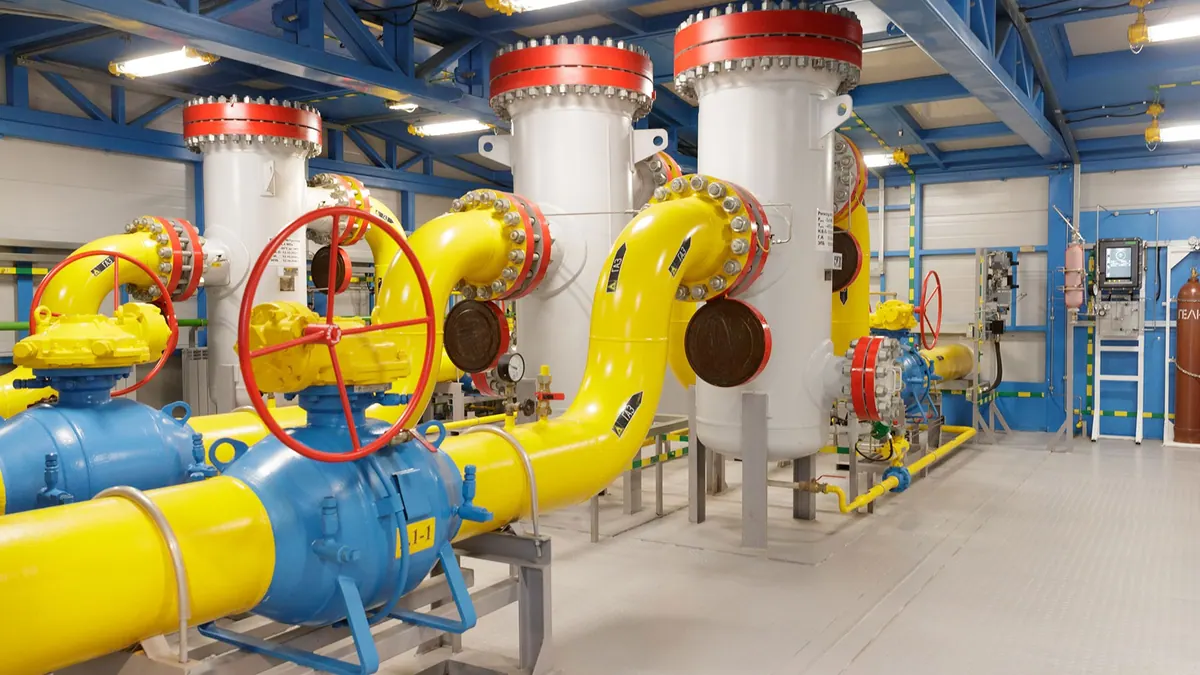

On 27 April 2022 Gazprom halted gas supplies to Poland delivered under the Yamal contract with PGNiG. The reason was that the Polish company did not agree to payments in roubles, which Russia had begun to require from customers in countries deemed "unfriendly". The Polish government assured that the country had secured supplies from other directions and full storage, and that households would not feel a lack of gas. The event nevertheless changes the perception of energy security and increases the importance of domestic gas sources.
What changes
The Yamal contract amounted to about 10 billion m³ of gas a year and was to run until the end of 2022. Poland announced that it would not extend it, and after its expiry would rely on gas from Norway (once the Baltic Pipe pipeline is launched), LNG delivered to the terminal in Świnoujście, and its own production. The LNG terminal has a regasification capacity of the order of 5 billion m³ a year, and its expansion is under way. The transmission system operator GAZ-SYSTEM assures the possibility of supplying customers from storage and other directions.
For the grid and customers this means a greater role for liquefied gas, interconnectors and storage, and at the same time greater price volatility. Gas in Poland is used in heating, in the chemical industry (including fertiliser production) and in households.
Significance for the industry in Poland
For biogas plants and biomethane investors the event raises the profile of domestic production of renewable gas. Biomethane produced from local substrates – slurry, manure, agri-food waste – has a value for the system that is not only energy-related but also strategic: it reduces dependence on gas imports, although its production costs still depend, among other things, on substrate and energy prices. Legal foundations are, however, still lacking: the Act on Renewable Energy Sources does not contain a full mechanism for biomethane, and grid connection procedures need clarification.
The scale of potential biomethane production in Poland is significant compared with the current level, but it will not quickly replace imports. What is key is the pace of investment and the stability of regulations.
How the Polish gas system works
The Polish transmission system is supplied from several directions: pipelines linking Poland with Germany and the Czech Republic (the connection with Lithuania – GIPL – was due to start commercial operation on 1 May 2022, and the connection with Slovakia was under construction), the LNG terminal in Świnoujście and domestic production. An additional buffer is gas storage, which in April was largely full. With such a structure the risk of an interruption in supply to final customers is limited, but gas purchase costs are rising and the market remains sensitive to further disruptions. This naturally encourages the development of local sources such as biogas.
What next
The Polish government announces further legislative steps in response to the gas crisis, including changes concerning security of supply and storage. For the biogas industry the most important thing will be to speed up work on the amendment to the Act on Renewable Energy Sources, simplify siting procedures and make connections to the gas grid easier.
Sources
Related articles