Emissions and climateExplainer
The Global Methane Pledge and the EU methane strategy: what they mean for biogas
At COP26 the Global Methane Pledge was announced: a 30% reduction in methane emissions by 2030 relative to 2020. We explain the pledge, the EU methane strategy of 2020 and the consequences for biogas plants.
Other language versions: polski.
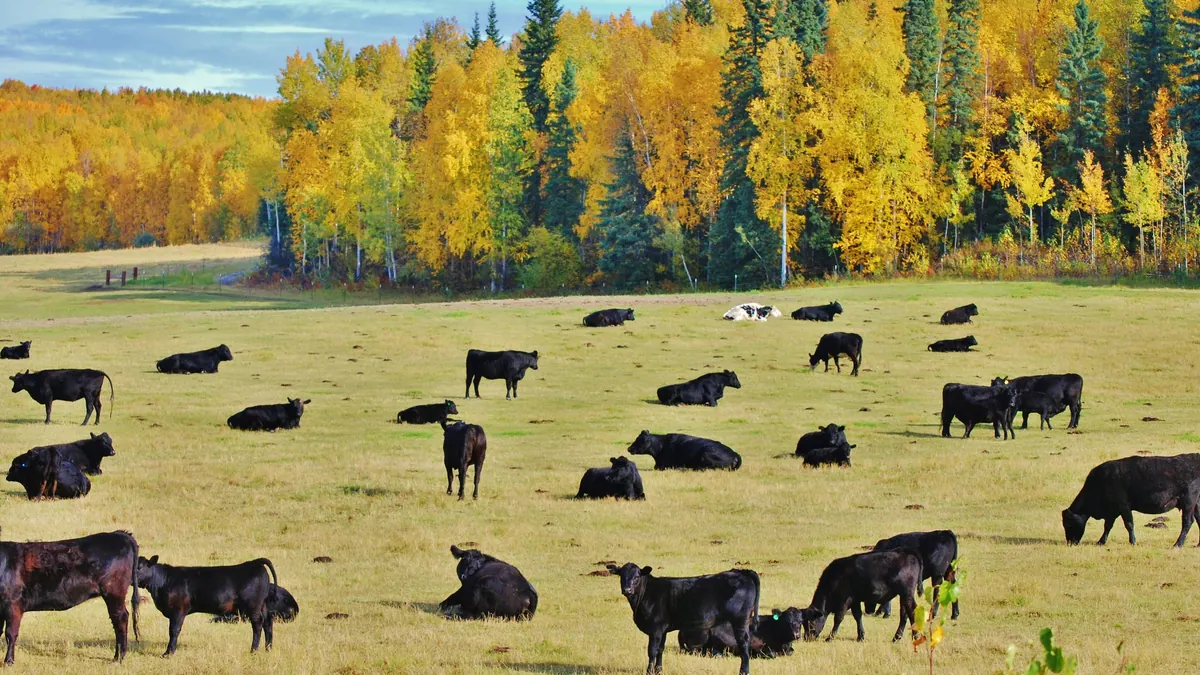

The Global Methane Pledge is an international initiative announced in November 2021 during the COP26 climate summit in Glasgow. Its participants undertake to jointly reduce global anthropogenic methane emissions by at least 30% by 2030 relative to 2020 levels. The pledge is political, not legal, but it sets a direction for action, including in agriculture, waste and energy. For the biogas sector this means greater interest in those technologies that capture methane from manures, wastes and sewage.
Why methane matters
Methane is the second most important gas responsible for warming after CO₂. It lives in the atmosphere for about a decade, so limiting its emissions quickly translates into a slowdown in the rate of warming. The Global Methane Assessment published in 2021 by the Climate and Clean Air Coalition and UNEP indicated that a significant part of anthropogenic emissions comes from three sectors: agriculture (about 40%), fossil fuels (about 35%) and waste (about 20%). These are orders of magnitude cited in that assessment; detailed data should be verified in the source.
The EU methane strategy
In October 2020 the European Commission presented the EU strategy for reducing methane emissions. It provides for:
- improved measurement, reporting and verification of emissions;
- action in the energy sector (detecting and repairing leaks, limiting flaring and venting);
- action in agriculture (including the use of slurry and manure, including through biogas production);
- action in the waste sector (limiting the landfilling of biodegradable waste, collecting landfill gas);
- international aspects, including energy imports.
The Commission announced further legislative steps concerning the energy sector. The strategy identifies biogas as an element of limiting methane emissions from agriculture and waste.
What this means for biogas plants
- Opportunity. Methane from slurry, sludge and waste, which would otherwise escape into the atmosphere, can become a fuel. From a climate perspective, biogas plants are one of the few ways of simultaneously producing energy and reducing methane emissions.
- Pressure for gas-tightness. Since policies concern methane emissions, leaks from biogas plants themselves will be a focus of attention. Initiatives are appearing concerning measurements, leak detection and repair (LDAR) programmes and good practices.
- Reporting. The importance of monitoring and documenting emissions in sustainability certification can be expected to grow.
- Financing and support. Methane reduction is sometimes an argument for support programmes for biogas from waste and manures.
Example: the scale of reduction
Assumptions: a large-scale farm produces 50,000 m³ of slurry a year; the hypothetical methane emission from storage is 5 kg CH₄ per m³ (an illustrative assumption; the real value depends strongly on temperature, time and method of storage). Emission: 250 t CH₄ a year ≈ 7000 t CO₂e at GWP₁₀₀ = 28. If fermentation captures, say, 80% of this methane, the avoided emission is 200 t CH₄ ≈ 5600 t CO₂e a year. This shows the potential, but also the dependence on assumptions, so measurement data are needed in projects.
Limitations and criticism
- The pledge is voluntary; it does not specify detailed instruments.
- Some key emitters have not joined the initiative.
- The share of agriculture in emissions is difficult to reduce without changes in livestock production and animal feeding.
- Biogas does not solve all sources of methane, e.g. enteric fermentation in cattle.
What is worth doing
At a biogas plant it is worth implementing good practices today: leak-tight tanks, regular inspections of fittings, measurements of methane concentration at key points and recording of the results. Such data become a competitive advantage in certification and when applying for support.
Measurement as a condition of credibility
Without reliable measurements the declared methane reduction can be challenged. This applies both to national inventories, which often rely on emission factors, and to specific projects. At a biogas plant the basis is measurements at installation level: tank tightness, methane concentrations around equipment, the gas mass balance. Measurement campaigns using remote methods (e.g. drones and laser analysers), which are compared with reporting data, are appearing more and more often.
Summary
The Global Methane Pledge and the EU methane strategy show that methane has become a priority of climate policy. Biogas plants are part of the solution, but they must also keep watch over their own emissions.
Sources
Related articles