BiohydrogenEvent
Hazer: first hydrogen and graphite from sewage biogas at Woodman Point
In January 2024 Hazer Group announced the first production of hydrogen and graphite at its demonstration plant next to the Woodman Point wastewater treatment plant, after delays in 2022–2023.
Other language versions: polski.

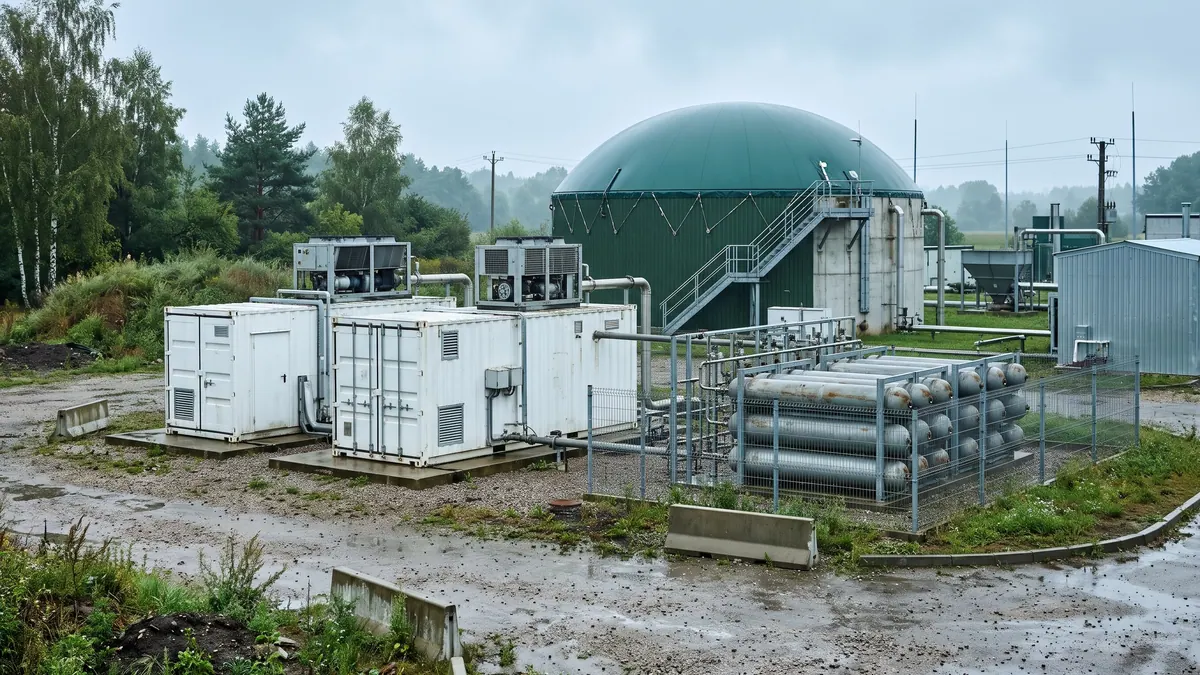
Hazer Group announced on 31 January 2024 (in Perth; the entry on the Australian Securities Exchange (ASX) is dated 1 February) the first production of hydrogen and graphite at its commercial demonstration plant located next to the Woodman Point wastewater treatment plant near Perth. The plant, fed with sewage biogas supplied by Water Corporation, is meant to provide the first commercial validation of the methane pyrolysis process developed by the company.
After years of preparation
Support from the Australian Renewable Energy Agency (ARENA) (up to AUD 9.41 million) was announced in September 2019, and the project record gives a start date of 13 March 2020. According to the Commonwealth Scientific and Industrial Research Organisation (CSIRO), the total cost is estimated at AUD 23–25 million. Commissioning of the plant had been planned for the end of 2022, but the delay was linked to a fabrication problem with the heat exchanger vessel. In June 2022 the company reported that construction and cold commissioning were complete, in July 2022 that the heat exchanger had to be remade, and in January 2024 that the first products, hydrogen and synthetic graphite, had been obtained.
Design parameters
- location: Woodman Point wastewater treatment plant (Water Corporation),
- feedstock: sewage biogas, about 2 million Nm³ per year, which would otherwise be flared,
- design output: about 100 t of hydrogen per year and about 380 t of graphite per year.
How it works
In Hazer's method, methane is split into hydrogen and carbon in the presence of an iron catalyst. The carbon is deposited as graphite, which can be sold for industrial applications. The hydrogen can be used as a fuel or a chemical feedstock. Unlike steam reforming, the process does not produce CO₂ directly, and if the feedstock is biogenic, the emissions balance is more favourable than for hydrogen from fossil gas.
What next, and caveats
The company announced a ramp-up of production in the first half of 2024 and a programme of performance tests. Questions remain open about the market for synthetic graphite after scale-up and about cost competitiveness against electrolysis.
What this means for Poland
Polish wastewater treatment plants and biogas plants may consider methane pyrolysis as an option for biogas with a high methane content, but applications in cogeneration and biomethane currently dominate. Hazer is a good case study, particularly for how long it takes to move from funding a technology to the first tonnes of product.
Sources
Related articles