BiogasEvent
IEA on biogas and biomethane: potential to cover approx. 20% of global gas demand
The IEA special report "Outlook for biogas and biomethane: Prospects for organic growth" estimates that full use of the sustainable potential could cover about one fifth of global gas demand.
Other language versions: polski.
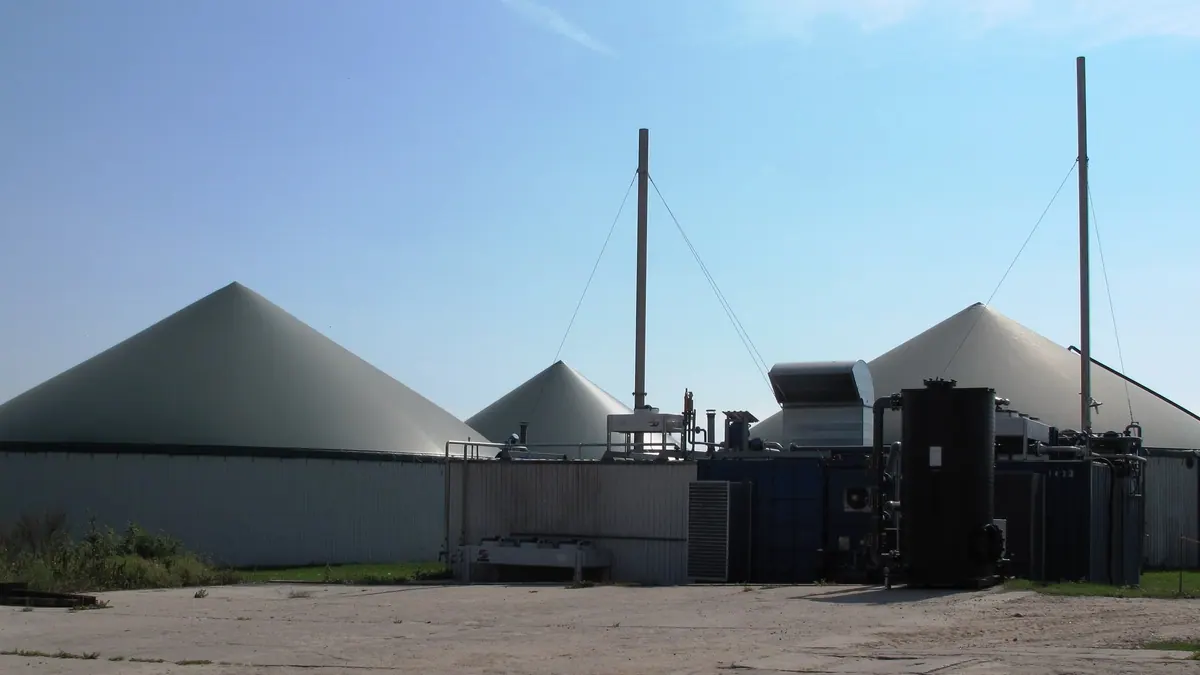

The International Energy Agency (IEA) published on 18 March 2020 the special report "Outlook for biogas and biomethane: Prospects for organic growth". Its main conclusion: global production of biogas and biomethane is only a fraction of the sustainable potential, and full use of that potential could cover about one fifth of today's global gas demand.
What the report says
The report is part of the World Energy Outlook series and is based on a detailed assessment of feedstock availability and production costs in individual regions. The most important findings:
| Issue | IEA finding |
|---|---|
| Production in 2018 | approx. 35 Mtoe of biogas and biomethane |
| Sustainable potential | could cover approx. 20% of global gas demand |
| Feedstock availability | growth of approx. 40% by 2040 |
| Cost of biomethane today | on average approx. USD 19/MBtu plus the cost of grid connection |
| Price-competitive biomethane | approx. 30 Mtoe (approx. 40 billion m³), mainly from landfill gas |
The volume of biomethane that can be produced more cheaply than domestic natural gas costs is, according to the IEA, about ten times larger than the entire biomethane use at the time. The cost gap between biomethane and natural gas is to narrow as technology advances and CO₂ emission prices rise.
Scenarios to 2040
In the IEA's sustainable development scenario, by 2040 biogas would provide clean cooking fuel to an additional 200 million people, half of them in Africa. The use of biomethane would avoid approx. 1000 Mt of greenhouse gas emissions in 2040 — both by replacing natural gas and by preventing methane emissions from the decomposition of feedstocks. The greatest opportunities were seen in the Asia-Pacific region, but North and South America, Europe and Africa also have significant potential.
Significance for Europe and Poland
For Polish investors the report is confirmation that biomethane makes economic sense above all where the feedstock is cheap or treated as waste: landfill gas, biogas from treatment plants, agricultural residues. In Poland, under the legal situation of the time, industrial-scale biomethane production practically did not exist, and the rules on grid injection were yet to be developed.
What next
The report appeared at a moment when the energy sector was grappling with the start of the pandemic. It nevertheless showed that biogas and biomethane are one of the few renewable energy carriers that link the waste economy with fuel production. Subsequent studies, including analyses by the European Biogas Association and the Gas for Climate consortium, developed these theses in the context of EU climate policy.
How to interpret the figures
The IEA estimates concern sustainable potential, that is, one that does not require competing with food production or destroying ecosystems. They assume the use of waste and agricultural residues, not large-scale energy crops. The report is therefore an argument above all for developing installations based on waste and by-products, and not for increasing the area of maize for silage.
Sources
Questions and answers
What does the unit Mtoe mean?
Mtoe is a million tonnes of oil equivalent. According to the IEA conversion factor, 1 Mtoe is 11.63 TWh, i.e. about 1.21 billion m³ of natural gas.
Related articles