Law and regulationExplainer
Implementing Regulation 2022/996: how the sustainability of biogas and biomass is verified, mass balance
Implementing Regulation (EU) 2022/996 of 14 June 2022 sets the rules for verifying the RED II sustainability criteria: audit, voluntary schemes and mass balance.
Other language versions: polski.
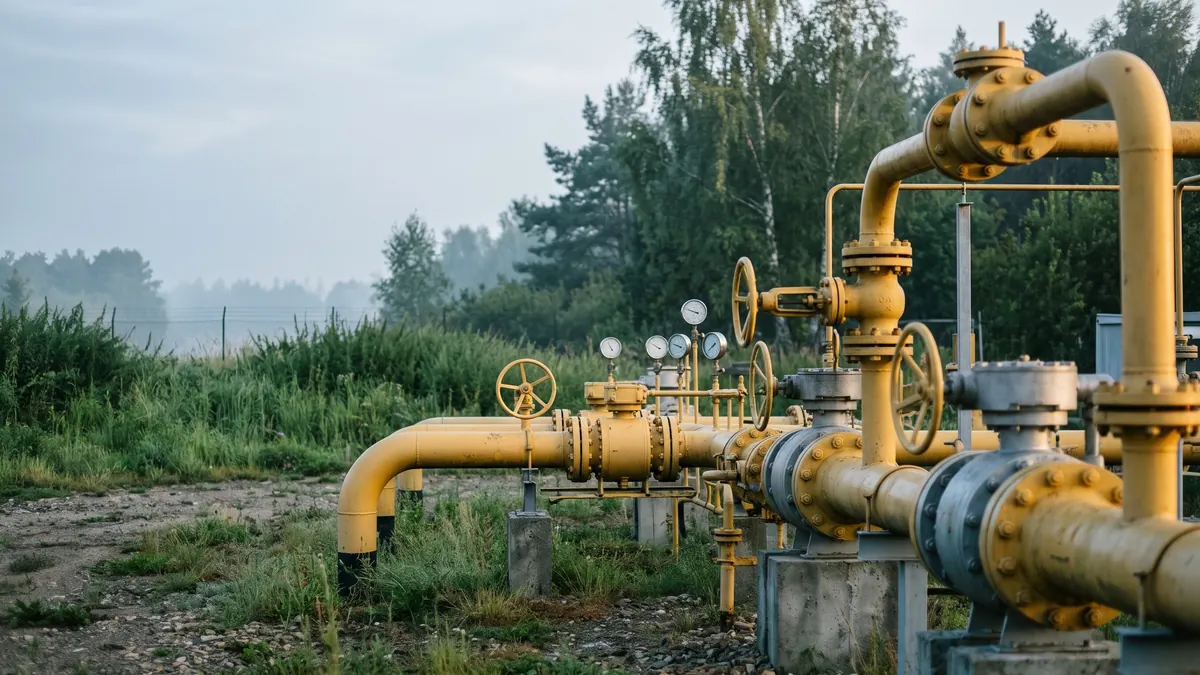
Commission Implementing Regulation (EU) 2022/996 of 14 June 2022 is the operating manual for the verification system on which the sustainability certification of biogas, biomethane and biomass is based. It was published in the Official Journal of the EU L 168 of 27 June 2022.
Why it was created
Directive 2018/2001 (RED II) in Article 29 sets the sustainability criteria and the greenhouse gas emission saving thresholds for biofuels, bioliquids and biomass fuels. The directive requires economic operators to demonstrate compliance with these criteria, but the detailed verification rules were left to implementing acts. Regulation 2022/996 is such an act: it is meant to ensure that compliance checks are effective and uniform throughout the Union.
It covers verification of compliance with the criteria of Article 29(2)–(7) and (10) and the reliability of data on greenhouse gas emission savings. It also contains rules on the criteria for low indirect land-use change (ILUC) risk.
Who the addressees are
Some of the provisions are directed at voluntary schemes, that is private certification programmes (e.g. ISCC), which the Commission may recognise for the purposes of verifying compliance with the EU criteria, and at certification bodies, which carry out audits on behalf of those schemes. Other provisions concern Member States and economic operators, and therefore also producers of biogas and biomethane.
In practice a biogas producer falling within the scope of Article 29 joins an audited chain: feedstock (e.g. slurry, silage, waste), biogas production, injection or use. The sustainability certificate that results is the basis for issuing proofs of sustainability to buyers of biomethane and for applying for support where it depends on compliance with RED II (see the GHG balance of biomethane and default and actual values in RED II).
Mass balance
The recitals of the regulation state that a mass balance system is meant to reduce the administrative burden of demonstrating compliance with the sustainability and emission saving criteria, by allowing feedstocks and fuels with different sustainability characteristics to be mixed. When biomethane is injected into the gas grid, this means that the physically mixed gas can be accounted for on paper by consignment: the sustainability properties of the consignments are assigned to the quantities withdrawn from the system. From the producer's point of view the key point is therefore reliable documentation of feedstock receipts and product dispatches, because it is the material for the audit.
ILUC in brief
Indirect land-use change (ILUC) occurs when crops grown for biofuels displace food production to other areas, e.g. forests, which increases emissions. The low ILUC risk criteria serve to identify fuels for which this risk is limited, for example by cultivation on unused land. For biogas plants based on slurry and waste this theme is of secondary importance, but for installations using silage from energy crops documentation of the origin of the feedstock is sometimes important.
The role of voluntary schemes
A voluntary scheme is a certification programme that the Commission recognises as a reliable way of demonstrating compliance with the EU criteria. It is not a state body: audits are carried out by independent certification bodies, and the scheme sets the rules under which certificates and proofs of sustainability are issued. Regulation 2022/996 specifies what standards such schemes and bodies must meet for their certificates to be recognised throughout the Union. For a biogas plant this means that a certificate obtained in one country should be accepted by a buyer in another, which matters when selling biomethane or guarantees of origin abroad.
Significance for electricity support
For electricity from biogas the verification requirements matter when support or counting towards renewable energy targets depends on compliance with Article 29. A cogeneration installation with a total rated thermal input of at least 2 MW (in the case of gaseous fuels from biomass, including biogas) should demonstrate compliance, and the audit covers the whole substrate supply chain.
What to watch out for in practice
- Substrate documentation (origin, type, quantity) must be consistent with the biogas production balance.
- The choice of a voluntary or national scheme affects audit costs and the recognition of proofs of sustainability by buyers.
- Default emission values simplify calculations, but actual values can give a better result if they are backed by data.
- Before an audit it is worth checking the current consolidated version of the regulation, available in EUR-Lex.
Sources
Questions and answers
Must a biogas plant itself undergo an audit under this regulation?
The regulation sets the verification rules, and the certificate is issued by a certification body within a recognised voluntary or national scheme. The details depend on whether the installation falls within the scope of Article 29 of RED II.
Related articles