Law and regulationExplainer
Union Database (UDB): tracking biomethane and renewable fuels in the EU
The EU database (UDB) is meant to track liquid and gaseous renewable fuels from production to sale. We explain the purpose, the scope of data and the significance for biomethane producers.
Other language versions: polski.
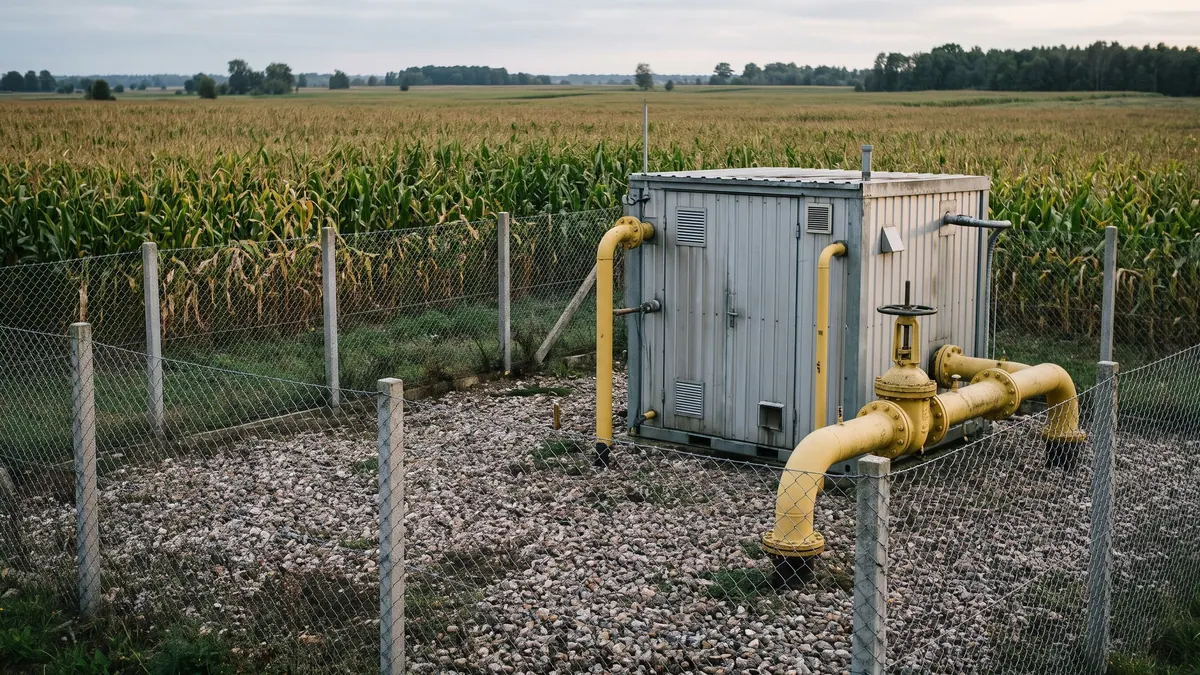
The Union Database (UDB) is a European Commission electronic database whose task is to track liquid and gaseous renewable fuels from the place of production to placing on the market. It is meant to limit double counting of the same consignment (for example in several countries or support systems) and to make fraud harder. The basis is Article 28(2) of the RED II directive; the entry describes the position as of January 2022.
Why the UDB is being created
Biomethane injected into the common gas grid mixes with other gas and cannot be "seen" physically. The fact that a consignment is renewable is determined by documentation: the certificate, the mass balance, evidence of the origin of substrates and the calculation of emission reduction. If each country keeps its own records, the same quantity may be counted twice – at the producer in one country and at the seller in another. The UDB is meant to be a common ledger in which consignments are registered and transferred between entities.
What data it contains
The scope is determined by detailed verification rules. In practice it concerns:
- identification of entities and installations,
- type of fuel and raw material and its origin,
- information from the certificate (scheme, number, scope),
- the calculated GHG emission reduction,
- data on public support (whether aid was granted for the consignment),
- successive transactions: to whom and in what quantity the consignment was sold or transferred.
In January 2022 the EC was preparing an implementing act on verification rules, so the technical details and registration deadlines were not yet final.
Where the biomethane producer sits in the supply chain
A typical chain: farm or waste supplier, biogas plant, upgrading installation, grid operator, seller, entity meeting fuel obligations. In certification schemes the biogas plant is the link that issues a sustainability declaration for the consignment of biogas or biomethane, and in the UDB that consignment has its record. From the biogas plant's perspective this means the need for reliable record-keeping: mass of substrates, their origin, production, energy consumption, quantity injected into the grid.
What this means in practice
- Certification remains the basis. The database does not replace the audit; a certificate issued in a recognised scheme (for example ISCC, REDcert) is evidence of compliance with the criteria.
- The mass balance must add up. The quantity declared as renewable cannot exceed the quantity actually injected into the grid, taking into account losses and deductions.
- Data need to be organised in advance. Well-kept records of substrate deliveries and gas measurement protocols shorten the audit and the entering of data.
- Public support will be visible. Information that aid was granted for a consignment is meant to prevent support systems from being combined with trading in "green" gas where this is prohibited.
What we do not know at the time of the entry
It had not yet been settled how Member States would divide obligations between producers, traders and grid operators, or whether data would be passed on through national databases. In Poland there were no provisions describing in detail the obligations of biomethane producers towards the UDB. It is therefore good practice to follow communications from ministries and operators and to choose a certification scheme that provides registration tools.
What to do first
- Choose a recognised certification scheme and certification body.
- Organise the documentation of substrate deliveries.
- Install or verify the measurement of the quantity and quality of biomethane at the grid entry.
- Check the terms of the contract with the biomethane buyer – who is responsible for the entries.
- Monitor national provisions implementing RED II.
The UDB, mass balance and guarantees of origin
Three concepts are easy to confuse. The mass balance is an accounting method that says how much sustainable product may be attributed to the output from a given place. A guarantee of origin (Article 19 of RED II) is a document confirming to the customer that a given quantity of energy, including gas, was produced from renewable sources. The UDB is meant to be a common record of consignments of renewable fuels between countries. Biomethane injected into the grid may have all three at once: a consignment registered in the database, a mass balance at the producer and a guarantee of origin at the buyer. The challenge is to synchronise them so that the same quantity is not counted again.
Data for the biomethane producer to prepare
- Monthly volume of biomethane injected into the grid, with the operator's measurement protocols.
- A list and masses of substrates broken down by supplier and delivery dates.
- Data on energy used in the process and auxiliary fuels used.
- A GHG emission reduction calculation consistent with an approved methodology.
- The number and scope of the certificate, details of the certification body.
- Information on the use of public support.
Well-kept monthly summaries make both the audit and registration in the database easier later, as well as settlements with the buyer.
Why it matters already today
Even if the registration obligation does not yet concern your installation, the market is moving towards full traceability of consignments. Biomethane buyers, banks and auditors increasingly expect the producer to be able to reconstruct the route of each delivery: from the field or food plant, through fermentation and upgrading, to the grid entry point. An installation that keeps such records electronically from the start avoids the costly backward tidying of data when the requirements tighten.
This text is for information only and does not constitute legal advice; before an investment or formal decision, check the current wording of the legislation and consult a lawyer or the relevant authority.
Sources
Questions and answers
Does the UDB replace an ISCC or REDcert certificate?
No. The certificate confirms compliance with sustainability criteria, while the UDB serves to track batches and transactions. The data in the database often come from certification systems.
Must a biomethane producer selling gas to the grid enter data in the UDB?
It depends on national regulations and on whether biomethane is counted as a renewable fuel under the targets. In Poland, the obligation to submit data applies, among others, to producers and processors under the Act on Biocomponents and Liquid Biofuels.
Related articles