Waste-to-energyExplainer
ITPOK in Poland: thermal treatment of municipal waste — status and significance in 2025
Poland has several municipal waste thermal treatment installations (ITPOK). We outline their number, their role in the system and the new installation in Gdańsk launched in 2025, with a caveat about differences in the data.
Other language versions: polski.
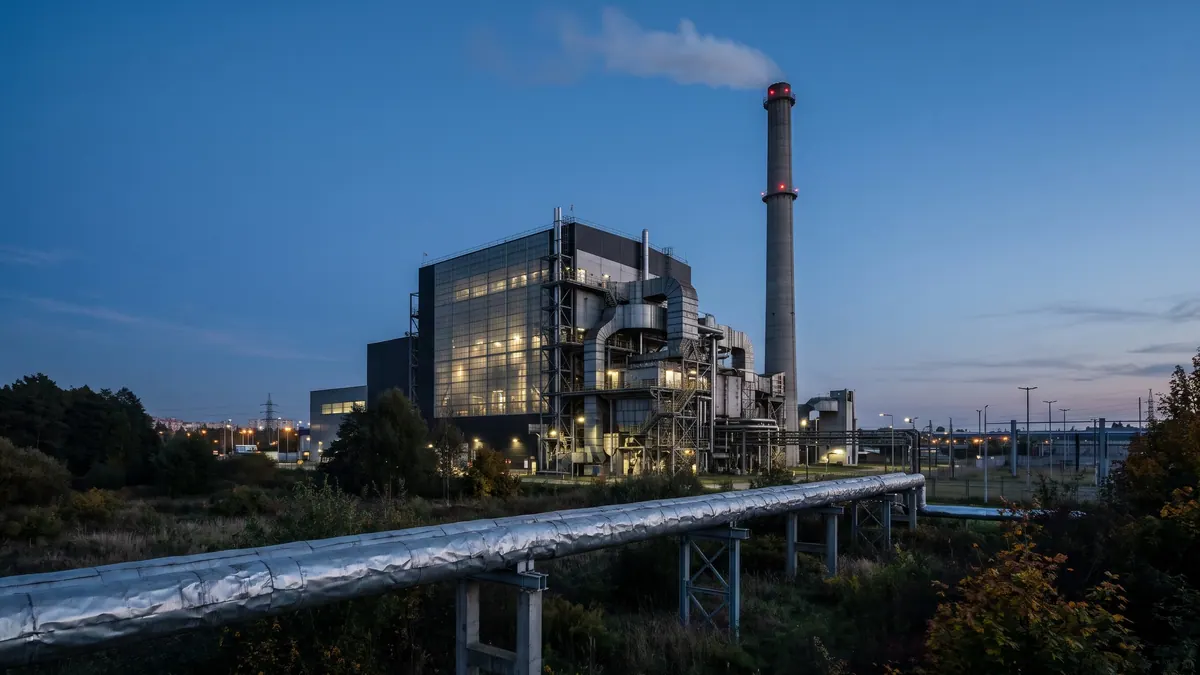
ITPOK, that is installations for the thermal treatment of municipal waste, are in Poland a small group of large plants that accept residual waste after segregation and convert it into heat and electricity. According to the 2024 IOŚ-PIB report (data for 2022), 15 thermal waste treatment installations were operating in the country, of which eight were municipal waste incineration plants. In March 2025 the installation in Gdańsk joined them.
Why the figures differ
Different sources give different figures because they count different things. Thermal treatment installations include not only municipal waste incineration plants, but also incineration plants for industrial, hazardous and medical waste or sewage sludge. Some compilations omit installations in commissioning, while others include installations just before start-up. Processing capacity must also not be confused with the quantity of waste actually processed. When quoting figures, it is therefore worth always stating the year and the definition.
Where ITPOK operate
Industry compilations list installations in Kraków, Poznań, Bydgoszcz, Gdańsk, Konin, Szczecin, Rzeszów, Białystok and Warsaw. The largest of those in operation is the Kraków Ekospalarnia, with a throughput of around 245 thousand tonnes per year; the Poznań ITPOK has about 210 thousand tonnes, the Bydgoszcz one about 180 thousand, and the Gdańsk one about 160 thousand tonnes per year. In Warsaw the installation in Targówek was being expanded, and it is to become the largest in the country. Further ones are planned, including in Olsztyn. The quantities given are indicative and come from journalistic studies.
Example: Port Czystej Energii in Gdańsk
The installation was officially opened on 24 March 2025. It is designed for about 160 thousand tonnes of waste per year, mainly non-recyclable municipal waste from Gdańsk and the surrounding municipalities. It is to generate annually approx. 114 thousand MWh of electricity and 509 thousand GJ of heat. The cost exceeded PLN 661 million net, of which PLN 271 million came from POIiŚ 2014–2020 and PLN 330 million from NFOŚiGW. Such values are design values, and the actual ones will depend on the feedstock and the operation of the district heating network.
The role of ITPOK in the waste management system
These installations have three tasks:
- Reducing landfilling. The Landfill Directive requires that in 2035 no more than 10% of municipal waste generated goes to landfills. Without additional capacity for managing residual waste, the target is difficult.
- Energy recovery. If the R1 indicator meets the threshold, the installation is classified as recovery, and the heat feeds the city district heating network.
- Cost stabilisation. Independent of a few RDF customers, the thermal treatment route reduces the risk that the waste stream is left without management.
They do not replace recycling: waste suitable for recycling, biowaste and secondary raw materials should be separated earlier. The scale of capacity needed is a subject of dispute. The National Waste Management Plan indicates further demand, but the final size depends on how quickly recycling grows and the quantity of residual waste falls.
Legal and environmental requirements
ITPOK are subject to the IED regime: an integrated permit, the BAT conclusions for waste incineration (Decision 2019/2010), continuous emission measurements and information obligations. They must also achieve the R1 energy efficiency indicator if they want to be classified as recovery. Since 2024, CO₂ emissions from municipal waste incineration installations have been subject to monitoring and reporting under the EU ETS, still without an obligation to surrender allowances. The installation also generates residues — slag and flue gas cleaning waste — which require separate management.
What to avoid in interpreting data
- Comparing processing capacity with the quantity actually processed.
- Combining data from different years without annotation.
- Taking design values as operating results.
- Assuming that every new installation will reduce landfilling: it depends on the quality of collection and on prices.
What to check when assessing a local project
- The balance of residual waste in the region and the forecast for the coming years.
- The R1 indicator and the possibility of heat offtake.
- The plan for handling slag and residues.
- Compliance with the BAT conclusions and public measurement results.
- A cost model, including future burdens related to the EU ETS.
How ITPOK fit into district heating
A municipal waste incineration plant makes economic sense mainly when it has a steady heat customer. City district heating networks can take heat all year round, but summer demand is much lower than winter demand, which limits the use of heat. That is why, in locations where there is year-round offtake (e.g. domestic hot water, technological processes), the R1 indicator is easier to reach. The quantity and composition of waste change over the course of the year, and the production of electricity and heat does not always coincide with demand, so heat stores or systems with peak sources are designed.
Operational challenges
ITPOK operators struggle with several recurring problems: the variable calorific value of waste (depending on the season and on changes in segregation), the cost of maintaining lines that run continuously, the management of slag and flue gas cleaning waste, and public acceptance. Added to this is regulatory uncertainty around the EU ETS. For municipalities this means that the gate fee is not constant, and contracts should include indexation mechanisms.
This text is for information purposes only and does not constitute legal advice; before an investment or formal decision, check the current wording of the legislation and consult a lawyer or the competent authority.
Sources
Questions and answers
Do incinerators not compete with recycling?
They can compete if a plant is oversized and "needs" waste, which is why EU policy provides that incineration should serve residual waste that is unsuitable for recycling, and not replace sorting.
How many municipal waste incinerators are there in Poland?
According to data for 2022, Poland had eight municipal waste thermal treatment plants with a combined capacity of about 1.2 million tonnes a year, and more were under construction, including in Warsaw.
Related articles