Law and regulationExplainer
Japan's FIT for biogas: 39 yen per kWh and 20 years of guaranteed purchases
How Japan's FIT scheme worked for biogas from sewage sludge, manure and food waste: a rate of 39 yen/kWh, a 20-year purchase period and the move to FIP from April 2022.
Other language versions: polski.
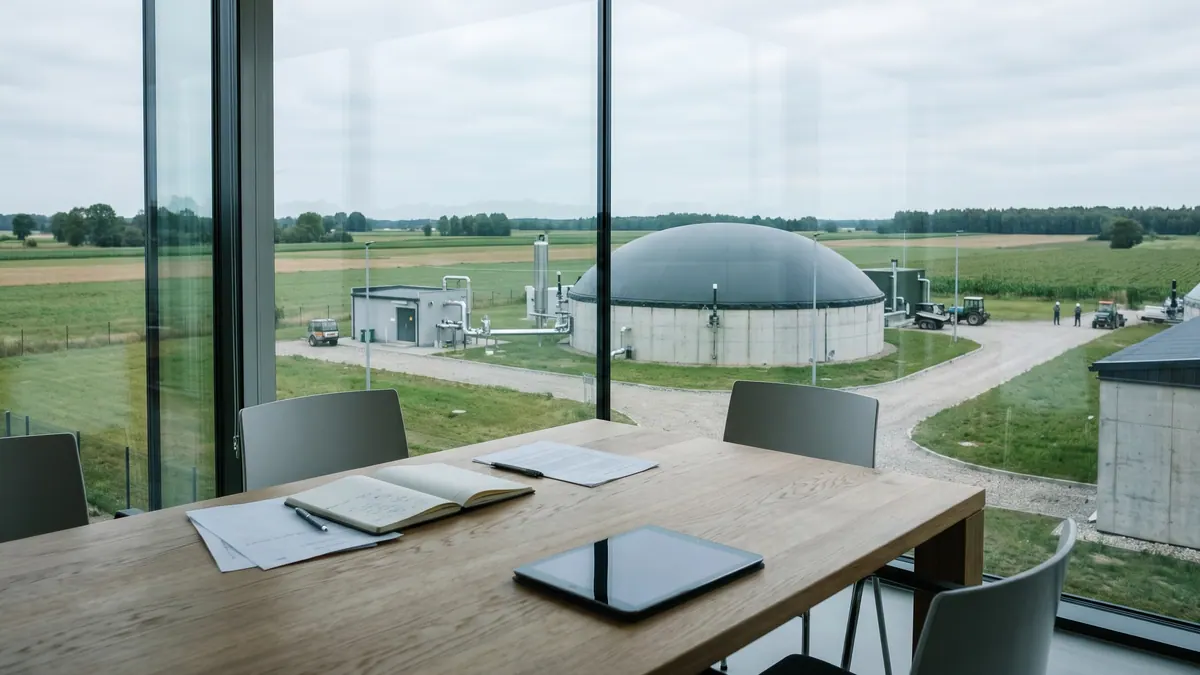
Japan's feed-in tariff (FIT) scheme provided for biogas a rate of 39 yen per kWh — one of the highest among biomass sources. An ERIA study for fiscal year 2021 shows that the rate for biogas was 39 yen/kWh, whereas for unutilised wood from installations below 2 MW it was 40 yen/kWh, and for general wood below 10 MW — 24 yen/kWh. The authors note that these rates have remained unchanged since the start of the scheme; the exception is unutilised wood from installations below 2 MW, for which the rate was raised from 32 to 40 yen/kWh in fiscal year 2015 to encourage the building of small power plants.
What "biogas" means in FIT
In Japan's FIT scheme, biomass fuels for generating electricity were divided into six categories. Biogas is defined as methane originating from sewage sludge, manure and food waste. The other categories include general wood, unutilised wood (obtained from thinning), construction waste wood, liquid biomass (palm oil) and "waste and other biomass", which includes, among others, pruned branches, paper, food waste and used cooking oil.
Where FIT came from and how it works
The predecessor of FIT was the Renewable Portfolio Standard (RPS) system of 2003, which turned out to be less effective than expected; FIT was introduced in 2012. According to ERIA, the generous FIT rates caused the capacity of biomass power plants to more than double within seven years. Energy from power plants approved under FIT is purchased at a fixed rate for 20 years.
The target for biogas
It is worth distinguishing the rate from the scale of the market. Japan's long-term energy supply and demand forecast (the Long-term Energy Demand and Supply Outlook of 2015) indicated for biogas a target of only 160 MW of capacity in 2030, which against the total target for biomass (6020–7280 MW) shows the modest role of this technology; the largest part was to be general wood. The target for biogas is thus only 2–3% of the capacity target for biomass as a whole.
Political context and FIT results
According to ERIA, Japan announced in October 2020 carbon neutrality by 2050, and in April 2021 an emissions reduction of 46% relative to 2013. The Fifth Strategic Energy Plan of July 2018 for the first time defined renewable energy as a main source of electricity and assumed its share at 22–24% of the mix in fiscal year 2030, of which 3.7–4.6% is to be biomass. By March 2020 the capacity of biomass power plants approved under FIT reached 10,830 MW — more than the 2030 target of 6020–7280 MW — but only 4500 MW was actually operating, and 6330 MW (mainly general wood) was waiting to be commissioned. The 2017 amendment of the FIT act tightened the requirements (including a grid connection agreement and a business plan), as a result of which new approvals fell to about 160 MW per year in fiscal years 2018–2019. Since fiscal year 2019 FIT can no longer be obtained for new biomass–coal co-firing projects because, as the data showed, such projects have lower costs and can be profitable without support.
From FIT to FIP
ERIA describes that under the Act on ensuring resilience of energy supply, passed by parliament in June 2020 and entering into force in April 2022, the FIT act was among those amended. From fiscal year 2022 the FIP (Feed-in Premium) system applies: generators sell energy on the wholesale market and receive a premium, that is the difference between the set guaranteed price and the average wholesale price. FIP covers, among others, biomass (general wood and others) with a capacity of at least 10 MW from April 2022 and potentially at least 1 MW from fiscal year 2023. FIT remains, in turn, for locally used sources, including biomass below 10 MW, but requires meeting conditions: for the "own consumption" type at least 30% of the energy generated must be consumed on site (or sold locally), and in cogeneration the heat must additionally be used, together with at least 10% of own energy consumption. We discuss the details in the entry on FIP.
Sources
Questions and answers
What was the FIT rate for biogas in Japan?
According to the table in the ERIA study for financial year 2021, the rate for biogas was 39 yen/kWh, and the study indicates that it had been unchanged since the start of the scheme.
Related articles