Waste and circular economyExplainer
Municipal installations, the former RIPOK and WPGO: how waste management is planned
The concept of RIPOK has been replaced by "municipal installations", and the planning role is played by voivodeship waste management plans with an investment plan. We explain the rules and the place of biowaste.
Other language versions: polski.
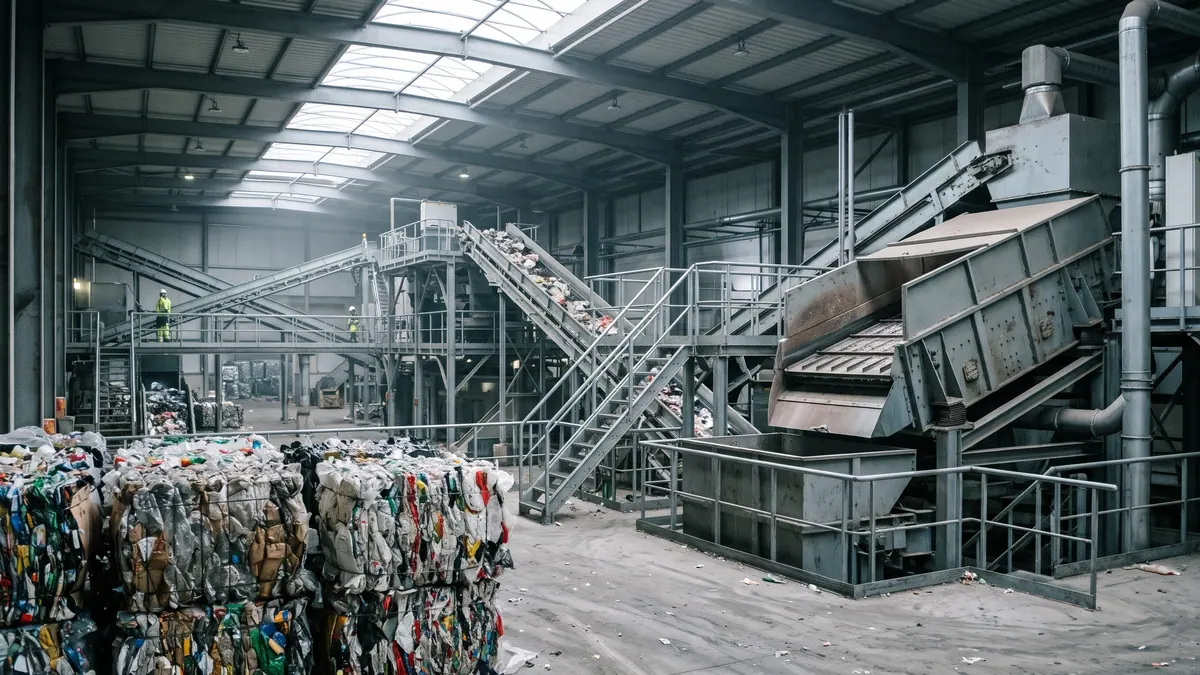
The former RIPOK, that is regional installations for processing municipal waste, disappeared from the Act on waste in 2019. They were replaced by municipal installations, entered on a list kept by the voivodeship marshal, and planning rests with voivodeship waste management plans (WPGO) with an attached investment plan. Whether an investment is included in the plan determines, among other things, access to EU funds and environmental protection funds.
Where RIPOK came from and why it disappeared
Under the Act of 14 December 2012 on waste, regional installations for processing municipal waste (RIPOK) arose from resolutions on voivodeship plans; the act transitionally recognised those indicated in the previous resolutions (Article 230). In 2019 the legislator, by an amendment of the acts on maintaining cleanliness and order in municipalities and on waste (Dz.U. 2019 item 1579), repealed, among others, Articles 38 and 38a and replaced the RIPOK system with the concept of a municipal installation and the marshal's list. In 2022 use of "RIPOK" is therefore historical, although in official practice the term is still sometimes encountered.
What a municipal installation is today
Under Article 35(6) of the Act on waste, a municipal installation is an installation for processing unsorted (mixed) municipal waste or residues from its processing, entered on the list under Article 38b(1)(1) and meeting the requirements of best available techniques (BAT) or appropriate technology. It provides:
- mechanical-biological treatment of mixed municipal waste and separation of fractions for recovery, or
- landfilling of waste from MBT and sorting residues.
An entity collecting municipal waste from property owners passes the mixed waste to such an installation (Article 29a). The marshal keeps on the BIP a list of operating municipal installations and of those planned for construction, extension or modernisation; entry is made at the request of the operator, and the marshal refuses entry or removes an installation if it has ceased to meet the requirements.
The voivodeship waste management plan
Waste management plans consist of an analysis of the situation (types and quantities of waste, collection systems, installations, their processing capacities), an assessment of problems (including needs to close installations and build infrastructure in line with the proximity principle) and an assessment of investments and sources of financing. The WPGO additionally contains:
- a list of municipal installations in the voivodeship area;
- a plan for closing installations that do not meet environmental protection requirements;
- the attached investment plan.
The plan is adopted by the voivodeship sejmik on the basis of a draft from the board; the draft is reviewed by municipalities, inter-municipal associations and water authorities, and the draft investment plan is agreed by the minister responsible for climate. Plans are updated, and reports on their implementation are prepared for three-year periods. The WPGO must be consistent with the national waste management plan adopted by the Council of Ministers — in June 2022 KPGO 2022 was in force.
Investment plan and financing
The investment plan describes the necessary infrastructure for municipal waste with its processing capacities, indicates planned investments, an estimate of costs and sources of financing, and a schedule. A condition for financing the construction, extension or modernisation of installations intended for processing municipal waste from EU funds or environmental protection funds is their inclusion in the investment plan; the requirement does not apply to recycling installations.
Where biowaste fits in all this
Installations for processing selectively collected biowaste (composting plants, biogas plants) are not "municipal installations" within the meaning of Article 35(6), because that provision concerns mixed waste and residues. However:
- the plan analyses the capacities of installations processing various waste streams, and the assessment of investments also covers collection infrastructure;
- an investment in biowaste processing that is to benefit from EU or fund financing should be consistent with the investment plan;
- municipalities are responsible for organising separate collection, and the regulation on the manner of separate collection of selected waste fractions requires biowaste to be separated out.
For the investor this is a practical hint: before the project, check the WPGO and investment plan in your voivodeship, and also the marshal's list of installations.
Who is responsible for what
| Entity | Task |
|---|---|
| Council of Ministers | adopts the national waste management plan |
| Voivodeship sejmik | adopts the voivodeship waste management plan (the draft is prepared by the board) |
| Voivodeship marshal | keeps the list of municipal installations, decides on entry and removal |
| Minister of climate | reviews the draft WPGO and agrees the investment plan |
| Municipalities | organise the municipal waste management system, including separate collection |
| Installation operator | applies for entry on the list, maintains BAT requirements and decisions |
The proximity principle and location
The Act on waste requires waste to be processed as close as possible to where it arises, which in assessing infrastructure needs translates into justifying the construction or closure of installations in a region. For the investor this means that the argument "there is a lack of processing capacity for biowaste in the subregion" is credible when it is confirmed by an analysis in the WPGO, and not only by one's own estimates.
How to read the WPGO when planning a biowaste installation
- Find in the plan the balance of biowaste generated and processed in the voivodeship, preferably broken down by subregion.
- Check whether installations for biowaste are included in the investment plan — this points to demand that the local authority considered justified.
- Note the capacities of existing composting and biogas plants and the closure of installations that do not meet the requirements, because that is the market for new capacity.
- Compare the plan with the marshal's list of municipal installations (for mixed waste) and with data on the selectively collected stream.
What to do first
- Download the current WPGO and investment annex from the BIP of the marshal's office.
- Check what processing capacities and gaps are indicated for biowaste.
- Verify with the office whether the investment qualifies for inclusion in the plan.
- Remember the proximity principle when choosing a location.
This text is for information purposes only and does not constitute legal advice; before an investment or formal decision, check the current wording of the provisions and consult a lawyer or the competent authority.
Sources
- Ustawa z dnia 14 grudnia 2012 r. o odpadach — art. 35–38b (ISAP/ELI)
- Ustawa z dnia 19 lipca 2019 r. o zmianie ustawy o utrzymaniu czystości i porządku w gminach oraz niektórych innych ustaw (Dz.U. 2019 poz. 1579)
- Uchwała nr 96 Rady Ministrów z 12 czerwca 2023 r. w sprawie Krajowego planu gospodarki odpadami 2028 (M.P. 2023 poz. 702) (aktualizacja)
Related articles