Waste and circular economyExplainer
Separate collection of biowaste in municipalities: duties of municipalities and residents, fractions, home composting
A municipality must provide separate collection of six streams, including biowaste, and residents must comply. We explain the fractions, bin colours, the exemption for home composters and the EU deadlines.
Other language versions: polski.
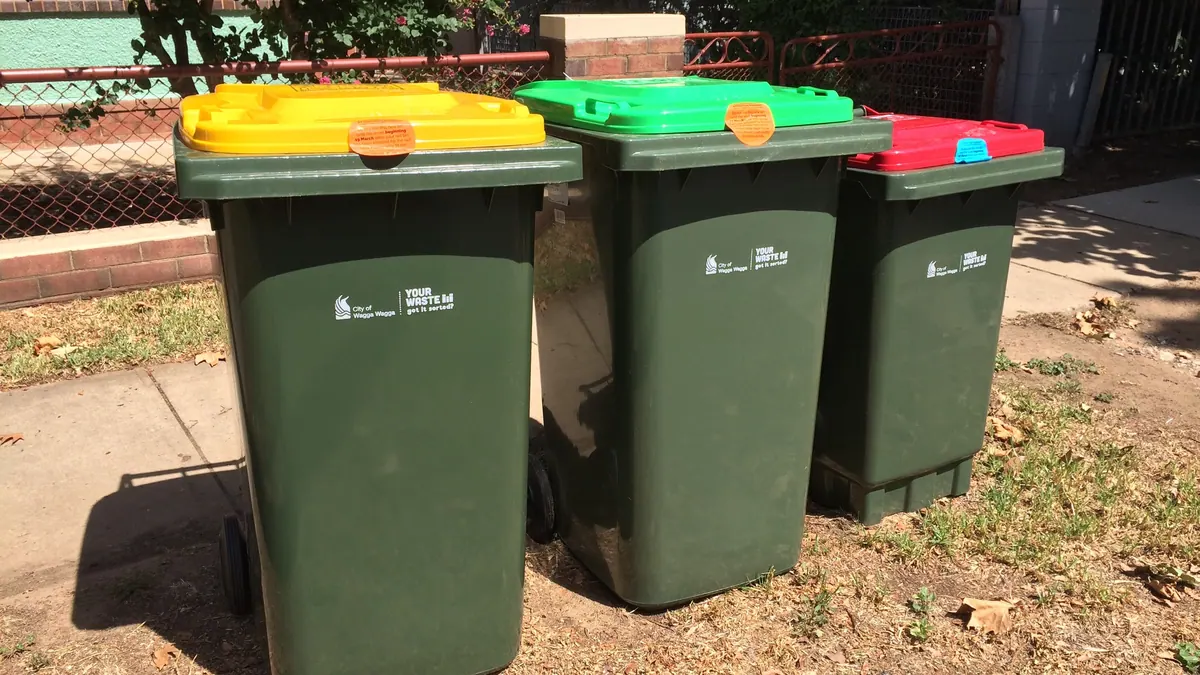

A municipality has a duty to provide separate collection of at least six streams of municipal waste: paper, metals, plastics, glass, multi-material packaging waste and biowaste, and residents are obliged to collect waste separately in accordance with the bylaws. According to the Act on Waste, biowaste is biodegradable waste from gardens and parks, food and kitchen waste from households, catering, offices, wholesale and retail, and comparable waste from food processing plants. In April 2024 the EU deadline for biowaste had already passed, and the deadline for textiles (1 January 2025) was just ahead of us.
Streams and bin colours
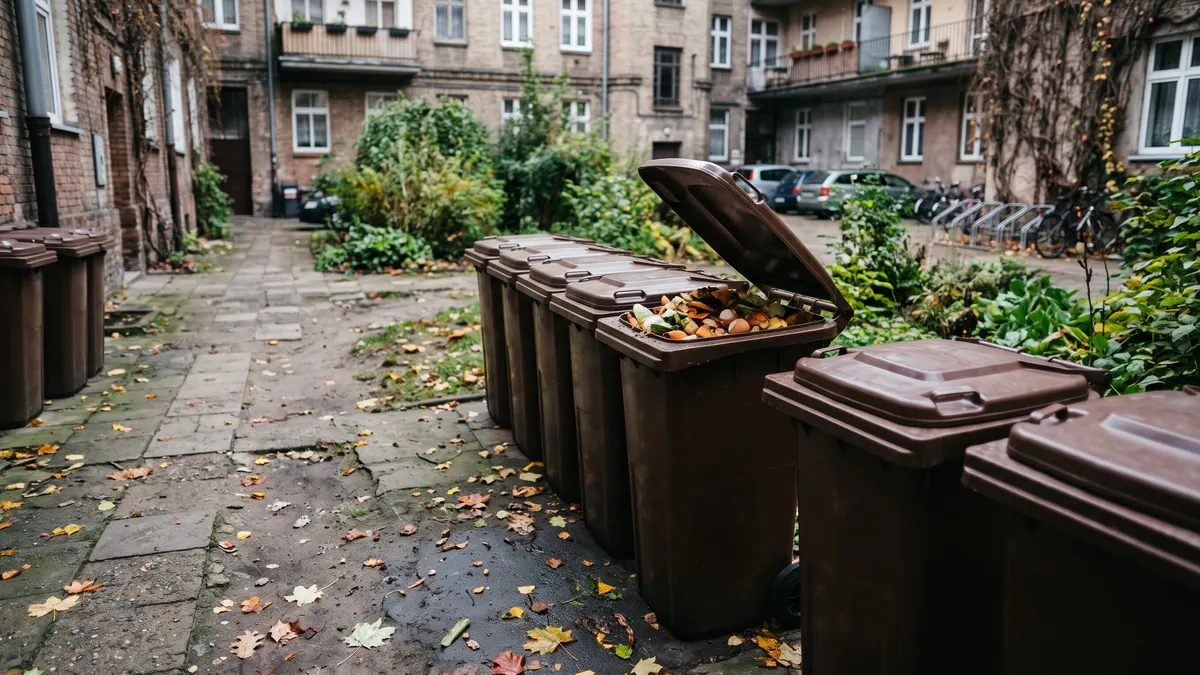
The regulation of the Minister of Climate and Environment of 10 May 2021 specifies six fractions and the markings of bins or bags:
| Fraction | Colour | Inscription |
|---|---|---|
| paper | blue | “Papier” (Paper) |
| glass | green (where split: clear — white, coloured — green) | “Szkło” (Glass) (or “Szkło bezbarwne”/“Szkło kolorowe” — Clear glass/Coloured glass) |
| metals, plastics, multi-material packaging waste | yellow | “Metale i tworzywa sztuczne” (Metals and plastics) |
| biowaste | brown | “Bio” |
Bins may be covered with the colour and inscription only in part, not less than 30% of the visible surface. The regulation entered into force on 1 July 2021, and bins and bags not meeting the requirements had to be replaced by 1 July 2022.
Municipality’s duties
- provide separate collection of six streams from property owners;
- set up, in a way ensuring easy access, at least one stationary PSZOK, accepting at least these streams as well as hazardous waste, expired medicines, batteries, waste equipment, furniture and bulky waste, used tyres, waste textiles and clothing and construction waste from households;
- ensure management of the waste in accordance with the hierarchy and carry out information and education activities;
- make available on the municipality’s website information on the entities collecting waste and on the places where mixed waste, biowaste and sorting residues are managed.
A PSZOK need not accept biowaste if the municipality, in return for the fee, entirely provides for its collection from the places where it is generated.
Property owner’s duties
The owner provides bins or bags (unless the municipality has taken over this duty), collects waste separately in accordance with the bylaws and the regulation, and disposes of it in accordance with the regulations. The municipal council may introduce additional requirements in the bylaws, e.g. collecting plant parts from the maintenance of green areas separately from other biowaste, as well as requirements for composters.
Home composter
- The municipal council may by resolution exempt in part from the fee for waste management owners of single-family houses who compost biowaste in a home composter, in proportion to the reduction in the costs of managing waste from households.
- The declaration of the amount of the fee contains information on having a composter and composting biowaste in it.
- The municipality may decline to collect biowaste from such a property if the owner has provided this information, uses the exemption, and the bylaws provide for an exemption from the obligation to have a bin or bag for biowaste.
- Where it turns out that the owner does not have a composter, does not compost biowaste in it or prevents inspection, the municipality determines by decision the loss of the right to the exemption.
Deadlines from EU law
Directive 2008/98/EC, as amended in 2018, requires that from 31 December 2023 biowaste be either collected separately or recycled at source (e.g. household composting). From 1 January 2025 Member States are to ensure separate collection of textiles. In Poland this was translated into municipal duties in the Act on Maintaining Cleanliness and Order in Municipalities (six streams, PSZOK with textiles).
Where biowaste goes and what this means for biogas
Biowaste from separate collection goes to composting plants or biogas plants. Municipal installations processing mixed municipal waste and residues must meet environmental protection requirements and hold a permit (the marshal is the competent authority for municipal installations). For biogas plants that receive the bio fraction, what matters are the appropriate codes (20 01 08, 20 02 01), depackaging for contaminated deliveries, the quality of separate collection and continuity of the contract with the municipality or the collecting entity.
Levels for municipalities
Separate collection is a tool for achieving the levels of preparation for re-use and recycling: 45% by weight for 2024, 55% for 2025, 60% for 2030 and 65% for 2035 and subsequent years. Composting and fermentation of biowaste count towards organic recycling if they meet the statutory and EU conditions.
What to check in your municipality’s bylaws
- the frequency of biowaste collection (separately in summer and winter) and the way green waste is collected;
- whether the municipality requires or permits composters and what their conditions are;
- the PSZOK rules: hours, quantity limits, the list of accepted waste;
- whether in multi-family housing shared bins apply and what the rules for marking them are;
- how the municipality verifies composting declarations.
Common mistakes
- no sorting of biowaste in multi-family housing because of contamination (plastic, glass) and the consequences for the quality of the fraction;
- declaring a composter without actually composting;
- collection too infrequent and no education;
- treating the PSZOK solely as a point for bulky waste, without textiles.
What to do first
- Check your municipality’s cleanliness and order bylaws: biowaste collection frequency, composter requirements, PSZOK rules.
- If you compost, submit the relevant information in the declaration.
- In a company or at a biogas plant, verify which entity the municipality has signed the biowaste contract with.
This text is for information only and does not constitute legal advice; before an investment or formal decision, check the current wording of the regulations and consult a lawyer or the competent authority.
Sources
- Ustawa o utrzymaniu czystości i porządku w gminach — tekst jednolity (Dz.U. 2024 poz. 399) — ISAP/ELI
- Rozporządzenie Ministra Klimatu i Środowiska z dnia 10 maja 2021 r. w sprawie sposobu selektywnego zbierania wybranych frakcji odpadów (Dz.U. 2021 poz. 906) — ELI
- Dyrektywa 2008/98/WE w sprawie odpadów — EUR-Lex
Questions and answers
How does the municipality verify composting?
The owner states in the declaration whether they have a composter and compost biowaste in it. If there is no composter, the biowaste is not composted in it, or the owner prevents inspection, the commune head (wójt), mayor (burmistrz) or city president (prezydent) determines by decision the loss of the right to the exemption.
Must a resident of a single-family home separate biowaste?
Yes, property owners collect municipal waste separately in accordance with the regulations of the municipality and the ordinance; the exception is where the municipality has exempted the owner from the obligation to have a biowaste bin because the owner composts it in a home compost bin and the municipal regulations provide for this.
Related articles