Law and regulationEvent
Korea: RPS obligation rises from 9% to 25% by 2026, and RECs for pellet co-firing are already halved
Korea raised the RPS obligation for large generators from 9% in 2021 to 25% in 2026. In 2020 the ministry halved RECs for co-firing imported pellets.
Other language versions: polski.

South Korea is increasing the renewable generation obligation in its RPS system: according to an Argus Media report of 28 December 2021, the share required of large generators is to rise from 9% in 2021 to 25% in 2026. For the biomass and biogas market this matters, because in the RPS the obligation creates demand for REC certificates, and REC prices and weights determine a generator's revenue.
New obligation path
The RPS (Renewable Portfolio Standard) in Korea is an obligation on generators with installed capacity above 500 MW. They must deliver a specified percentage of energy from renewable sources, either their own or "bought in" in the form of REC certificates. Argus gives the following path:
| Year | RPS obligation |
|---|---|
| 2021 | 9% (previous level) |
| 2022 | 12.5% |
| 2023 | 14.5% |
| 2024 | 17% |
| 2025 | 20.5% |
| 2026 | 25% |
- RPS obligation
Argus notes that the revision is linked to an oversupply of REC certificates on the market: raising the obligation increases demand for them.
How REC weights work
A REC certificate corresponds to a specified quantity of energy from a renewable source, but the number of certificates awarded per 1 MWh depends on the technology and the method of generation. This is the so-called REC weight. A higher weight means more certificates for the same energy, and therefore higher revenue. The ministry can thus steer market development without changing the overall obligation: it rewards technologies it wants to develop and cuts those it considers too cheap or controversial.
The 2020 cut for pellets
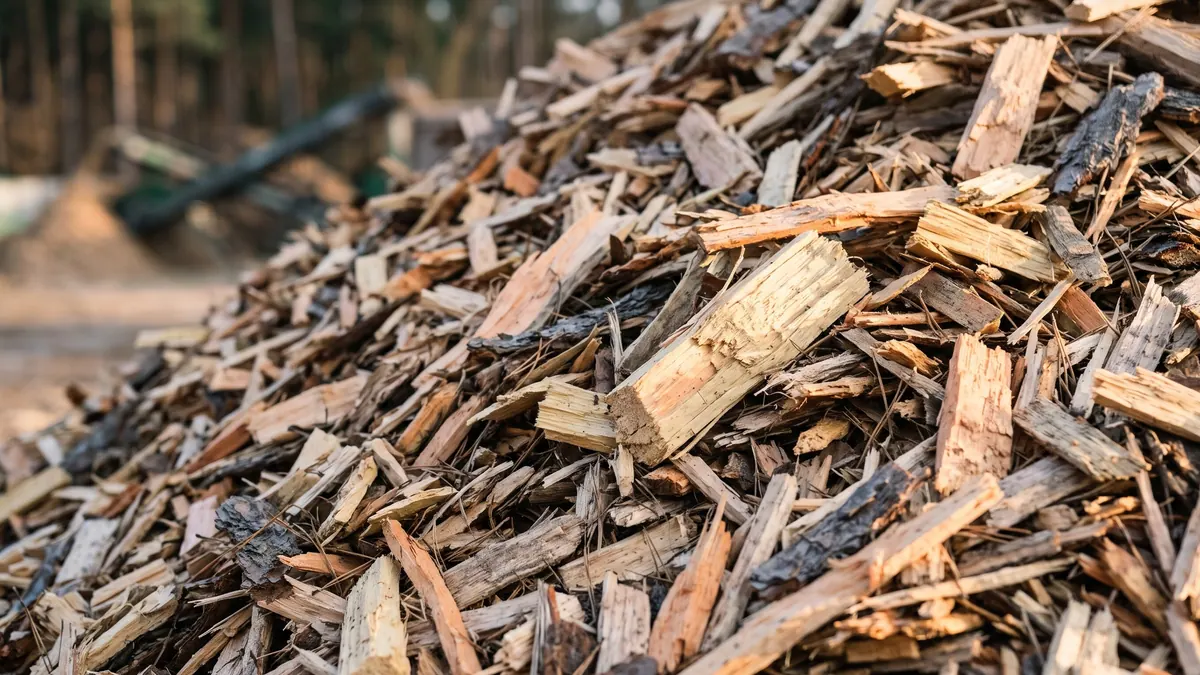
According to Argus, in July 2020 MOTIE halved the number of RECs that state-owned energy companies receive for co-firing imported wood pellets in coal-fired power plants: to 0.5 REC/MWh. The change hit the profitability of co-firing imported biomass.
What this means for biogas and biomass
For biogas and biomass producers in Korea the signal is twofold. On the one hand, the rising RPS obligation increases demand for renewable energy. On the other, REC weights are a policy tool of the ministry and can be changed, as the pellet example showed. When assessing a project it is therefore necessary to run scenarios with a variable weight, not only with the current rate.
In Poland the equivalent of RECs was green certificates (certificates of origin), and the equivalent of the support mechanism itself is now auctions and feed-in tariffs, described in other articles in the law category. Korea, however, follows the route of a quantity obligation with a certificate market, not a fixed rate per kWh. To compare policy directions it is also worth looking at the article on Korea's climate strategy: the emission reduction target for 2030.
Sources
Questions and answers
What is RPS in Korea?
It is the Renewable Portfolio Standard: an obligation for large power generators to ensure that a specified percentage of energy comes from renewable sources. They fulfil it by buying or generating REC certificates.
Related articles