Law and regulationAnalysis
Latvia: the OIK component in the mandatory purchase of energy from biogas — from bills to the state budget
The Latvian mandatory purchase system was financed by the OIK component added to bills; it bought electricity from cogeneration and biogas, paid for through charges on bills. No new rights have been granted since 2012, and in December 2022 the government decided to cover the costs from the state budget.
Other language versions: polski.
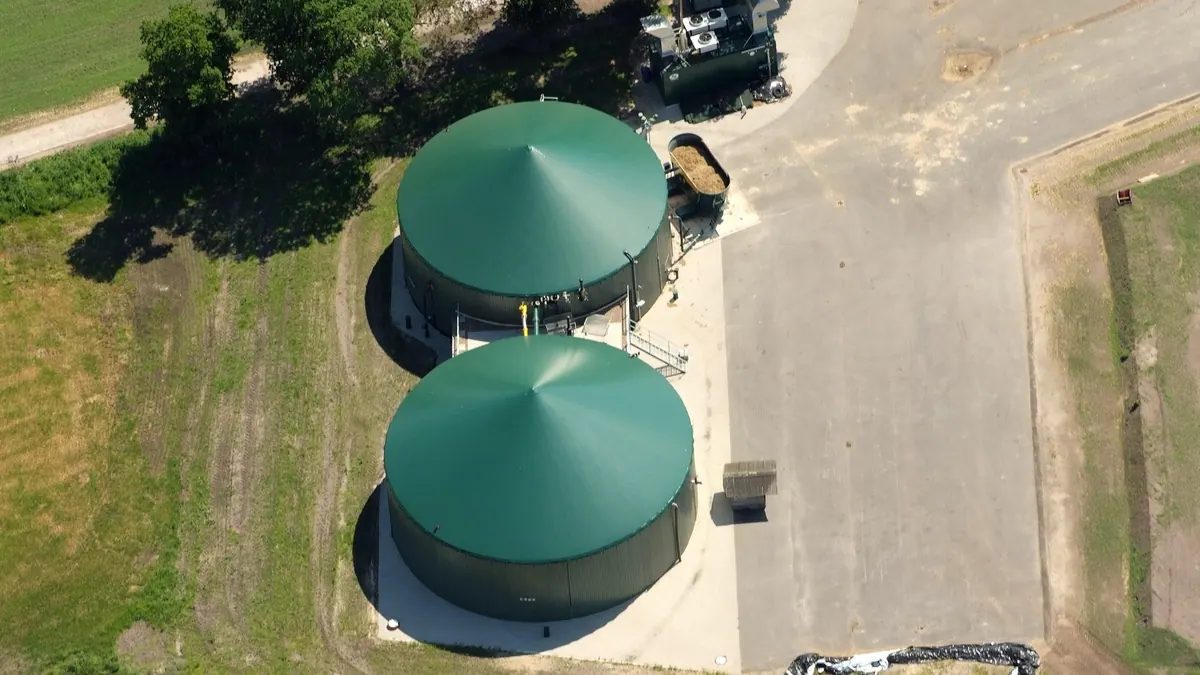

The Latvian mandatory energy purchase system (obligātais iepirkums) for years financed higher prices for energy from cogeneration and renewable sources, including biogas, through the OIK component (obligātā iepirkuma komponente) added to customers' bills. New rights to this support have not been granted since 2012, and in December 2022 the government decided to transfer the costs to the state budget.
How OIK worked
The OIK component was paid by final customers in proportion to their energy consumption, regardless of the chosen supplier. Power plants entitled to mandatory purchase sold energy at a guaranteed price, higher than the market price, and the difference was covered by the OIK component. The price was linked to the type of fuel used at the biogas plant. The legal basis was Cabinet of Ministers Regulations No. 221 of 2009 (cogeneration) and No. 262 of 2010 (renewable energy sources), replaced in September 2020 by new acts. No new rights have been granted since 2012, so the system has been closed to new investors, and any support covers only existing installations.
Reforms 2019–2021
In January 2019 the Ministry of Economics proposed ending the OIK component from 1 January 2022. The plan envisaged, among other things, halting excessive support, cutting support for idle power plants and tightening requirements for biogas plants, as well as the principle that from 2022 state support for energy production should be market-based and not exceed 0.3% of GDP per year. The ministry stated that halting support for several dozen power plants would prevent an increase in mandatory purchase costs of €391 million (the source does not state over what period).
Earlier, amendments to the energy market act entered into force on 15 February 2020, and on 2 September 2020 the government adopted new regulations (see the report on their adoption). Separately, on 17 September 2020 the Saeima supported in first reading a bill abolishing the OIK component; according to its proponents, households were to pay on average 15% less for energy (this was only the first reading). From 1 January 2021 efficiency and heat utilisation requirements also cover renewable sources, and from 2022 biogas plants are to limit the use of food-grade agricultural products such as maize.
Consequences for biogas plants
According to a paper from the Rural Development 2021 conference, in 2021 46 biogas plants sold energy under the mandatory purchase system, six fewer than in 2020. The authors link the weaker results of the first half of 2021 to changes in the cogeneration efficiency rules at the end of 2020. According to the authors, the cogeneration efficiency requirements thus began to genuinely reduce the number of installations benefiting from support; restrictions on the use of food-grade agricultural products were to apply only from 2022.
- Biogas plants in OIK
Transfer of costs to the budget
On 20 December 2022 the government approved covering OIK costs from the state budget; amendments to the energy market act still require approval by the Saeima. Earlier the cabinet adopted a concept of setting the average OIK rate at €0/MWh from 1 September 2022 to 31 December 2025, and the ministry is to prepare provisions so that final customers do not pay OIK after 2025 either. In the proposed model the state-owned supplier (EPT) covers OIK costs from market revenues, and any shortfall over the whole period, together with VAT, is covered by the budget.
For biogas energy producers this change does not mean a reduction of the guaranteed price, but it changes the way it is financed: from customers' bills to the budget and the revenues of the state-owned supplier.
Latvia compared with its neighbours
The neighbouring Baltic countries took a different path. Estonia uses a sliding premium with a cap on total revenue and auctions, and Lithuania moved to technology-neutral auctions. Latvia kept the historical system of guaranteed prices for installations that entered it by 2012, and at the same time is trying to limit its costs: by tightening requirements for biogas plants and, most recently, by changing the source of financing. The differences show that support for biogas energy in the region is evolving from fixed guarantees towards market mechanisms, but at a pace dictated by the costs inherited from earlier contracts.
Conclusions for investors
- The system has been closed to new installations since 2012; for new biogas plants other channels matter (biomethane, the energy market).
- Existing installations must meet efficiency and substrate composition requirements, otherwise they risk losing the right to purchase.
- Financing from the budget shifts the focus of the dispute over costs from customers to taxpayers.
Sources
- Rada Ministrów Łotwy — nowe rozporządzenia o obowiązkowym zakupie (2.09.2020)
- LSM — Ministry proposes 2022 end to electricity surcharge (4.01.2019)
- LSM — Valdība atbalsta OIK segšanu no valsts budžeta (20.12.2022)
- LSM — Saeima supports energy surcharge removal in Latvia (17.09.2020)
- Rural Development 2021 (VDU) — Characteristics of the biogas industry of Latvia
Questions and answers
Can a new biogas plant in Latvia receive OIK?
No. Since 2012, no new mandatory procurement rights have been granted, so the system applies only to installations that obtained them earlier.
Related articles