BioLNG and bioCNGExplainer
RNG as a transport fuel in the US: how bioCNG earns from D3 RINs, the LCFS and tax credits
We explain why in the US renewable natural gas goes mainly into transport: how D3 RINs from the RFS, LCFS credits and other support instruments combine, and what the risks of this model are.
Other language versions: polski.
In the United States the largest market for biomethane is transport: renewable natural gas (RNG) sold as bioCNG or bioLNG generates RIN units in the cellulosic fuel category (D3) under the federal Renewable Fuel Standard, and credits in state low-carbon fuel programmes such as the Californian LCFS. It is the sum of these streams, not the price of gas alone, that determines the profitability of most projects.
Layer one: the RFS and D3 RINs
The RFS obliges refineries and fuel importers to demonstrate that a certain share of the fuel they place on the market is renewable. The evidence is RINs, which renewable fuel producers generate when the fuel is placed on the market. Biomethane produced from biogas (from fermentation or landfill gas) and used as a transport fuel may qualify for the cellulosic category, designated D3 (provided it comes from an approved production pathway and qualifying feedstock; some pathways, e.g. from food waste, go to D5). In June 2023, in the regulation for 2023–2025, the EPA adopted in the cellulosic volume model a 25% annual growth in RNG used as CNG/LNG (the proposal had 13.1%); cellulosic volumes were 0.84, 1.09 and 1.38 billion RINs. The regulation also introduced a split of RINs between D3 and D5 for installations accepting food waste together with manure or sludge (BioCycle).
Layer two: state LCFS systems
California, Oregon and Washington grant additional credits to fuels with a carbon intensity lower than the benchmark. Biomethane from manure or food waste has a very low CI, and so generates a high number of credits per unit of energy. In practice, gas physically injected into the grid in one place can be accounted for as used by vehicles in another — this requires strict record-keeping, and the book-and-claim rules are the subject of work by regulators.
Layer three: taxes and other instruments
To these are added federal tax credits (from 2025, among others 45Z for clean transport fuels, which in August 2023 was only entering the preparation phase), investment support and contracts with vehicle fleets (refuse trucks, buses, lorries). Fleets with climate targets are stable buyers of bioCNG.
What a typical flow looks like
- A facility (landfill, agricultural biogas plant) produces biogas.
- The biogas is upgraded to biomethane and injected into the gas grid, or compressed (bioCNG) or liquefied (bioLNG).
- The gas is assigned to a vehicle fuelling point.
- The producer generates D3 RINs and LCFS credits, which it sells on the market.
- Revenue from the physical gas is usually a smaller part of total revenue than the sum of the instruments.
Why transport and not electricity
Biogas can be burned in a cogeneration engine and the electricity sold, but in the US support for transport fuels — RINs and LCFS credits — is usually higher than for electricity from biogas. For the owner of a landfill or farm this means that upgrading the gas to grid quality and assigning it to transport often yields higher revenue than electricity, despite higher outlays on cleaning and compression. It does, however, depend on the specific prices of the instruments in a given period.
The role of fleets and infrastructure
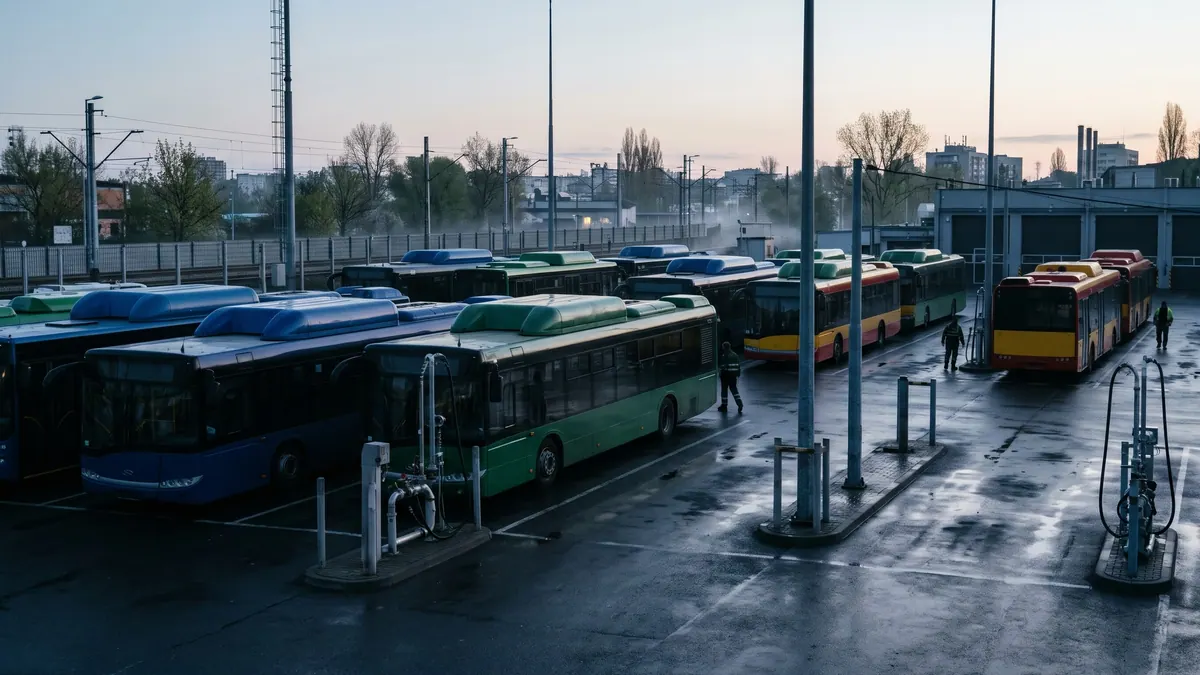
The buyers of bioCNG are mainly fleets with fixed routes: waste collection vehicles, urban buses and regional lorries. CNG stations connect to the gas grid, and gas from biomethane remains physically the same natural gas; what distinguishes it is its origin and documented emissions balance. That is why in practice record-keeping and avoiding double counting of the same batch of gas in several systems are crucial.
How bioCNG differs from bioLNG
bioCNG is biomethane compressed to high pressure and delivered to vehicles or stations; bioLNG is biomethane liquefied at low temperature, which increases energy density and allows it to power heavier long-distance transport. The choice depends on distance, fleet size and available infrastructure, and both variants are subject to the same rules on recording the origin of the gas.
Risks of the model
- Regulatory risk — RFS volumes, refinery exemptions, and changes to the LCFS methodology or tax credits directly affect the prices of the instruments.
- Price risk — the prices of RINs and credits are volatile and not guaranteed in the long term.
- Risk of methodology disputes — crediting of avoided methane from manure is the subject of criticism and regulatory change.
- Demand risk — the market depends on the number of gas vehicles and on whether electrification reduces demand for gaseous fuel.
What this means for Poland and Europe
In Poland and the EU the equivalents are the targets for the share of renewable energy in transport (RED) and guarantees of origin, but the instruments are less tradable than in the US. For countries developing a bioCNG and bioLNG market, it is important to ensure consistency between the rules for accounting biomethane injected into the grid and its consumption in transport — this is precisely the field in which the American system built its experience.
Sources
Related articles