BiohydrogenExplainer
Biomass gasification to hydrogen and bio-SNG: process stages, challenges and real TRL
Biomass gasification yields syngas, from which hydrogen can be separated or bio-SNG produced. We describe reactors, gas cleaning, yields, the GoBiGas example and technology maturity.
Other language versions: polski.
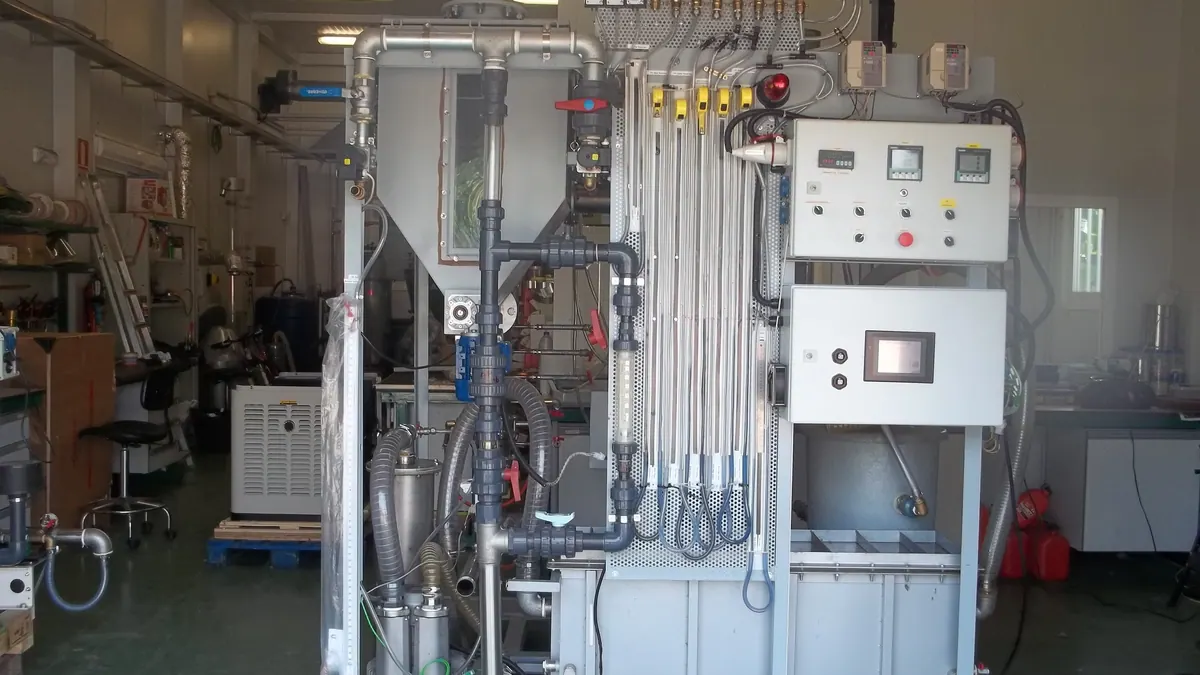

Biomass gasification is the thermochemical conversion of organic material (wood, straw, forest and agricultural residues) into syngas with a limited supply of oxidant, at a temperature usually from 700 to over 1000°C. Syngas consists mainly of CO, H₂, CO₂ and CH₄ and can be directed to the production of hydrogen (after CO shift and purification), synthetic methane (bio-SNG), liquid fuels or energy. The technology has been known for decades, but its application to hydrogen from biomass is at the demonstration stage: the main barriers are tars, ash, scale, costs and reliability.
Process stages
- Biomass preparation: drying, size reduction, briquetting or pelletising. Moisture content affects efficiency.
- Gasification: in a fixed-bed, fluidised-bed or entrained-flow reactor; the gasifying agent is air, oxygen, steam or mixtures of these.
- Gas cleaning: removal of tars, dust, alkalis, sulphur and chlorine compounds, and ammonia.
- CO shift: CO + H₂O → CO₂ + H₂ increases the share of hydrogen.
- Hydrogen separation: PSA or membranes, removal of CO₂.
- Alternatively – methanation of CO and H₂ into CH₄ (bio-SNG), i.e. synthetic biomethane.
Reactor types
| Type | Features | Application |
|---|---|---|
| Fixed bed (co-current, counter-current) | simple, small, large amounts of tar in counter-current | small scales, cogeneration |
| Fluidised bed (bubbling, circulating) | good heat transfer, fuel flexibility | medium and large scales |
| Entrained flow | very high temperature, little tar, requires finely ground fuel | large scales, prepared fuels |
Steam gasification in two-stage systems (e.g. separate combustion and gasification) gives a gas with a higher share of hydrogen and without nitrogen dilution.
Hydrogen yield
The theoretical hydrogen yield from biomass depends on the elemental composition and the conversion efficiency. The literature gives values in the order of several dozen to over a hundred grams of H₂ per kilogram of dry matter; in the example below we assume 100 g H₂/kg TS as an illustrative assumption. From 1 tonne of dry biomass this gives 100 kg of H₂, and the energy of the hydrogen (LHV 33.3 kWh/kg) is about 3.3 MWh, whereas biomass with a calorific value of 4.8 MWh/t TS contains 4.8 MWh – an energy efficiency of about 69% (under ideal conditions; in practice lower once the plant's own energy consumption is taken into account). For a plant processing 100 t TS per day, production is about 10 t of H₂ per day. The figures are assumptions.
Tars and cleaning
Tars (complex aromatic hydrocarbons) condense at lower temperatures and clog pipelines, heat exchangers and engines. They are removed by thermal or catalytic cracking, oil scrubbers or filters. This is one of the most expensive and most difficult elements of the system. In addition, alkalis and chlorine cause corrosion, and sulphur poisons catalysts in downstream stages.
Example from practice: GoBiGas
In Gothenburg (Sweden), the GoBiGas demonstration plant operated, producing bio-SNG from forest residues with a capacity in the order of 20 MW in the gas. The first stage operated in 2014–2018, after which the project was closed mainly for economic reasons (low gas price, high costs and no support mechanisms at commercial scale). The example shows that technically possible production from biomass may not be enough to achieve profitability.
Hydrogen from gasification and RED
Hydrogen obtained from biomass is subject to the rules for biomass fuels, including sustainability criteria (feedstocks, GHG reduction). If the biomass consists of residues, the carbon footprint can be low, and with CO₂ capture and storage (BECCS) – negative. For this reason gasification is considered as a CO₂ removal technology, but costs and regulations require further work.
Technological maturity
Gasification for electricity and heat production has been deployed at many scales (cogeneration). Gasification for fuels (hydrogen, SNG, liquid fuels) is at the level of demonstration and first-of-a-kind plants, and its commercial deployment depends on fuel prices, support policy and biomass availability. Hydrogen from biomass at industrial scale remains a long-term project.
Biomass and competing uses
Agricultural and forest residues have many uses: soil fertilisation, animal feed, energy generation, methane fermentation. When considering gasification, the availability of feedstock within the delivery radius and competition from other users must be assessed. Straw in Poland, too, is a limited resource because of the need to maintain soil organic matter.
Summary
Biomass gasification is a potential route to hydrogen and bio-SNG, but today it is a demonstration technology, dependent on support and scale. Compared with methane fermentation, it has higher gas cleaning requirements and greater technical risk.
Sources
Related articles