Law and regulationEvent
Romania: ANRE grants the first licence for the supply of biogas and biomethane
The Romanian regulator ANRE issued in November 2024 the first licence in its history for the supply of biogas and biomethane. Goal: 5% biomethane in gas grids by 2030.
Other language versions: polski.
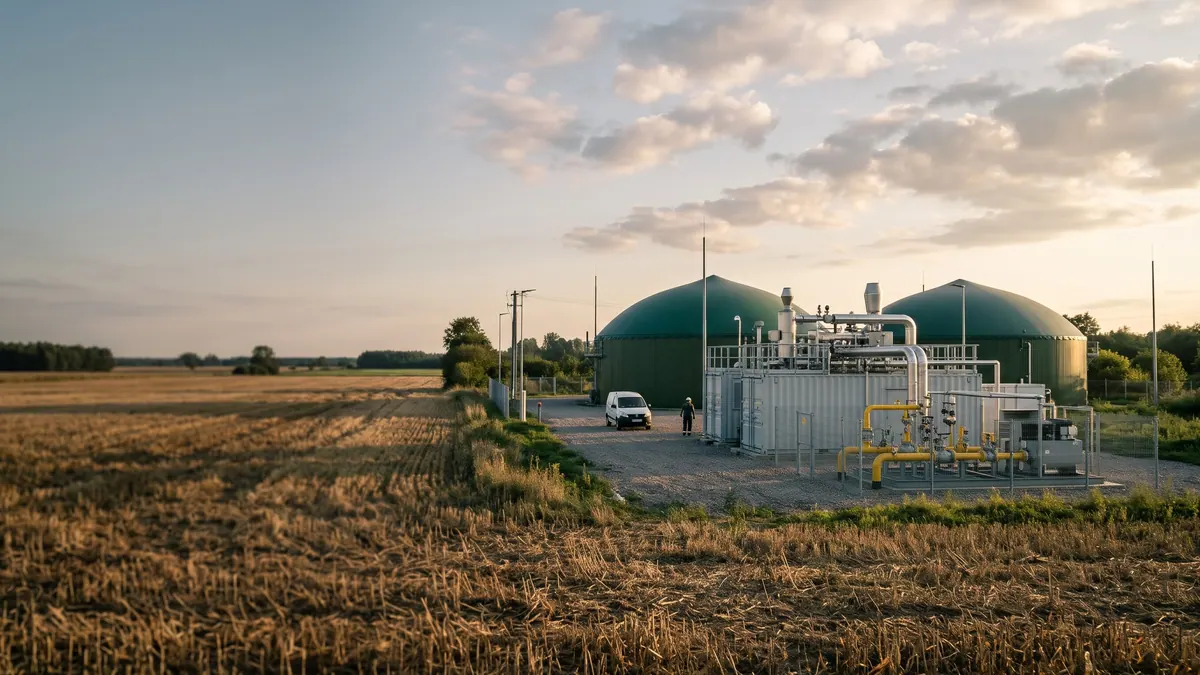
The Romanian energy regulator ANRE has granted the first licence in its history for the supply of biogas and biomethane. This was announced on 7 November 2024 by the president of the authority, George-Sergiu Niculescu, in a recording published on his social media profile. The licence was received by an undisclosed economic operator, and the decision was approved by the ANRE regulatory committee at a meeting the same week.
What the president of ANRE said
Niculescu stated that this is "in practice the first licence that ANRE grants in this field". He called the decision a historic step for green energy: according to him it diversifies the energy mix, reduces the carbon footprint and supports a circular economy. He pointed out that biomethane is produced from waste and can be supplied to both household and non-household customers.
Targets indicated by ANRE
The president of ANRE indicated two quantitative targets:
- 5% biomethane in gas grids by 2030,
- 10% by 2050.
According to the president of ANRE these targets are consistent with the existing gas infrastructure. The licence provides a legal basis for trading renewable gas, but in itself contains no price mechanism.
What this means for electricity from biogas
For producers of electricity from biogas and biomass a gas supply licence does not change the support rules. In Romania electricity from biogas and biomass is supported by the green certificate system, in which the generator receives certificates for every MWh produced, and electricity suppliers must buy a quota of certificates. The system has been closed to new participants since 1 January 2017 (it could be entered until 31 December 2016), and certificates issued after 1 January 2017 are valid until 31 December 2031 (Romania: green certificates for biogas and biomass).
The licence does, however, show the direction of change: the Romanian biogas market is shifting towards upgrading and injection into the gas grid, rather than towards electricity generation. For biogas plants that do not benefit from certificates, biomethane can be an alternative to electricity production, provided they can be connected to the gas grid.
Regulatory context
Biomethane requires several conditions: a grid connection, a system of guarantees of origin and settlement rules. The ANRE licence removes one of the formal barriers for suppliers, but does not resolve the issue of connection tariffs and gas prices. For investors this means that the first projects will be a test of the whole chain: from production through connection to sale.
Sources
Related articles