Waste and circular economyEvent
BIC and ZWE report: nearly 75% of food bio-waste in the EU is not recovered
The second edition of the report by the Bio-based Industries Consortium and Zero Waste Europe: only 26% of food waste in the EU is collected separately. Since 1 January 2024 the obligation to collect bio-waste separately has applied to all Member States.
Other language versions: polski.
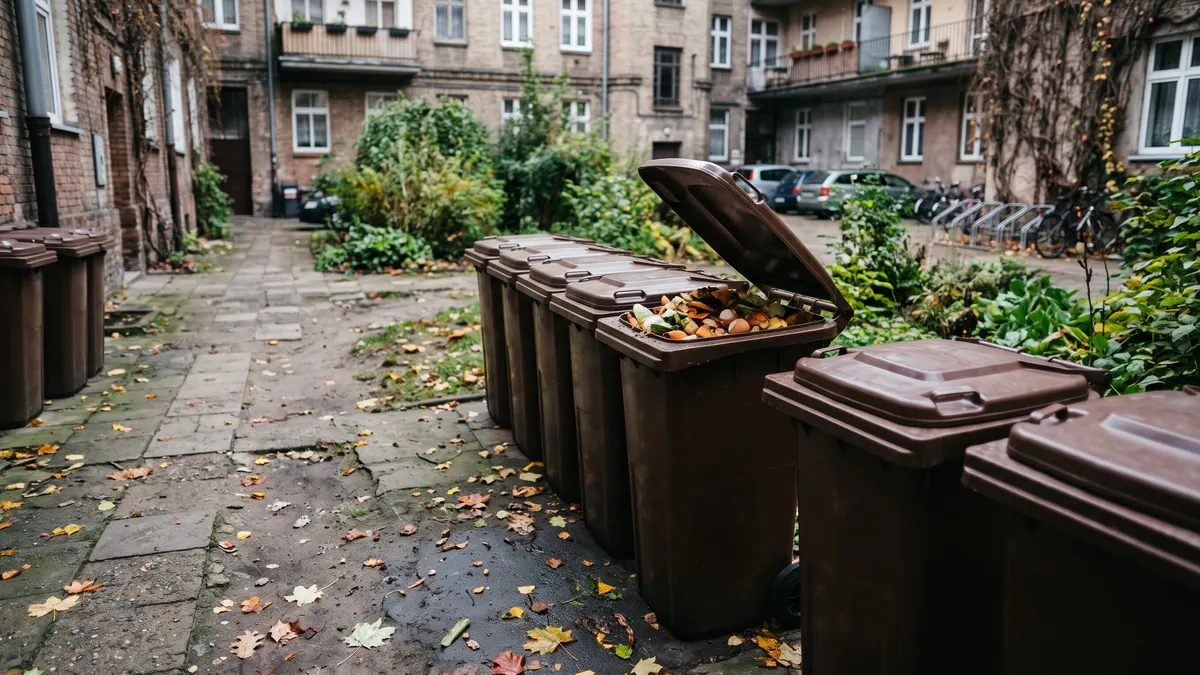
The Bio-based Industries Consortium (BIC) and the organisation Zero Waste Europe (ZWE) published the second edition of their report on bio-waste collection in the EU on 15 November 2024. The main conclusion: only about 26% of food waste is collected separately, and nearly three quarters remain "uncaptured" – ending up in mixed waste, in landfills or in incineration. For the biogas industry this is both a warning and an opportunity, because bio-waste is one of the best-described substrates for fermentation.
What the report shows
The first edition, four years ago, showed that 16% of the theoretical potential was being collected. Since then the result has improved by less than 10 percentage points. The report compiles national data in the form of country fact sheets and points out that the obligation to collect bio-waste separately came into force across the EU on 1 January 2024, but many countries have weak collection models.
The authors call for:
- binding quality targets for collected bio-waste (less contamination),
- a limit on mixed waste per inhabitant, which would encourage better separation,
- wider adoption of proven municipal practices ("door-to-door" systems, suitable bins, education),
- a greater share of bio-waste directed to biogas plants and to composting.
The report does not quantify the biogas potential of the uncaptured bio-waste, but it points out that uncollected bio-waste causes large emissions from landfills and, after proper collection, could be a feedstock for the bioeconomy and for compost.
Significance for the industry in Poland
In Poland, separate collection of bio-waste has been a municipal obligation for years, but the quality of the fraction is often poor, and there are still relatively few bio-waste fermentation plants compared with composting plants. Meanwhile, national funding programmes (the National Fund for Environmental Protection and Water Management, NFOŚiGW) identify bio-waste as a priority feedstock for both cogeneration and biomethane. The findings of the BIC and ZWE report are therefore directly useful: making effective use of the programmes requires first improving collection and fraction quality, because a plant without secure supplies "on paper" becomes a risky investment.
For operators of existing plants, contaminants – plastic, glass, metal – are important: they reduce biogas yield, increase unpacking costs and worsen the quality of the digestate. The Packaging and Packaging Waste Regulation (PPWR) and the revision of the Waste Framework Directive are expected to improve this situation indirectly.
What next
The report points to the direction of legislative change: binding quality targets and a reduction of mixed waste per inhabitant. The revision of the Waste Framework Directive is under way, but it is not known whether it will bring such solutions. For municipalities, national fee systems and bio-waste quality controls will be key. Plant operators should already be writing quality requirements and procedures for handling contaminated batches into their contracts.
Sources
Related articles