Waste and circular economyEvent
Commission proposes food waste reduction targets: –10% in processing and –30% in retail and households
On 5 July 2023 the European Commission proposed binding food waste reduction targets for 2030 and extended producer responsibility in the textiles sector. The change will affect the food waste stream.
Other language versions: polski.
On 5 July 2023 the European Commission proposed a targeted revision of the Waste Framework Directive. The proposal sets binding food waste reduction targets for 2030 compared with 2020: a 10% reduction in food processing and manufacturing and a 30% reduction per capita in retail, restaurants, food services and households. The second part of the package concerns textiles: the introduction of extended producer responsibility. For the biowaste and biogas sector the change matters in two ways – it reduces the quantity of feedstock, but raises its quality and value.
What is changing
The waste hierarchy puts prevention first. The Commission concluded that voluntary action is not enough: it is estimated that tens of millions of tonnes of food are wasted in the EU every year. Member States would have to monitor waste using a uniform methodology, introduce national prevention programmes and report on progress. The targets are binding at the level of countries, not of individual companies. Agriculture at the level of primary production is treated separately in the proposal.
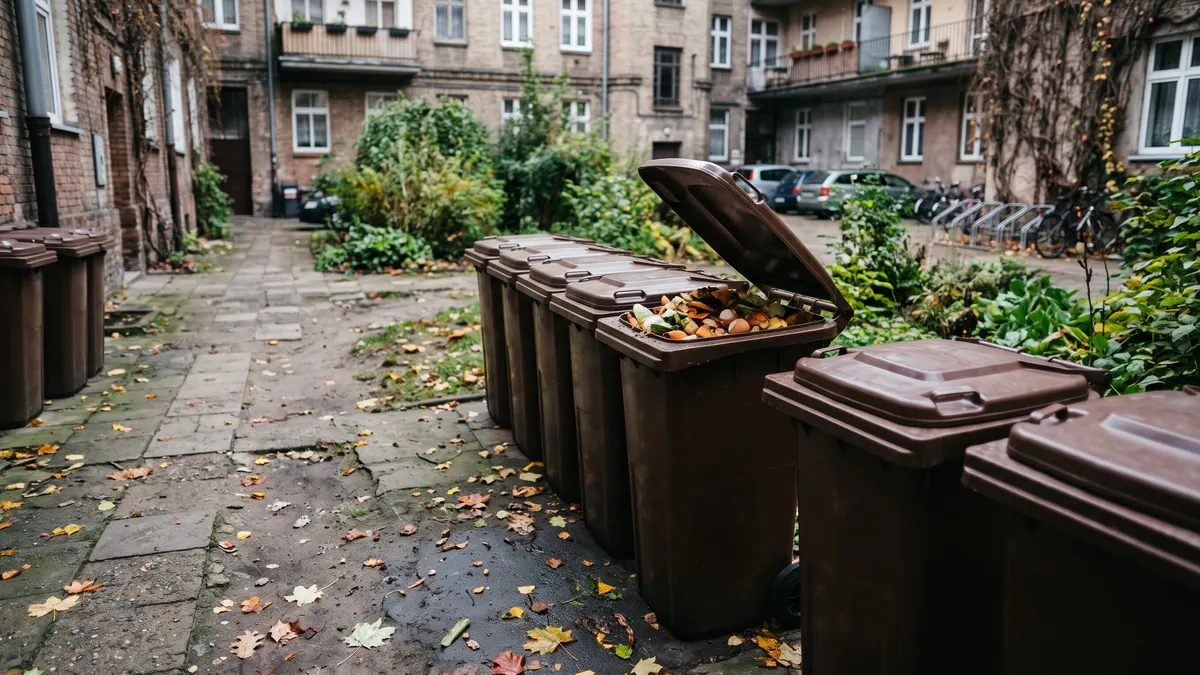
Food waste that cannot be avoided will still need to be managed. According to the hierarchy, it is directed first to reuse (for example food donation), then to animal feed, and then to biological treatment: composting or anaerobic digestion.
Significance for the industry in Poland
Polish waste-based biogas plants and installations processing biowaste take feedstock from the food industry, catering, retail and the separate collection of kitchen waste. If processing plants and shops reduce waste, part of the stream will disappear, but the remainder will be better labelled and more predictable. It is important for operators to take into account in their feedstock supply contracts declines in quantity over the longer term, and flexible terms.
From the point of view of climate policy, food waste prevention has the greatest effect: no waste is generated, so there is no need to process it. Biogas from biowaste is a second-order solution, but still important for unavoidable waste, such as kitchen scraps, shells, peelings and production residues.
What to pay attention to
Installation operators should follow the draft national waste prevention programmes and reporting requirements. It is worth building relationships with retail chains and processors, who will look for ways to dispose lawfully of leftovers, and taking care to keep streams separate, because the cleanliness of the waste determines the quality of the digestate.
Impact on feedstock management
For waste-based biogas plants, the distinction between waste that can be prevented and waste that is unavoidable matters. The former will disappear from the stream, the latter – such as scraps from meal preparation or production waste – will remain. Installations should therefore plan to diversify their feedstocks and not base their business model on a single supplier.
What next
The proposal goes to the European Parliament and the Council. Setting the final levels of the targets, the baselines and the definitions of food waste will be key. For Poland, where the system for the separate collection of biowaste is only now being consolidated, the rules on supporting processing infrastructure will be important.
Sources
Related articles