BiohydrogenExplainer
Biohythane: two-stage fermentation yielding hydrogen and methane from a single substrate
In a two-stage system, dark fermentation yields hydrogen, and the second stage converts acids into methane. We explain the principle, the composition of biohythane, the energy benefits and the limits to deployment.
Other language versions: polski.
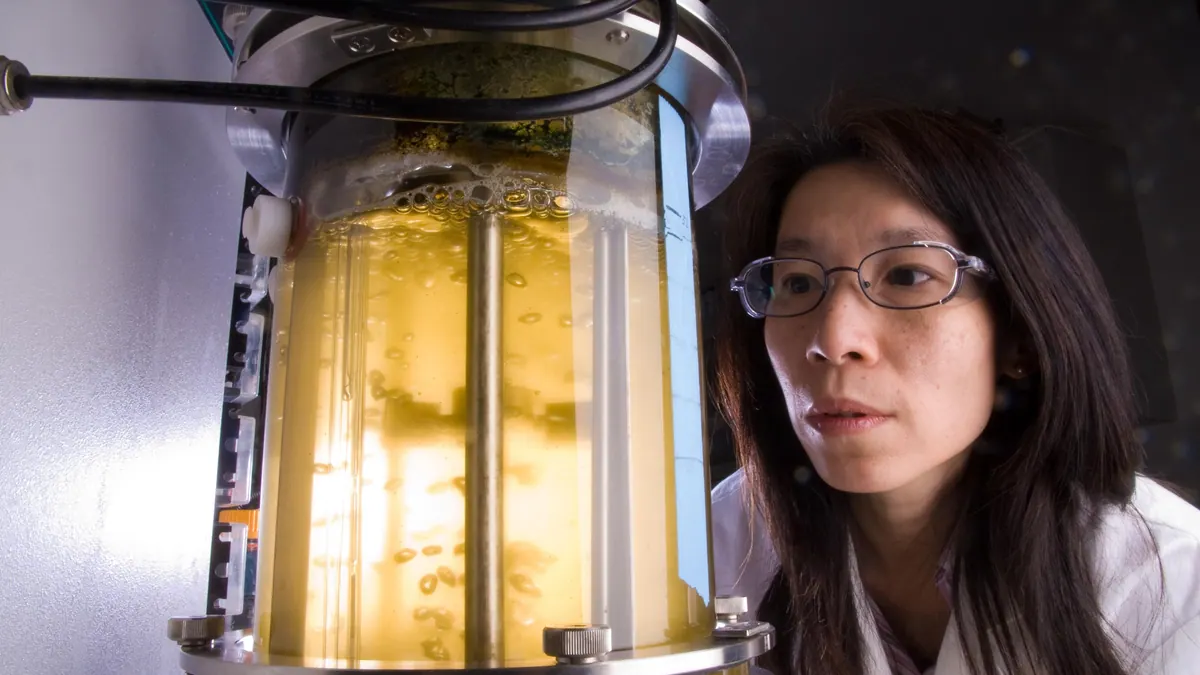

Biohythane is a mixture of gases from two-stage fermentation, containing both hydrogen and methane. In the first reactor, maintained at a low pH (usually about 5–6.5) and a short retention time, bacteria produce hydrogen, CO₂ and organic acids; in the second reactor, methanogenic archaea convert the acids into methane. Total energy recovery from the substrate can be higher than in single-stage fermentation, and gas with a higher hydrogen content has favourable combustion properties. In practice the system remains at the research and pilot stage, with difficulty in finding a market for gas of variable composition.
Why two stages
In conventional methane fermentation, hydrolysis, acidogenesis and methanogenesis take place in a single digester, which requires a compromise of conditions (pH around neutral, temperature). Separating the stages makes it possible to maintain optimal parameters for each group of microorganisms:
- stage 1: pH 5–6.5, retention time from several to several dozen hours, acidogenic and hydrogen-producing cultures;
- stage 2: pH 7–8, retention time of days to weeks, methanogenic cultures.
As a result, the first stage can accelerate the breakdown of readily available substrates, and the second stage uses the acids from the first, which improves process stability (lower risk of acidification).
Gas composition
Gas from the first stage usually contains 30–60% H₂ in a mixture with CO₂; gas from the second stage is typical biogas with 55–65% CH₄. Mixing these streams or using them separately gives biohythane with a hydrogen content depending on the proportions. In the literature on "hythane", the term refers to mixtures of over a dozen to twenty percent hydrogen in methane, used in engines to reduce emissions; in the case of biohythane the hydrogen content is often lower and variable.
Energy balance (example)
Assumptions: 1 t of fruit and vegetable waste containing 100 kg of organic dry matter (VS) and a BMP of 400 NmL CH₄/g VS in single-stage fermentation gives 40 m³ CH₄ (400 mL/g × 100,000 g = 40,000 L). Energy: 40 × 9.97 ≈ 399 kWh. In a two-stage system, part of the VS (e.g. 30%) goes to hydrogen and acids; let us assume a hydrogen yield of 1.5 mol per mol of hexose for the sugar fraction (let us assume that 30 kg of VS is sugars): 30,000 g / 180 g/mol ≈ 167 mol of hexose → 250 mol of H₂ ≈ 5.6 m³ H₂ ≈ 16.8 kWh. Methane from the second stage will use the remaining acids and the rest of the substrate, so the total energy depends on the balancing. In the literature, results for two-stage systems indicate energy recovery higher by several to a dozen or so percent than in single-stage ones, but much depends on the substrate. The example illustrates the scale, not a forecast.
Advantages
- Higher energy recovery for readily available substrates (food waste, whey).
- Better control of volatile acids, lower risk of overloading.
- The possibility of separating hydrogen as a product or fuel additive.
- A shorter fermentation time in the second stage in some systems.
Limitations
- Two reactors increase CAPEX and complexity.
- The first stage is sensitive to contamination by methanogens and hydrogen-consuming bacteria.
- Hydrogen is diluted with CO₂, so separating it requires additional steps.
- The market for biohythane is niche; in practice the gas is often burned in a CHP or upgraded together with biogas.
- The lack of commercial installations makes it difficult to assess costs.
Applications
In research and pilot installations, biohythane has been used to power engines and buses in demonstration programmes. In a typical biomethane plant, a two-stage system can be considered for substrates with a high content of readily degradable sugars, but it must first be verified whether the energy gain covers the additional costs.
How to evaluate a pilot
A pilot of two-stage fermentation should last long enough (months), cover real, variable substrates and measure not only the hydrogen yield but also the total energy yield, pH stability, own energy consumption and gas purification costs. Good practice is a comparison with a parallel single-stage system on the same substrate. Only such a comparison makes it possible to assess whether the additional reactor pays off, and to avoid conclusions based on short tests under laboratory conditions.
Summary
Biohythane is an interesting idea for improving energy utilisation and process stability, but it remains a research technology. In commercial projects it should be treated as an option to be tested in a pilot, not as a ready solution.
Sources
Related articles