BiohydrogenExplainer
Photofermentation: hydrogen from light and purple bacteria – state of research
Purple bacteria produce H₂ from organic acids in the light, using nitrogenase. We explain the mechanism, conditions, hybrid systems with dark fermentation and the real barriers to scaling up.
Other language versions: polski.
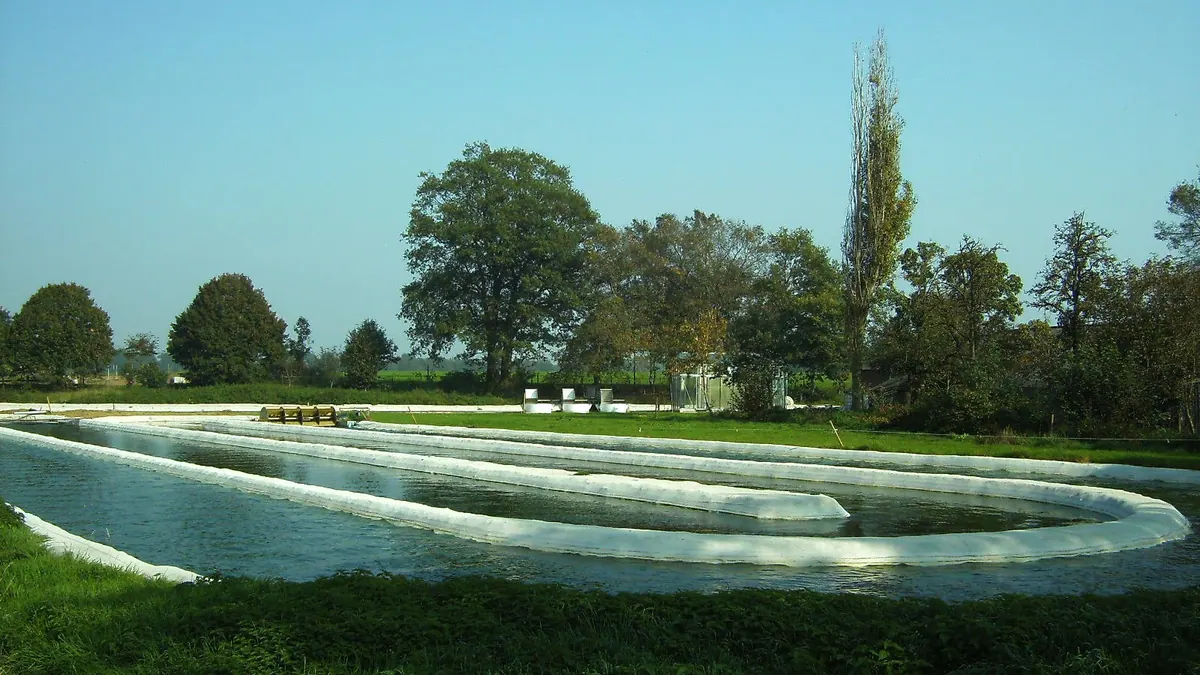

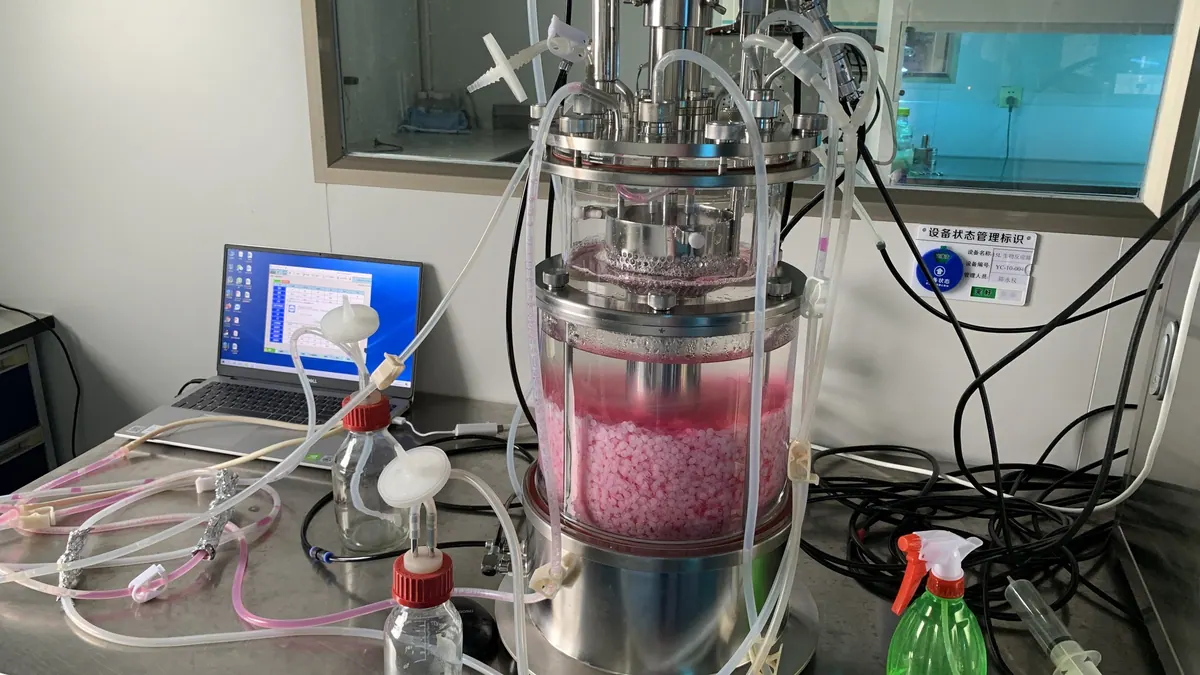
Photofermentation is a process in which purple non-sulphur bacteria (including Rhodobacter sphaeroides and Rhodopseudomonas palustris) convert organic acids into hydrogen using the energy of light. H₂ production is carried out by the enzyme nitrogenase, which, in the absence of molecular nitrogen, reduces protons to hydrogen at the expense of ATP. In theory acetate can be completely converted to H₂ and CO₂, but in practice the efficiency is limited and the reactors require large illuminated areas. The technology therefore remains at the laboratory and pilot stage.
Mechanism
Phototrophic bacteria absorb light with bacteriochlorophyll and build a proton gradient from which ATP is generated. Nitrogenase uses ATP and electrons from the oxidation of the substrate (organic acids) to reduce protons to hydrogen. For acetate the balance looks, in simplified form, like this: CH₃COOH + 2H₂O → 4H₂ + 2CO₂ (with a sufficient supply of light). In nature nitrogenase serves to fix nitrogen and hydrogen is a by-product; in the absence of N₂ and at a low ammonia content the whole stream of electrons is directed to H₂.
Process conditions
- Light: a source with a suitable spectrum is required (near infrared and visible light); in reactors sunlight or LED lamps are used.
- No oxygen: nitrogenase is inactivated by oxygen.
- Low ammonia level: NH₄⁺ inhibits the enzyme, so the substrate must have a high C:N ratio.
- Temperature: usually 30–35°C.
- Substrate: organic acids (acetate, butyrate, lactate); a combination with dark fermentation favours this.
Hybrid system
Dark fermentation produces H₂ and organic acids, which are precisely the substrate for purple bacteria. Coupling the two stages theoretically makes it possible to extract from sugar close to the maximum of 12 moles of H₂ per mole of glucose (4 in the first stage and 8 in the second). In practice much less is obtained, because the cultures are sensitive and the effluent from the first stage contains inhibitors (ammonia, excess salts, phenolic compounds).
Barriers
- Illumination. Light must reach the whole volume, and the density of bacteria quickly reduces penetration. Reactors must have a large surface area relative to volume (shallow panels, tubes), which raises costs.
- Light conversion efficiency. In the literature the efficiency of light use at laboratory scale usually lies within a few per cent; further losses result from changes in light intensity during the day and the year.
- Variability and inhibition. Excess ammonia or oxygen stops production.
- Culture contamination. Continuous operation under non-sterile conditions favours foreign microorganisms.
- Cost. Area, artificial light or large amounts of space, monitoring and control equipment.
Worked example
Assumptions: we want to produce 100 kg of H₂ per day (≈ 3.3 MWh of LHV energy). Assuming the bioreactor achieves a flux of 5 mmol H₂ per litre per hour (an illustrative value for good laboratory results) and works 10 hours a day with sufficient illumination: 1 l yields 50 mmol H₂ ≈ 0.1 g. Required volume: 100,000 g / 0.1 g/l = 1,000,000 l = 1000 m³. Such a volume of illuminated reactor with a layer depth of, say, 5 cm would require an area of 20,000 m² (2 ha) – and for a rather modest production of 100 kg H₂ per day. This calculation shows the scale of the difficulty; it is not a forecast.
Technological maturity
Photofermentation is the subject of scientific research, including pilot projects in various countries, but it does not operate on a commercial scale. Most assessments treat it as a technology with a low readiness level (laboratories, pilots). To use it for producing hydrogen from waste, progress would be needed in reactor design, culture stability and integration with other processes.
Where it may be applied
In biorefineries that produce hydrogen, biomethane and other products from a single waste stream, and also as a stage in treating sewage rich in organic acids. In Polish conditions the seasonality of insolation limits the use of sunlight, so artificial lighting is considered, which consumes energy and lowers the balance.
What to look for in scientific reports
When reading publications, check the reactor scale (millilitres, litres, cubic metres), the light intensity, the type of substrate (pure acetate or real waste) and the duration of the experiment. High yields given in mmol/l/h for pure cultures and short runs do not translate directly into continuous operation with waste. Caution is all the more important because in press releases laboratory results are sometimes presented as ready commercial solutions.
Summary
Photofermentation brings to the discussion of biohydrogen the idea of fuller use of waste, but scaling it up is difficult. It is worth following the research, without assuming, however, that the technology will reach the market in the coming years.
Sources
Related articles