BiomethaneExplainer
Measuring the quality and quantity of biomethane at injection: chromatograph, gas meter, propane
Biomethane is settled on the basis of energy: a gas meter measures the volume and a chromatograph the calorific value. We describe the metering system, propane for calorific correction and quality supervision.
Other language versions: polski.
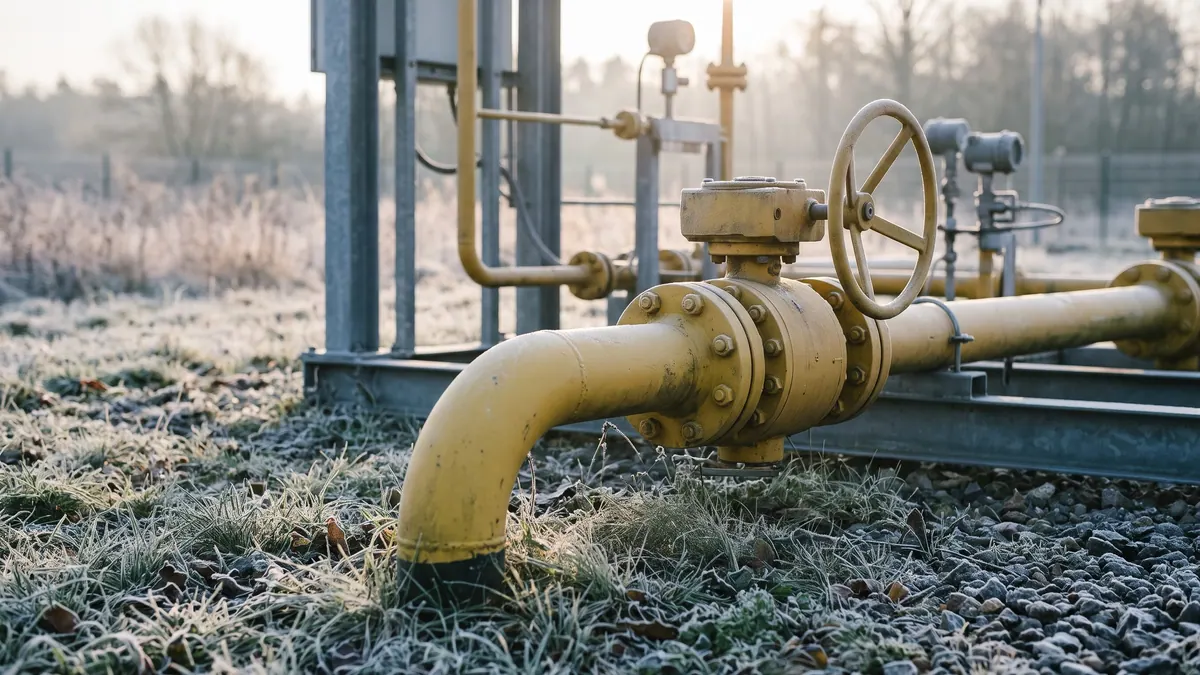
Biomethane injected into the grid is settled in units of energy, so two quantities are measured at the station: the volume of the gas (a gas meter with a corrector) and its calorific value or gross calorific value (a gas chromatograph). The product of the two gives the quantity of energy for which the producer is paid or which is recorded for the purposes of the guarantees of origin system. In addition there are measurements of parameters that protect the grid: the dew point of water and hydrocarbons, oxygen, H₂S and other components, depending on the operator's requirements.
Volume measurement
The most commonly used gas meters are:
| Type | Characteristics |
|---|---|
| Turbine | good for higher flows, requires straight sections and filtration |
| Rotary | accurate at lower flows and low pressures |
| Ultrasonic | no moving parts, wide range, popular in new stations |
| Mass (Coriolis) | mass measurement, independent of pressure and temperature; used, among others, for bioCNG/bioLNG |
The measured operating volume is converted by a volume corrector to normal conditions (the reference temperature and pressure adopted in the agreement or in the regulations). Measuring instruments are subject to metrological control to the extent required by law, and they are calibrated periodically.
Quality measurement: the chromatograph
A gas chromatograph separates the components of the gas (CH₄, CO₂, N₂, O₂, higher hydrocarbons and, if necessary, H₂) and on that basis calculates the gross calorific value (GCV), the calorific value, the Wobbe index and the relative density. It works cyclically (a cycle of the order of a few minutes), so the results are averaged periodically. For settlement the gross calorific value is most often used, in Poland in accordance with the rules adopted by the operators.
The chromatograph requires calibration gas, regular calibrations, protection against contamination and redundancy or a substitute procedure when it fails.
Physical parameters
- Water dew point – condensate in the grid is dangerous, so a dew point analyser checks that there is not too much water.
- Hydrocarbon dew point – important when enriching with propane.
- Oxygen – an oxygen analyser, because oxygen in the grid can cause corrosion and a hazard in gas storage facilities.
- H₂S and sulphur – continuous measurement of H₂S or periodic tests of total sulphur.
Adding propane (LPG)
Biomethane with a gross calorific value lower than that required by the operator (e.g. because of residual CO₂ or N₂) can be enriched with propane so that its Wobbe index and gross calorific value fall within the grid's range. The solution is standard in some countries, but it raises costs (purchase of LPG) and introduces a fossil component into the biomethane, which may affect the accounting of green gas status: the energy from the added propane is not renewable energy unless the propane is also renewable. For this reason only the energy of the biomethane is settled, and the propane is separated out in the balance. The design should be agreed with the operator and the certifier.
Example: calorific correction
Assumptions: biomethane with a gross calorific value of 10.9 kWh/m³ (slightly below the required 11.0 kWh/m³), flow 400 m³/h. Adding propane with a gross calorific value of about 28 kWh/m³ in a quantity of x m³/h raises the gross calorific value of the mixture: (400 × 10.9 + x × 28)/(400 + x) = 11.0. Solution: 4360 + 28x = 4400 + 11x → 17x = 40 → x ≈ 2.4 m³/h of propane, i.e. about 0.6% of the volume. The quantity is small, but costly and requires separate measurement; propane makes up about 0.6% of the volume, and about 1.5% of the energy (2.4 × 28 = 67 kWh out of 4427 kWh).
Ensuring data quality
- Calibrations and checks of the chromatograph in accordance with the plan.
- Redundancy of key measurements (e.g. two oxygen analysers).
- Data recording and immutable measurement logs.
- Procedures for a measurement failure (interrupting injection or substitute settlement).
- An audit of the system by the operator and, if the certification scheme requires it, by the certification body.
What about guarantees of origin
The data from the gas meter and the chromatograph are the basis for issuing guarantees of origin (the quantity of energy from biomethane). Their reliability therefore matters not only for settlement but also for the commercial value of the gas as a green product.
Measurement uncertainty and revenue
An error in measuring volume or gross calorific value translates directly into revenue. With a production of 4 million m³ of biomethane a year, underestimating the gross calorific value by 0.5% means a loss of about 20 thousand m³ of energy equivalent, i.e. about 220 MWh. When assessing offers it is therefore worth comparing the accuracy classes of the instruments and the costs of calibrating them. Good practice also includes a periodic comparison of the readings with an independent laboratory test.
Summary
A good metering system is not an add-on but the foundation of settlement and grid safety. When designing the station, plan the metrological requirements, redundancy of key analysers and emergency procedures already at the stage of agreements with the operator.
Sources
Related articles