BiomethaneExplainer
EN 16723: quality requirements for biomethane for the gas grid and transport
The EN 16723 standard specifies biomethane: part 1 for grid injection, part 2 as a fuel. We explain the scope, parameters and the relationship to gas quality standards and grid operator requirements.
Other language versions: polski.
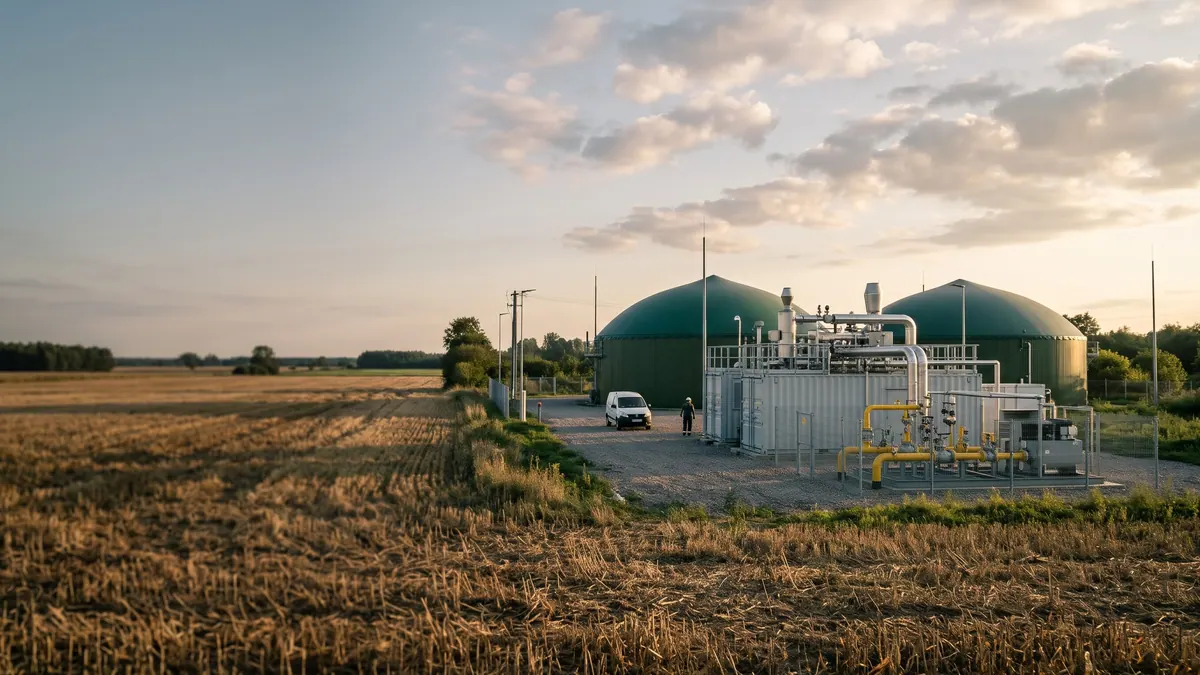
EN 16723 is a European standard specifying quality requirements for biomethane. Part 1 (EN 16723-1) concerns biomethane injected into the natural gas grid, and part 2 (EN 16723-2) – gas used as a vehicle fuel (CNG and LNG). The standard sets permissible concentrations of impurities and parameters for measurement, but it does not replace the requirements of the grid operator or national regulations. It is the basis for discussions with the technology supplier and the system operator.
Why it was created
As long as each country had its own regulations, biomethane producers had to adapt the gas to different specifications, and equipment suppliers to different ranges. The standard, developed within a CEN committee (work on the part concerning gas from biomass was carried out by CEN/TC 408), introduces a common framework for injection and for vehicle fuels. It applies alongside the standard for the quality of transmitted gas EN 16726 for group H, which sets, among other things, the Wobbe number and other parameters of high-methane gas.
What it regulates
The standard covers both parameters shared with natural gas (e.g. calorific value, Wobbe number, water and hydrocarbon dew point) and parameters specific to biomethane:
| Area | Example parameters |
|---|---|
| Sulphur compounds | H₂S (together with COS) at the level of single mg/m³; total sulphur; mercaptans |
| Inert gas and oxygen components | oxygen, hydrogen, CO₂, nitrogen – with limits depending on the application |
| Organic compounds | hydrocarbons, siloxane content in the part concerning fuels |
| Contaminants | ammonia, halogens, amines, solid particles, oil |
| Physical parameters | water and hydrocarbon dew point, pressure |
The exact limit values should be read from the current version of the standard and from the operator's requirements; in the text we give only orders of magnitude, so as not to mislead.
Biomethane for the grid and biomethane for vehicles
Part 1 refers to the situation in which gas is introduced into a transmission or distribution grid and must work with various customers. Part 2 concerns fuel for gas engines, where the methane number and the content of siloxanes, oxygen and moisture are important, as they affect the operation and durability of engines. Gas meeting part 2 is usually cleaned more thoroughly than gas for the grid.
Relationship to operator requirements
The distribution system operator, guided by the safety and parameters of its grid, may require additional conditions: specific measurement points, testing frequency, limits for oxygen or hydrogen, procedures for cutting off non-compliant gas. These conditions are written in the grid code (instrukcja ruchu i eksploatacji sieci dystrybucyjnej, IRiESD) and in the connection agreement and the distribution agreement. In Poland, national standards on gas quality and regulations on the quality of gaseous fuels apply in parallel; their scope should be verified with the operator before submitting an application.
How to demonstrate compliance
- Continuous measurement of key parameters (composition by chromatograph, dew point, and where needed oxygen and H₂S).
- Periodic laboratory tests (siloxanes, amines, trace impurities, sulphur compounds).
- A shut-off system – a valve that automatically closes injection when parameters fall outside the permissible range, and the gas returns to upgrading or goes to the flare.
- Documentation – reports and test records, instrument calibrations.
Example: oxygen from desulphurisation with air
If desulphurisation in the digester introduces, for example, 1% of air into the biogas, approx. 0.2% of oxygen and approx. 0.8% of nitrogen appear in the biogas (air is approx. 21% O₂ and 78% N₂). Membranes remove oxygen partially, but nitrogen practically remains in the biomethane, which lowers the Wobbe number and the calorific value. With a large dosing of air it is therefore easy to exceed the limits for nitrogen or oxygen. This is a practical reason to agree permissible values with the operator already at the design stage.
What next
The quality requirements for biomethane will evolve with the growing share of green gases, synthetic gases and hydrogen in the grid. The EN 16723 standard is regularly reviewed, and the availability of its current version can be checked with the Polish Committee for Standardization (Polski Komitet Normalizacyjny, PKN) or with CEN.
Where to look for current values
The text of the standard is available for a fee from national standardisation bodies; in Poland this is the Polish Committee for Standardization (PKN) (European standards are introduced as PN-EN). Before submitting a connection application, ask the operator to indicate the applicable quality specification and test methods, because in practice it is the document that decides. It is also worth checking whether planned changes to the standard or to national regulations (e.g. the permissible hydrogen content in the grid) will affect the parameters of the station in the coming years.
Summary
EN 16723 is a common language for producers, technology suppliers and operators. Before you order an installation, agree with the operator the list of parameters, measurement methods and cut-off procedures, and in the contract with the supplier record guarantees in line with the standard.
Sources
Related articles