BiomethaneExplainer
Biomethane: what it is and how it differs from biogas and natural gas
Biomethane is biogas cleaned of CO₂ and impurities to natural-gas quality (usually over 95% CH₄). We explain the differences, the parameters and the routes to use.
Other language versions: polski.
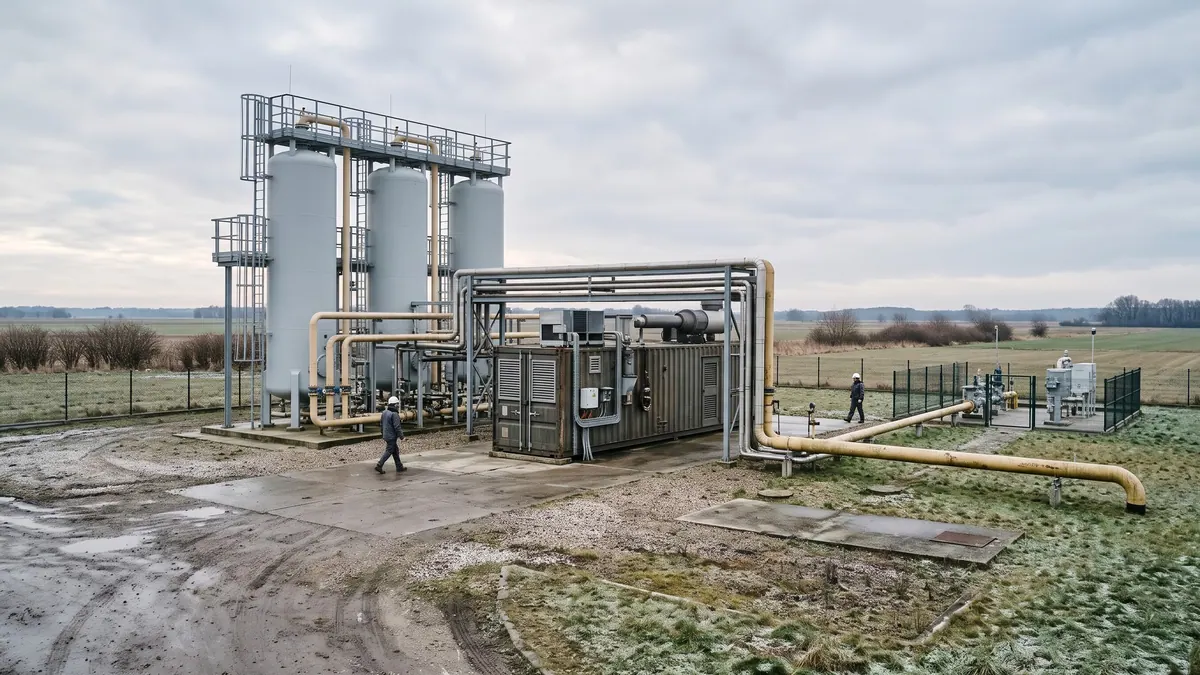
Biomethane is biogas cleaned of carbon dioxide and impurities so that its composition and combustion parameters correspond to natural gas. It usually contains over 95% methane (CH₄) and can be injected into the gas grid, compressed as bioCNG, liquefied to bioLNG, or used locally. What distinguishes it from raw biogas is above all the methane concentration and the absence of impurities; from natural gas, only its origin.
Biogas, biomethane and natural gas: composition
Biogas is formed in a digester, where a mixture of bacteria decomposes organic matter in the absence of oxygen. Its main components are methane and carbon dioxide, plus water vapour and trace amounts of hydrogen sulphide (H₂S), ammonia (NH₃), nitrogen, oxygen and — depending on the substrates — siloxanes. The table below shows typical orders of magnitude; specific values depend on the substrates and process conditions.
| Parameter | Raw biogas | Biomethane | Natural gas (grid) |
|---|---|---|---|
| CH₄ | approx. 50–65% | usually >95% | usually >90%, often 95–98% |
| CO₂ | approx. 35–50% | a few % or less | approx. 0–3% |
| H₂S | from several dozen to several thousand ppm | practically none (below standard limits) | trace |
| Calorific value | approx. 5–6.5 kWh/m³ | approx. 9.5–10 kWh/m³ | approx. 9–10 kWh/m³ |
| Use | CHP engine, boiler | grid, transport, industry | grid, transport, industry |
The calorific value of pure methane is approx. 9.97 kWh per 1 normal m³ (lower heating value). Therefore 1 m³ of biogas containing 55% CH₄ has an energy content of approx. 5.5 kWh, i.e. roughly half of what a m³ of biomethane has.
Why upgrading is necessary
The gas grid is designed for a specific range of parameters: the Wobbe index, calorific value, water and hydrocarbon dew point, and the content of sulphur compounds, oxygen or hydrogen. Biogas with a lot of CO₂ does not fit within these limits, and it also contains corrosive components that wear out fittings. Upgrading therefore consists of several steps:
- Pre-cleaning – removal of H₂S, water, and often volatile organic compounds and siloxanes.
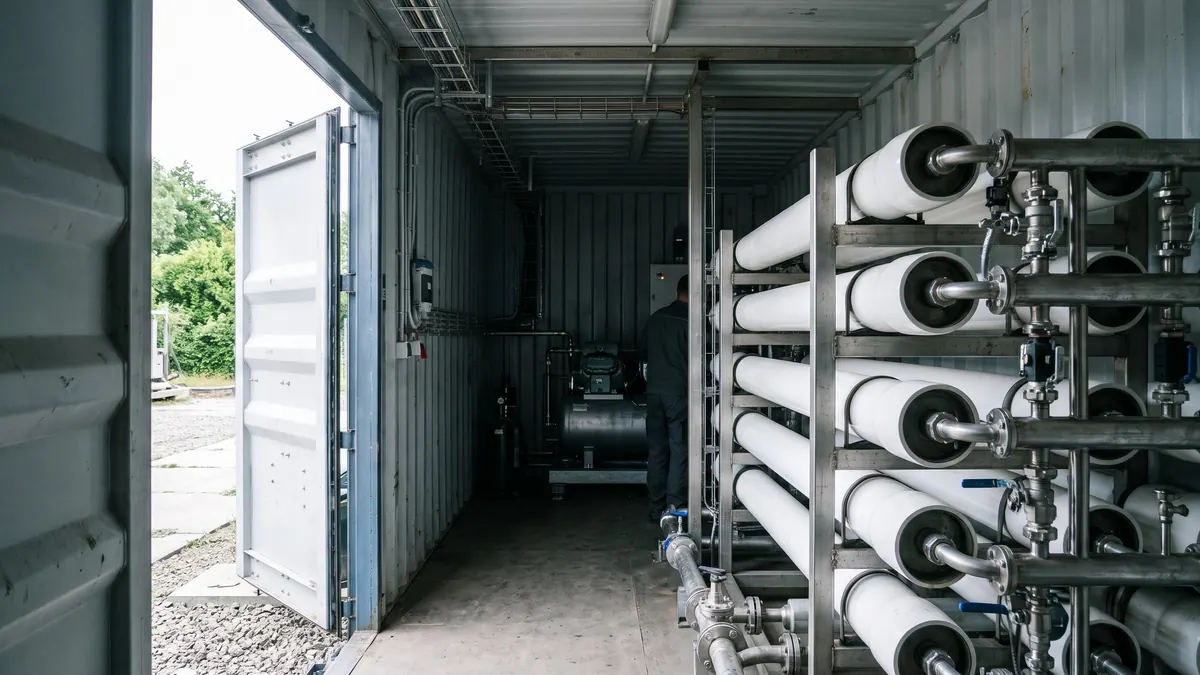
- CO₂ separation – the actual "upgrading", carried out e.g. with membranes, adsorption (PSA), absorption in water or in amines, or by the cryogenic method.
- Conditioning and compression – drying, adjusting the pressure to the grid, possible enrichment with propane, and odorisation.
- Quality and quantity measurement – without it, gas cannot be accepted into the grid or the sale settled.
We discuss each of these stages in separate articles of this series.
Biomethane and "green gas"
The word "biomethane" alone describes the composition of the gas, not its sustainability. Sustainable biomethane is one that meets the criteria of the RED II directive (Directive (EU) 2018/2001), i.e. among other things comes from permitted feedstocks and achieves the required greenhouse gas emission reduction relative to the fossil fuel. Only meeting these conditions (and confirming them with a certificate) allows biomethane to be counted towards renewable energy targets or sold at a "green" premium.
What can be done with biomethane
- Injection into the gas grid – the logistically simplest route, if a gas pipeline of adequate capacity runs nearby. The green molecules "dissolve" in the grid, and their origin is confirmed by the guarantees-of-origin system.
- Transport fuel – as bioCNG (compressed, e.g. to 200–250 bar) or bioLNG (liquefied at a temperature of about −162°C). Biomethane can power the same fleet that runs on natural gas.
- "Off-grid" supply – in cylinders or tanks to a consumer without access to the grid.
- Use as a feedstock – among others for hydrogen production by reforming, or in chemistry.
Scale in Europe
According to the European Biogas Association (EBA), hundreds of biomethane plants are already operating in Europe, and production grows from year to year. In December 2019 the market was concentrated mainly in Germany, the United Kingdom, Sweden, France, the Netherlands and Denmark. In Poland, biomethane injected into the grid was then still at the stage of analyses and first projects; numerous agricultural biogas plants with cogeneration were being built, however, which may in future be adapted to biomethane production.
The most important differences in operation
A biogas plant with a CHP engine sells electricity and heat, and its parameters are described by electrical output and efficiency. A biomethane plant sells gas, and its key indicators are throughput (m³/h of biomethane), methane losses in upgrading and own energy consumption. The measurement system also changes (a chromatograph instead of just biogas analysers), as do operation (pressure processes) and the legal environment — from licences and connection conditions to sustainability certification. For an investor this means a different revenue profile, different risks and different team competences, which is worth understanding before entering a project.
Summary
Biomethane is biogas "brought to natural-gas standard". Thanks to this it uses the existing infrastructure — pipelines, stations, engines and burners — and can replace fossil gas without changes on the consumer's side. Its climate value is determined by the feedstock, the technology (including methane losses) and the emission balance across the whole chain.
Sources
Questions and answers
Are biomethane and natural gas chemically the same?
Yes, the main component of both fuels is methane (CH₄), so after upgrading biomethane is chemically interchangeable with natural gas, and differs solely in the origin of the feedstock.
Can biomethane be blended with natural gas in the grid?
Yes, provided it meets the grid operator's quality requirements and the standards (e.g. EN 16723-1). Once injected, biomethane molecules cannot be distinguished from natural gas, so their origin is confirmed by documents.
Related articles