Law and regulationExplainer
Biomethane quality in the gas grid: the parameters in the regulation and who checks them
Biomethane injected into the grid must meet the quality parameters set out in the regulation on the functioning of the gas system, including hydrogen sulphide, oxygen, CO₂ and the Wobbe index. We explain the limits and the monitoring.
Other language versions: polski.
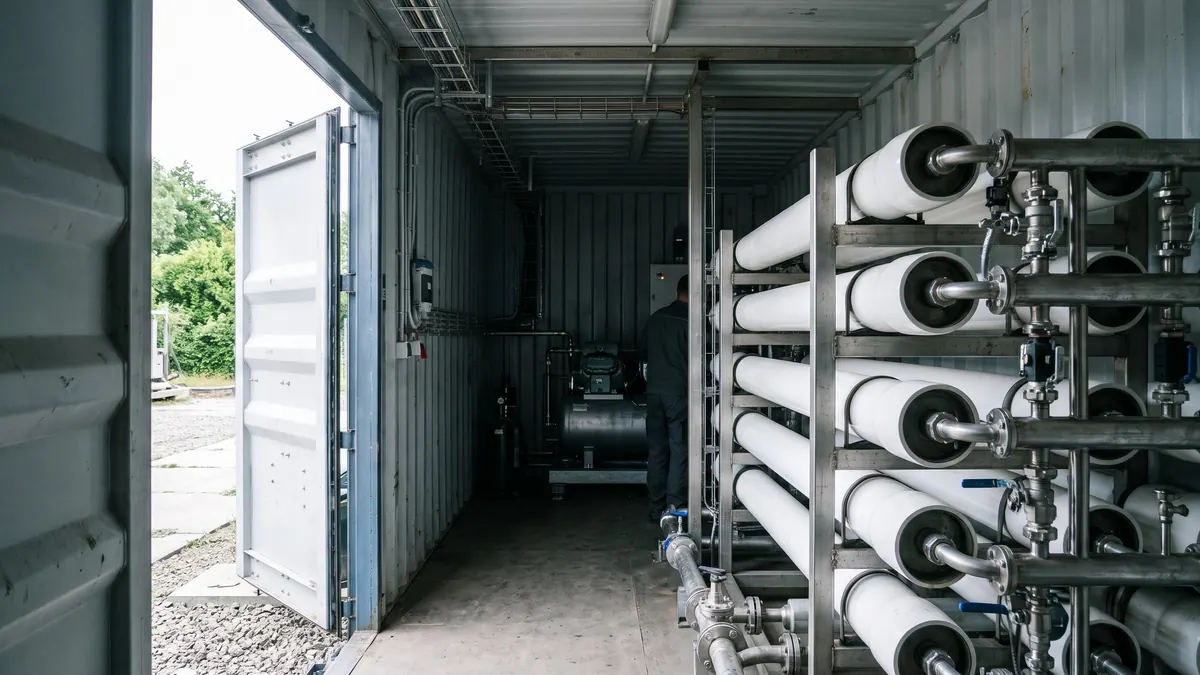
Biomethane injected into the gas grid must meet the same quality parameters as natural gas transmitted through the network. They are set out in § 38 of the Minister of Economy regulation of 2 July 2010 on the detailed conditions for the functioning of the gas system. The regulation also contains separate rules for biomethane producers: measurements at the entry point, responsibility for the parameters and the rules for suspending off-take. We describe the position as of July 2026.
Basic parameters
The values below apply to gaseous fuels transmitted through transmission and distribution networks:
| Parameter | Limit value |
|---|---|
| Hydrogen sulphide | up to 7.0 mg/m³ |
| Mercaptan sulphur | up to 16.0 mg/m³ |
| Total sulphur | up to 40.0 mg/m³ |
| Mercury vapour | up to 30.0 µg/m³ |
| Water dew point temperature (5.5 MPa) | up to +3.7 °C (1.04–30.09) and up to –5 °C (1.10–31.03) |
| Calorific value, group E gas (Wobbe 45.0–56.9 MJ/m³) | at least 34.0 MJ/m³ |
| Oxygen | up to 0.5% mol/mol; in designated cases (e.g. supplying a storage facility) up to 0.2% |
| Carbon dioxide | up to 3.0% mol/mol |
| Dust > 10 µm | up to 1.0 mg/m³ |
| Total siloxanes | up to 0.3 mg/m³ (expressed as silicon) |
| Relative density | from 0.555 to 0.700 |
| Carbon monoxide | up to 0.1% mol/mol |
| Total chlorine / fluorine | up to 1.0 mg/m³ / up to 10.0 mg/m³ |
| Ammonia | up to 2.0 mg/m³ |
Hydrogen should not be present (0.0% mol/mol), except in networks adapted to gas with a higher hydrogen content, where up to 10% is permitted. Sulphur is assessed before the gas is odorised. Exceeding the limits is permitted within the measurement error of the metering and settlement device. The reference conditions are strictly defined: combustion at 25 °C and 101.325 kPa, volume at 0 °C and 101.325 kPa.
Who checks
- The biomethane producer tests the parameters at the entry points to the transmission or distribution system: hydrogen sulphide, mercaptan and total sulphur, dew point temperature, calorific value and Wobbe index, oxygen and carbon dioxide – at least once every 30 minutes; mercury vapour – at least once a year. The remaining parameters are monitored by the operators according to a testing plan (e.g. chlorine, fluorine and ammonia at least every six months, odour intensity every two weeks).
- The system operator (transmission or distribution) monitors gas quality in the network, may refuse to accept gas with incorrect parameters unless, by providing an additional service, it obtains the required parameters, and designates the settlement areas.
- The President of the Energy Regulatory Office (URE) supervises the application of the provisions, handles complaints and may impose penalties for breaches of operators' obligations.
What happens in the event of non-compliance
When the producer's measurement shows that any parameter is not met (a negative result), the producer must carry out a second measurement without delay. A negative result of the second measurement causes the operator to suspend gas off-take. Responsibility for ensuring the parameters at the entry point lies with the entity injecting the biomethane. The regulation also requires a reverse-flow installation to be located upstream of the entry point, returning biomethane with incorrect parameters to the producer. In a distribution network carrying biomethane, the average daily calorific value in the settlement area may not differ by more than 4% from the value at any point in that area.
Biomethane transmission service
The Act on Renewable Energy Sources (ustawa o OZE), Article 118, obliges operators to provide a transmission or distribution service for biomethane that meets the quality parameters arising from the implementing provisions of the Energy Law. A breach of this obligation is subject to a financial penalty imposed by the President of URE. For the producer this means that if the parameters are met, the operator cannot refuse the service without justification.
The EN 16723-1 standard
The European standard EN 16723-1 specifies the requirements for biomethane injected into the natural gas network. It is a useful reference point when designing upgrading and selecting analysers, but because Poland sets the parameters in the regulation, it is the regulation's limits that decide whether gas is admitted. The connection conditions may additionally set detailed requirements, including for analysers and measurement frequency.
What to do first
- Obtain the connection conditions and the network code with the measurement requirements from the operator.
- Choose the upgrading technology so that the limits are met with a margin: CO₂ up to 3.0%, oxygen, hydrogen sulphide, dew point.
- Install analysers with a reading every 30 minutes and plan the calibrations.
- Agree the procedure for a negative result and cooperation with the operator's dispatch.
Technological challenges in meeting the parameters
The requirements of the regulation translate into specific decisions in the upgrading installation. Limiting carbon dioxide to 3.0% requires efficient CO₂ separation (membranes, adsorption, water or amine scrubbing), and keeping the oxygen content low requires a leak-tight system and control of air ingress, especially with biological desulphurisation using air dosing. Hydrogen sulphide is removed at the biogas cleaning stage, and siloxanes, which matter particularly in biogas from sewage sludge and landfills, are removed with activated carbon filters. The water dew point is ensured by drying. The calorific value and the Wobbe index can be adjusted by adding, for example, propane; the regulation provides for such devices in justified cases. It is worth designing the system with a margin against the limits, because exceeding a limit value in two consecutive measurements means an interruption in off-take.
This text is for information purposes only and does not constitute legal advice; before an investment or formal decision, check the current wording of the provisions and consult a lawyer or the competent authority.
Sources
Questions and answers
Is the EN 16723 standard mandatory in Poland?
The standard itself is voluntary. The legally binding requirements are the parameters in the ordinance on the functioning of the gas system and the operator's requirements set out in the connection conditions and the contract. The standard is often used as a technical reference point.
Who tests biomethane quality?
Testing at the entry point is carried out by the biomethane producer on its own equipment, while the gas system operator checks quality in the grid and may refuse to accept gas that does not meet the parameters. Supervision is exercised by the President of the Energy Regulatory Office (URE).
Related articles