Law and regulationGuide
Connecting a biomethane plant to the gas grid: conditions, costs and liability
Connecting a biomethane plant to the gas grid requires an application for conditions, meeting quality requirements and installing a metering station. We describe the stages, deadlines, costs and the division of liability.
Other language versions: polski.
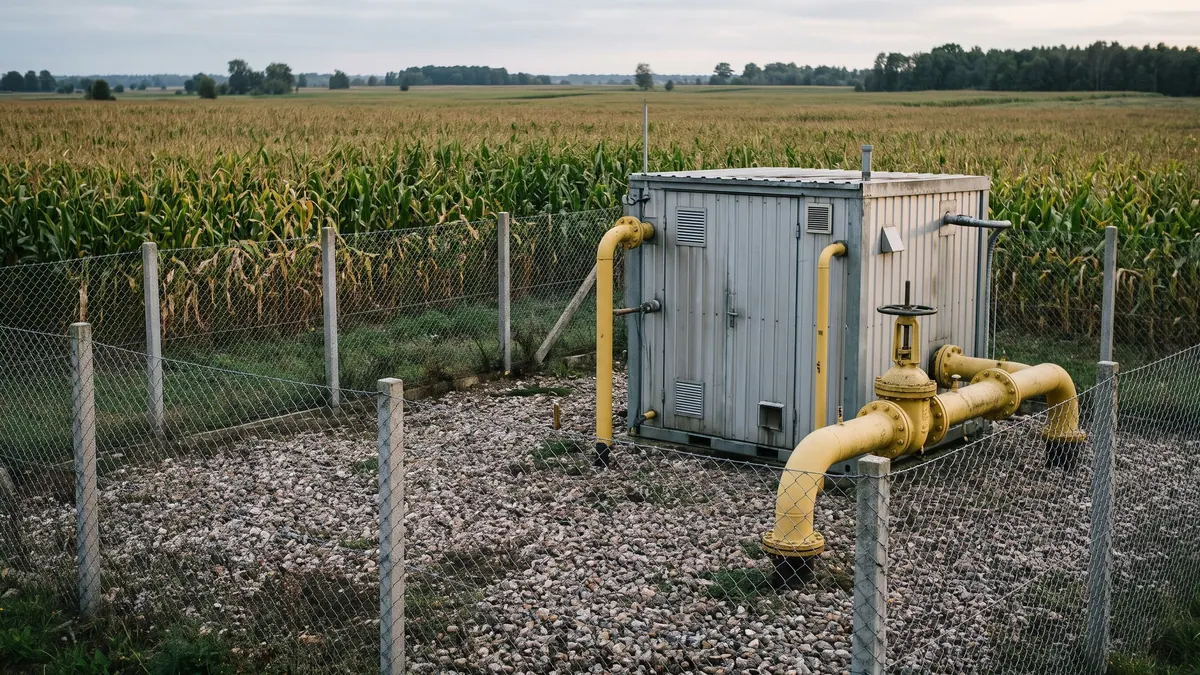
Connecting a biomethane plant to the gas grid requires submitting an application to the transmission or distribution grid operator to determine connection conditions, concluding a connection contract and installing, at your own cost, the system that feeds biomethane into the network: a compressor or station, quality testing devices, a metering and settlement system and a reverse-flow installation. The entry describes the provisions as of August 2024.
The operator's obligation and the possibility of refusal
Article 7 of the Energy Law obliges a transmission or distribution undertaking to conclude a connection contract, on the basis of equal treatment and as a priority for renewable installations, if technical and economic conditions for connection exist. Where the operator refuses to issue conditions for a biomethane production installation because such conditions do not exist at the indicated location, it must indicate the nearest alternative location if connection there meets the conditions. Every refusal requires notifying the President of URE and the applicant, stating the reasons. The Act on Renewable Energy Sources (Article 118) also imposes on operators an obligation to provide a service of transmitting or distributing biomethane that meets the quality parameters for gaseous fuels fed into the grid.
Stages of connection
- Preliminary talks with the operator – location of the entry point, pressure in the grid, off-take in the summer season (gas consumption in the distribution grid falls in summer, so the capacity to take biomethane may be limited).
- The application to determine connection conditions. The operator should within 7 days call for supplementary information if there are gaps, with a deadline of at least 21 days. A biomethane producer's application (connection group C) contains, among other things, the planned date of starting gas deliveries, the connection point, the connection capacity, expected quantities in the year of connection and the two following years, required pressures, hourly minimum and maximum, type of gas and a forecast of variability of composition. A declaration of legal title to the property is attached.
- Connection conditions. The operator has 90 days for group C, with a possible extension in particularly justified cases by the same period. The conditions set out, among other things, the point of demarcation of grid ownership and the requirements for the gas station and the metering and settlement system and telemetry.
- The connection contract – deadline for completion, charge, scope of works, schedule, capacity, liability for delays.
- Construction and acceptance, followed by a contract for the provision of distribution or transmission service.
Technical requirements for biomethane plants
The regulation on detailed conditions for the operation of the gas system contains specific requirements for installations producing biomethane:
- in justified cases, devices for adjusting the parameters of the biomethane (including raising the calorific value by adding other gases) are installed before the entry point or on the grid,
- on the distribution grid, compression is installed to enable injection into a higher-pressure grid, unless the operator indicates in the conditions that it is not required,
- before the entry point the producer installs devices for testing gas quality and a reverse-flow installation returning biomethane with incorrect parameters to the producer,
- measuring systems must meet the operator's requirements, including telemetry.
The biomethane producer carries out tests of the quality parameters at the entry point, and after a negative result must immediately carry out a second measurement; a repeated negative result means the operator halts gas off-take.
Costs
For connecting sources, a charge is levied determined on the basis of the actual outlays incurred in carrying out the connection. The reduction by half applies to renewable installations with an electrical capacity of up to 5 MW and cogeneration units below 1 MW, so it is not applied to a typical biomethane plant. To the connection costs are added expenditure on own equipment: the compressor, analysers (hydrogen sulphide, water dew point, calorific value, oxygen and others), the metering station and any gas supplementation. The exact cost depends on the distance to the grid and the pressure.
Liability
The entity feeding in biomethane is responsible for ensuring the quality parameters required by the operator at the entry point to the gas system. The operator is responsible for maintaining gas quality in the grid and may refuse to accept gas that does not meet the parameters if the producer does not ensure they are adjusted. In settlement areas with fed-in biomethane, the average calorific value over a day may not differ by more than 4% from the value at any point of the area.
What to do first
- Ask the operator about seasonal off-take capacity and the available pressure nearby.
- Prepare a production forecast (hourly, daily, annual) and of variability of composition.
- Plan the compression, analysers and the reverse-flow installation already in the process design.
- Agree with the operator the form of the contract and the method of settlement.
Guarantees of origin and settlement of biomethane
After connection the producer may apply for guarantees of origin for the biomethane. Under the Act on Renewable Energy Sources, a guarantee of origin is an electronic, transferable document which alone certifies to the final customer that a given quantity of biomethane was produced from renewable sources and fed into the gas grid. It gives rise to no property rights, and its issue does not depend on using support mechanisms. Settlement of the gas takes place on the basis of the metering and settlement system, so the accuracy of measuring quantity and calorific value matters both financially and as evidence.
Seasonality and off-take limits
A low-pressure distribution grid takes less gas in summer, so the operator may indicate in the connection conditions the need to compress into a higher-pressure grid or to limit feed-in in some periods. Before taking an investment decision, it is worth asking for an analysis of off-take capacity in the summer season and for alternative entry points to be indicated – all the more so because in case of refusal the operator must indicate the nearest possible location.
This text is for information only and does not constitute legal advice; before an investment or formal decision, check the current wording of the legislation and consult a lawyer or the relevant authority.
Sources
Questions and answers
What if the operator refuses a grid connection?
A refusal on the grounds of a lack of technical or economic conditions must be justified, and the operator must indicate to the applicant the nearest alternative location if connection there is possible. The President of the Energy Regulatory Office (URE) must also be informed of the refusal.
Who bears the cost of connecting a biomethane plant to the gas grid?
The cost of the connection depends on the rules set out in regulations and in the connection agreement, and in practice a significant part, especially the injection station and the pipeline to the connection point, is borne by the biomethane plant's investor.
Related articles