

BMP testingStraws and crop residues
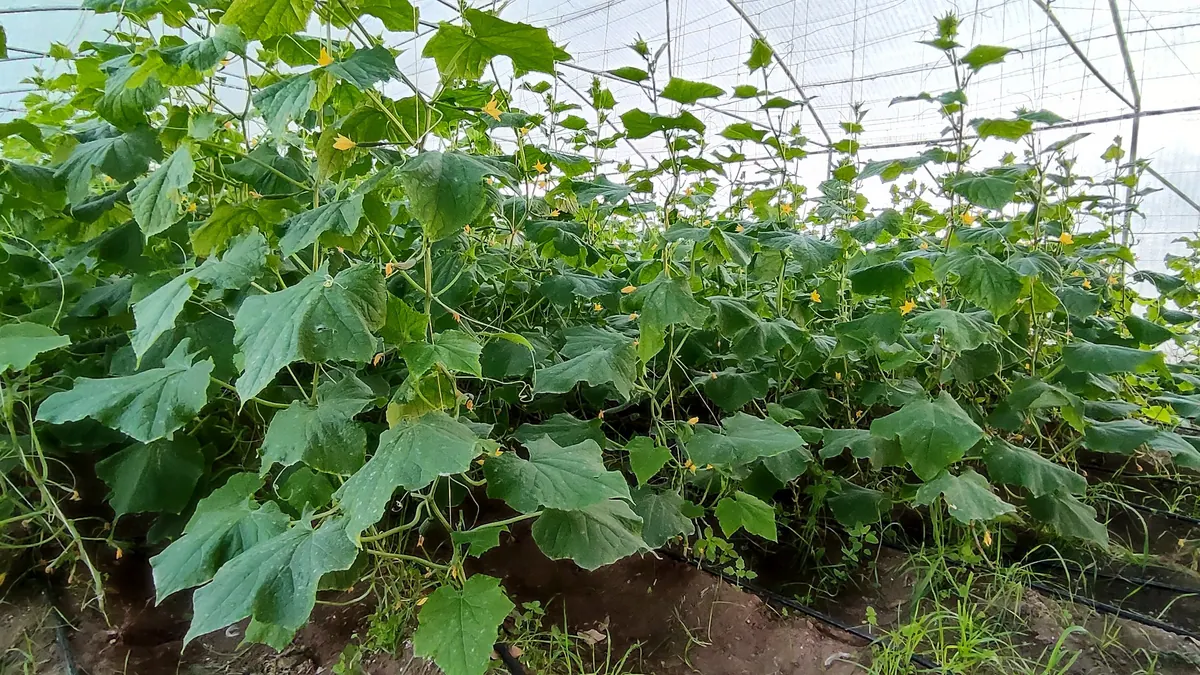
Cucumber leaves and stems — BMP: 6 studies, weighted mean 237 m³ CH₄/t VS
Cucumber leaves and stems are residues after the greenhouse and polytunnel growing season. Moist and quick to decompose, they are suitable as a seasonal addition to the mix.
Photo Amnsalem / Wikimedia Commons, licence CC BY-SA 4.0, source file; changes: cropping

- Weighted mean
- 237m³ CH₄/t VS
- Range
- 118–345m³ CH₄/t VS
- Records
- 6studies
- Publications
- 3sources
- Temperatures
- 36 °C, 38 °Cof the test
Methane in biogas
Medium methane content · ≈ 5.9 kWh/m³ of biogas
measured mean of 1 study BMP; in a batch test the CH₄ share tends to be higher than in a plant.
Rating for biogas plants
not rated — editorial rating for biogas plants
Not rated: no dry matter or volatile solids in the data. We calculate the rating when the dry matter and volatile solids of the material are known.
Add to the co-digestion calculator CSV data
BMP curves from 6 studies
Weighted mean Individual records
Dashed lines are a model curve (first-order kinetics, B(t) = B₀·(1 − e−kt)); the end point comes from the publication. All curves are model curves.
Cumulative methane production over the test [m³ CH₄/t VS]. The thick line is the weighted mean of all records (237); dots mark the end values given in the publications. Point at the chart to read values; click a legend item to hide or show a record.
Records and sources
Download CSV| Source | BMP m³ CH₄/t VS | CH₄ in biogas % vol., measured | Temperature | Sample | Curve |
|---|---|---|---|---|---|
| Shin et al. (2011) · 1 DOI | 278 | — | 38 °C · mesophilic | Cucumber stem | end point (model curve) |
| Shin et al. (2011) · 2 DOI | 337 | — | 38 °C · mesophilic | Cucumber leaf | end point (model curve) |
| Gioulounta et al. (2023) · 1 DOI | 230 | — | — | Cucumber stalks (season average) | end point (model curve) |
| Gioulounta et al. (2023) · 2 DOI | 285 | — | — | Cucumber leaves (season average) | end point (model curve) |
| Gioulounta et al. (2023) · 3 DOI | 345 | — | — | Cucumber suckers (season average) | end point (model curve) |
| Li et al. (2018) DOI | 118 | 59.6 % | 36 °C · mesophilic | Cucumber crop residues (CUR) | end point (model curve) |
| Weighted mean | 237 | 59.6 % | arithmetic mean 265, SD 84 | ||
Process properties
Advantages
- Methane potential in the database: weighted mean 237 m³ CH₄/t VS (median 281; range 118–345; 6 records from 3 sources).
Drawbacks and risks
- Results depend on the part of the plant (leaves/stems) and the harvest date (Gioulounta 2023).
Co-digestion — what to combine it with, what to watch out for
- combines well
- combines well
A mixture of tomato and cucumber residues from one greenhouse (Gioulounta 2023).[3]
Dosing
No source-based dose limits; add together with excrement, initially at a small share.
Introduce gradually, starting with a small dose and monitoring the process (e.g. FOS/TAC, pH, gas composition).
Practical requirements
- Shred: shredding increases the surface available for degradation and speeds it up, but does not necessarily raise the final gas yield (FNR 2010, Ch. 3 “Triturado”).
- Remove foreign contaminants before dosing: material from biowaste may contain interfering substances, and the co-substrate should be free of them (FNR 2010, Ch. 3).
Sources of the process data
- Weiland, P. (2010) Biogas production: current state and perspectives. Applied Microbiology and Biotechnology
- Li, P.; Li, W.; Sun, M.; Xu, X.; Zhang, B.; Sun, Y. (2018) Evaluation of Biochemical Methane Potential and Kinetics on the Anaerobic Digestion of Vegetable Crop Residues. Energies 12(1), 26
- Gioulounta, K.; Matska, M.; Piskilopoulos, A.; Stamatelatou, K. (2023) Greenhouse Residues’ Potential for Biogas Production. Applied Sciences 13(9), 5445
- Shin, K.S.; Kim, C.H.; Lee, S.E.; Yoon, Y.M. (2011) Biochemical Methane Potential of Agricultural Byproduct in Greenhouse Vegetable Crops. Korean Journal of Soil Science and Fertilizer 44(6), 1252–1257
- Hendriks, A.T.W.M.; Zeeman, G. (2009) Pretreatments to enhance the digestibility of lignocellulosic biomass. Bioresource Technology
- FNR (2010). Guía sobre el Biogás – Desde la producción hasta el uso (hiszp. wydanie „Leitfaden Biogas”, GIZ 2013)
The co-digestion calculator will assess a specific mixture containing this substrate.
What it is and where it comes from
Growing cucumbers in a greenhouse or polytunnel ends with the removal of whole plants. This produces a batch of leaves, stems and side shoots, which is usually taken off the farm as plant waste or composted. During the season, periodic portions of removed leaves and shoots also arise. The studies used in the compilation treat these fractions separately or together as crop residues, including seasonal averages from one of the studies.
Properties relevant to digestion
Cucumber residues have a high moisture content, and the dry matter consists mainly of organic matter of good digestibility, with a share of fibrous structures in the stems. Leaves and side shoots decompose faster than woody parts. The C/N ratio is moderate, usually lower than in straws. Such waste often contains growing aids: strings, plastic clips and pieces of film, which can damage pumps and agitators. Possible residues of plant protection products and the risk of transmitting plant diseases should also be borne in mind, because mesophilic digestion does not guarantee hygienisation.
How to read the spread of results
The compilation contains records for leaves, stems, side shoots and a mixture of residues, from several studies. Fractions so different in structure give different results, and when they are treated together the outcome is decided by the percentage composition of the material in a given batch. Seasonal variability of composition (plant age, fertilisation, variety) and the way the sample is prepared (grinding, drying, freezing) further increase the spread. Not all studies state the test temperature explicitly.
In biogas plant practice
This material is a seasonal and dispersed waste, so its use is decided by logistics: the distance to horticultural farms and the possibility of collecting a larger batch. Before feeding it must be size-reduced and cleared of artificial elements. It can be ensiled or fed directly at a small share. It is usually an addition to a mix based on slurry or silages. As a waste from agricultural production, it requires checking whether it is covered by the plant's formal documents; the energy yield of a specific batch is worth confirming with a BMP test. For plants that want to use such waste regularly, it can make sense to conclude an agreement with a producer group and to set quality requirements: no structural elements, a maximum permissible share of soil, and delivery dates. It is also good to keep simple batch records, so that changes in digester performance can be linked to a specific delivery.
Methodology in brief
BMP is the amount of methane obtained from volatile solids (VS) in a batch test, given in m³ CH₄ per tonne of VS (numerically the same as NmL CH₄/g VS in the publications) and converted to normal conditions (0 °C, 101.325 kPa). The weighted mean gives each publication a total weight of 1, split equally between its results for the substrate — a paper testing twenty varieties does not outweigh a paper with a single sample. In inter-laboratory programmes the unit is the laboratory (total weight 1), and within it the weight of a test grows with the number of bottles (replicates). Results after pretreatment (e.g. thermal, chemical, enzymatic) are shown separately and are not included in the mean.
Solid lines are curves measured in the tests. Where a publication gives only the final result, we draw a first-order kinetic model, B(t) = B₀·(1 − e−kt): only the end point comes from the publication, and the shape of the curve serves purely as visualisation — do not read the production on a particular day from it. For this substrate k = 0.136 d−1 was assumed (median of rate constants k reported in the sources and/or fitted to the mean measured curves).
The statistics describe the spread of published results — a descriptive compilation, not a meta-analysis or a guarantee of plant yield.
Bibliography
- Shin, K.S.; Kim, C.H.; Lee, S.E.; Yoon, Y.M. (2011). Biochemical Methane Potential of Agricultural Byproduct in Greenhouse Vegetable Crops. Korean Journal of Soil Science and Fertilizer 44(6), 1252–1257. DOI: 10.7745/kjssf.2011.44.6.1252 DOI
- Gioulounta, K.; Matska, M.; Piskilopoulos, A.; Stamatelatou, K. (2023). Greenhouse Residues’ Potential for Biogas Production. Applied Sciences 13(9), 5445. DOI: 10.3390/app13095445 DOI
- Li, P.; Li, W.; Sun, M.; Xu, X.; Zhang, B.; Sun, Y. (2018). Evaluation of Biochemical Methane Potential and Kinetics on the Anaerobic Digestion of Vegetable Crop Residues. Energies 12(1), 26. DOI: 10.3390/en12010026 DOI
All sources of the site: bibliography.
Other substrates in the group “Straws and crop residues”
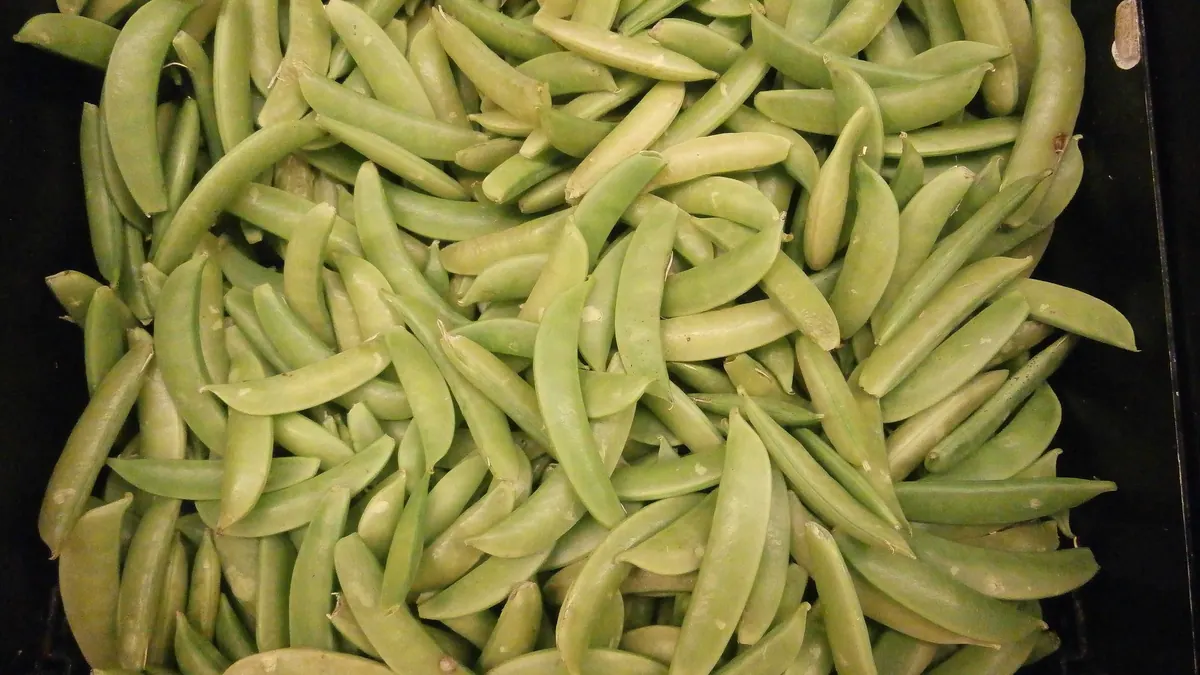
Legume crop and processing residues (pea pods, bean haulm and husks, pea leaves) — BMP: 5 studies, mean 264 m³ CH₄/t VS
264 m³ CH₄/t VS weighted mean from 5 studies
58 %
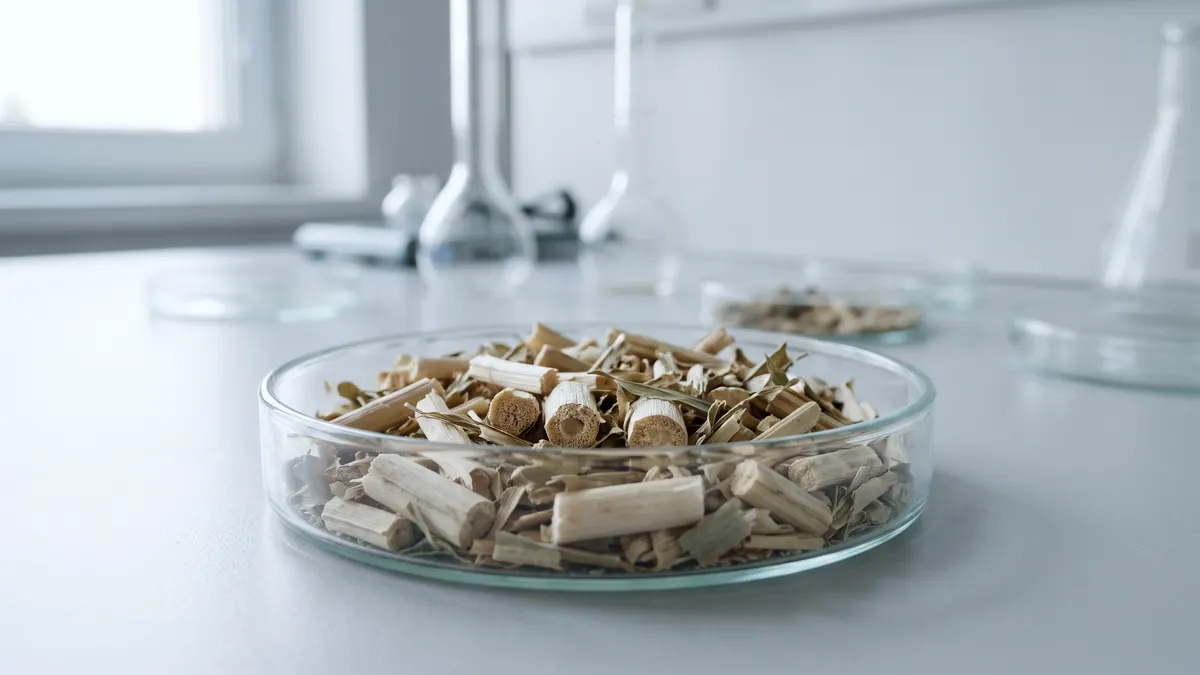
Sorghum straw (stover) — BMP: 9 studies, weighted mean 334 m³ CH₄/t VS
334 m³ CH₄/t VS weighted mean from 9 studies
good — editorial rating for biogas plants≈52 %
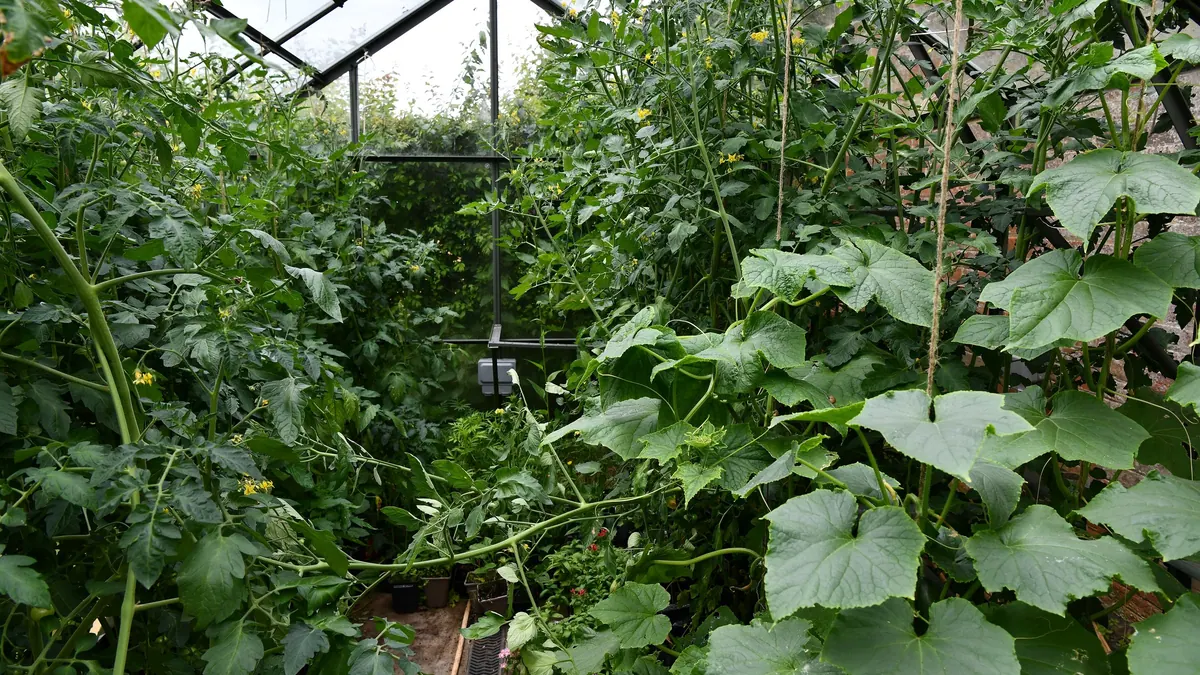
Tomato leaves and stems — BMP: 6 studies, weighted mean 200 m³ CH₄/t VS
200 m³ CH₄/t VS weighted mean from 6 studies
58 %
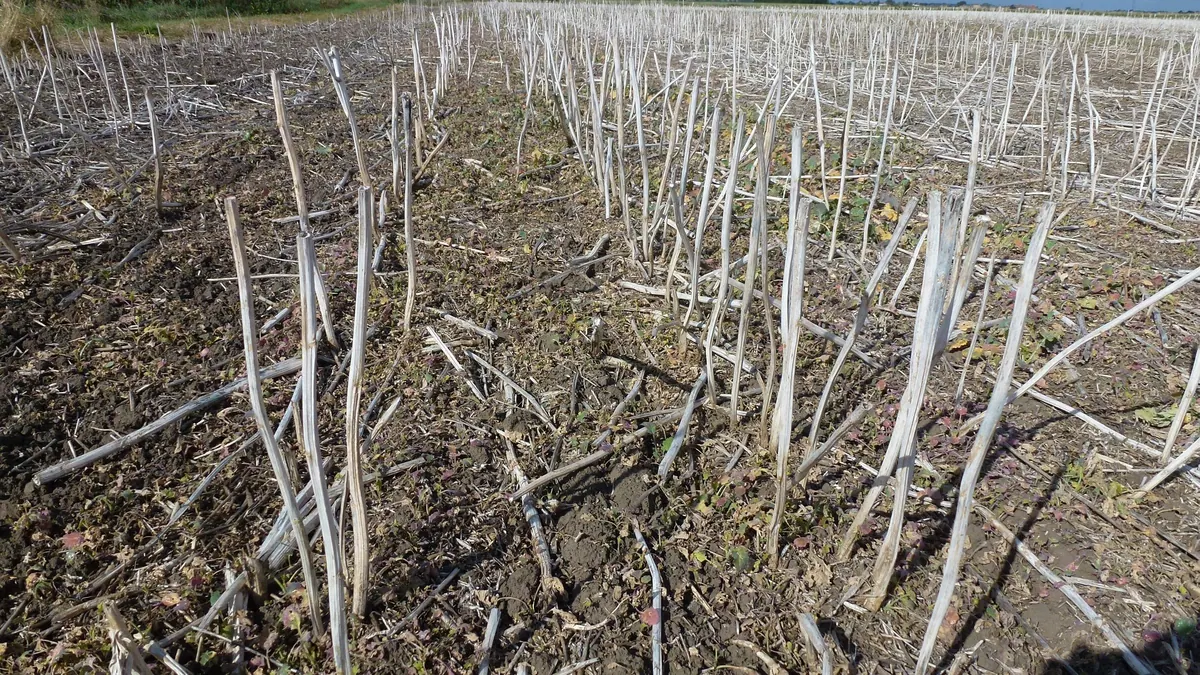
Rapeseed straw — BMP: 2 studies, weighted mean 241 m³ CH₄/t VS
241 m³ CH₄/t VS weighted mean from 2 studies
good — editorial rating for biogas plants≈53 %