

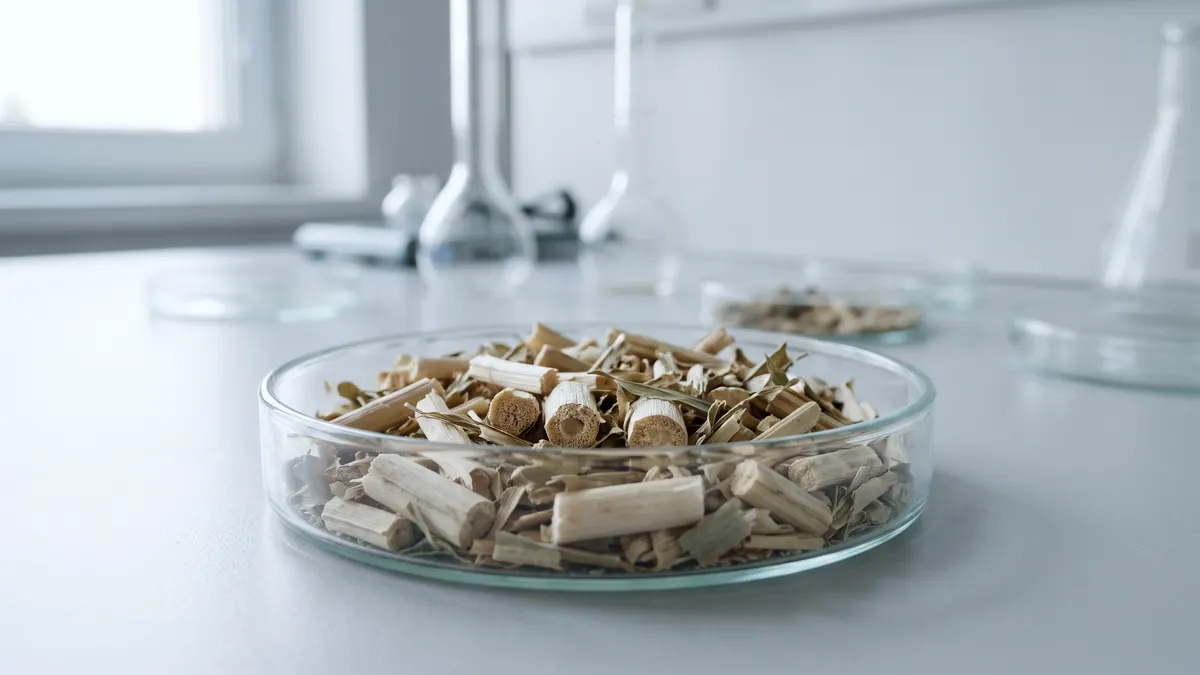
BMP testingStraws and crop residuessingle study (9 samples)
Sorghum straw (stover) — BMP: 9 studies, weighted mean 334 m³ CH₄/t VS
Sorghum straw (stalks and leaves after grain harvest) gave 277-413 m³ CH₄/t VS in one Spanish study depending on variety; these are data from a single publication, so the spread concerns varieties and not many independent studies.
rating: goodCH₄ ≈ 52 % (estimate)
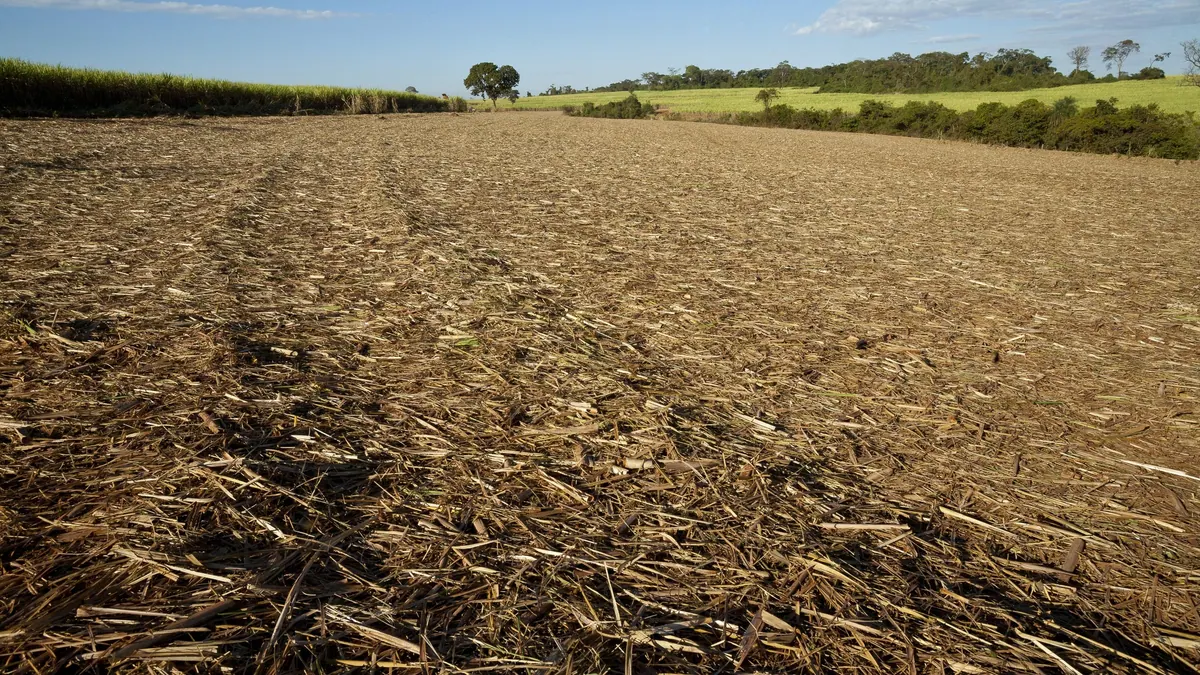
Illustration: FeedstockData (AI, Google Gemini)
- Weighted mean
- 334m³ CH₄/t VS
- Range
- 277–413m³ CH₄/t VS
- Records
- 9single study (9 samples)
- Publications
- 1source
- Temperatures
- 35 °Cof the test
Methane in biogas
Medium methane content · ≈ 5.2 kWh/m³ of biogas
estimate from the substrate type The collected studies contain no measurement. The interval follows from the approximate composition (carbohydrate-dominated (no protein or fat characteristics)) and the yields of compound groups according to FNR.
Rating for biogas plants
good — editorial rating for biogas plantsStable, usually accepted without a fee
Potential per tonne of fresh matter: very high (279 m³ CH₄/t); no particular threats to stability. Handling costs: fibres, floating layer, slow degradation.
Why? Rating factors
Potential per tonne +3
- +3potential 279 m³ CH₄/t fresh matter (BMP 334 × DM 91.8 % × VS 90.9 %)
Process stability 0
- 0no factors
Handling and costs −1
- −0.5fibres, floating layer — shredding and intensive mixing
- −0.5slow degradation — long retention time
Total points: 2 · thresholds: ≥ 2.5 very good, ≥ 1 good, below — neutral; negative with cumulative process risk.
Add to the co-digestion calculator CSV data
BMP curves from 9 studies
Weighted mean Individual records
All curves are measurements from the publications.
Cumulative methane production over the test [m³ CH₄/t VS]. The thick line is the weighted mean of all records (334); dots mark the end values given in the publications. Point at the chart to read values; click a legend item to hide or show a record.
Records and sources
Download CSV| Source | BMP m³ CH₄/t VS | Temperature | Sample | Curve |
|---|---|---|---|---|
| de la Lama‐Calvente et al. (2023) · 1 DOI | 277 | 35 °C · mesophilic | Sorghum straw PAN (mean of 3 reactors, BMP 5 sheet, day 30.9) | measurement (27 pts) |
| de la Lama‐Calvente et al. (2023) · 2 DOI | 287 | 35 °C · mesophilic | Sorghum straw PR88 (mean of 3 reactors, BMP 5 sheet, day 30.9) | measurement (27 pts) |
| de la Lama‐Calvente et al. (2023) · 3 DOI | 302 | 35 °C · mesophilic | Sorghum straw PR87 (mean of 3 reactors, BMP 5 sheet, day 30.9) | measurement (27 pts) |
| de la Lama‐Calvente et al. (2023) · 4 DOI | 304 | 35 °C · mesophilic | Sorghum straw ZHG (mean of 3 reactors, BMP 5 sheet, day 30.9) | measurement (27 pts) |
| de la Lama‐Calvente et al. (2023) · 5 DOI | 318 | 35 °C · mesophilic | Sorghum straw P89 (mean of 3 reactors, BMP 5 sheet, day 30.9) | measurement (27 pts) |
| de la Lama‐Calvente et al. (2023) · 6 DOI | 344 | 35 °C · mesophilic | Sorghum straw MP (mean of 3 reactors, BMP 5 sheet, day 30.9) | measurement (27 pts) |
| de la Lama‐Calvente et al. (2023) · 7 DOI | 376 | 35 °C · mesophilic | Sorghum straw TG (mean of 3 reactors, BMP 5 sheet, day 30.9) | measurement (27 pts) |
| de la Lama‐Calvente et al. (2023) · 8 DOI | 386 | 35 °C · mesophilic | Sorghum straw CÑ (mean of 3 reactors, BMP 5 sheet, day 30.9) | measurement (27 pts) |
| de la Lama‐Calvente et al. (2023) · 9 DOI | 413 | 35 °C · mesophilic | Sorghum straw ZH (mean of 3 reactors, BMP 5 sheet, day 30.9) | measurement (27 pts) |
| Weighted mean | 334 | arithmetic mean 334, SD 48 | ||
Typical composition
- Dry matter (DM)
- 91.8% (range 91.6–93.4)
- Volatile solids (VS)
- 90.9 % DM (range 88.2–94)
Median and range of the determinations reported in the publications behind this substrate's BMP records (read from: tabele, tekst lub zbiór danych publikacji); dry matter: 9 determinations, volatile solids: 9 determinations. Samples were tested dried/air-dry – the DM refers to the material in the test, not to fresh material.
Sources: de la Lama‐Calvente et al. (2023).
The composition of the raw material varies between batches — for plant calculations use an analysis of your own sample. The calculator inserts typical values automatically.
Process properties
Advantages
- Methane potential in one paper (9 varieties, 35 °C): from 276.9 to 412.8 m³ CH₄/t VS, mean 334 (de la Lama-Calvente et al. 2023).
- Dry matter approx. 92% FM, and VS approx. 89-90% DM - little ash, high energy density per tonne of material (raw Zenodo data for de la Lama-Calvente et al. 2023).
- High C/N complements nitrogen-rich substrates well, e.g. slurry (Weiland 2010).
Drawbacks and risks
- All data come from one publication and one protocol; yield depends strongly on the variety (more than a 1.4-fold difference), so the mean is only indicative (de la Lama-Calvente et al. 2023).
- The lignocellulosic structure limits degradation and requires size reduction or pretreatment (Hendriks and Zeeman 2009).
- Very little nitrogen (C/N from approx. 50 to several hundred in the data sheet) - mono-digestion risks N deficiency (de la Lama-Calvente et al. 2023; Weiland 2010).
Co-digestion — what to combine it with, what to watch out for
- combines well
group: Animal excreta (slurry, manure, poultry litter)
Slurry/manure supplies nitrogen and alkalinity, balancing the nitrogen-poor straw.[1]
- caution
substrates: high dry matter — e.g. Wheat straw, Horse manure, Cattle manure, Cereal straw (unspecified), Meadow hay
Two dry, fibrous components at once thicken the feed and promote a floating crust - dose with a liquid component.[2]
Dosing
No source-based dose limit. Dry, fibrous straw requires size reduction and dosing together with a liquid substrate (slurry); choose the share to suit the mixing capability of the digester and confirm with a BMP test for the specific variety.
Practical requirements
- BMP test for a specific variety and batch (de la Lama-Calvente et al. 2023)
Sources of the process data
- Weiland, P. (2010) Biogas production: current state and perspectives. Applied Microbiology and Biotechnology
- Hendriks, A.T.W.M.; Zeeman, G. (2009) Pretreatments to enhance the digestibility of lignocellulosic biomass. Bioresource Technology
- de la Lama-Calvente et al. (2023). Valorization of different landrace and commercial sorghum (Sorghum bicolor (L.) Moench) straw varieties by anaerobic digestion. GCB Bioenergy 15(3), 332-345
The co-digestion calculator will assess a specific mixture containing this substrate.
What it is and where it comes from
Sorghum straw is the stalks and leaves of common sorghum (Sorghum bicolor) that remain in the field after the grain harvest. In Poland sorghum is grown on a small scale, so this stream is local and rather seasonal; it is of greater importance in Mediterranean countries, from which the data come. The dataset contains nine records from one publication: de la Lama-Calvente et al. (2023, GCB Bioenergy), whose authors made the raw data available in a Zenodo dataset. It compared local varieties (including Zahina, Zahina gigante, Trigomillo) and commercial ones (including PR88Y20). Each record is the mean of three reactors for one variety.
Properties relevant to digestion
The data sheets show that the material is very dry: dry matter was about 92% of fresh matter, and volatile solids about 82-83% of fresh matter, i.e. about 89-90% of dry matter. This is a typical lignocellulosic straw, so it degrades more slowly than starchy materials and requires chopping. The nitrogen content is very low: in the sheet with elemental analysis the C/N ratio comes out from about 50 to several hundred, and for one variety exceeds a thousand, which results from nitrogen close to the limit of quantification. These figures should be treated as indicative. In practice this means a nitrogen deficiency in mono-digestion, and mixing with a nitrogen-rich substrate (e.g. slurry) is the natural solution (Weiland 2010).
How to read the spread of results
This is the most important remark about this entry: all nine values come from one study, carried out by one team, under the same conditions (35 °C, mesophilic, about 31 days). The spread from 276.9 m³/t (variety Panizo) to 412.8 m³/t (local variety Zahina) therefore mainly reflects differences between varieties, and not between laboratories, and it is not known how straw from another year, soil or harvest date would behave. The mean of 334 m³/t (SD 48) is only indicative. The dataset also contains sheets in which values calculated in a different way deviate from the means of the last measurement used here, so these figures should not be compared with other compilations without checking the method.
In biogas plant practice
For an agricultural plant, sorghum straw is a supplementary substrate, not a primary one. The dose must be matched to the mixing capability in the chamber: a dry, long-fibre mass can form scum, so chopping and dosing together with a liquid substrate are needed. Methane yield depends on the variety, and there is no source giving a safe dose limit, so the calculator applies no threshold for it. If you are planning a contract for sorghum straw, commission your own BMP test for the specific variety; pretreatment (chopping, possibly chemical) can raise the yield, but this entry does not cover it (Hendriks and Zeeman 2009).
Methodology in brief
BMP is the amount of methane obtained from volatile solids (VS) in a batch test, given in m³ CH₄ per tonne of VS (numerically the same as NmL CH₄/g VS in the publications) and converted to normal conditions (0 °C, 101.325 kPa). The weighted mean gives each publication a total weight of 1, split equally between its results for the substrate — a paper testing twenty varieties does not outweigh a paper with a single sample. In inter-laboratory programmes the unit is the laboratory (total weight 1), and within it the weight of a test grows with the number of bottles (replicates). Results after pretreatment (e.g. thermal, chemical, enzymatic) are shown separately and are not included in the mean.
Solid lines are curves measured in the tests. Where a publication gives only the final result, we draw a first-order kinetic model, B(t) = B₀·(1 − e−kt): only the end point comes from the publication, and the shape of the curve serves purely as visualisation — do not read the production on a particular day from it.
The statistics describe the spread of published results — a descriptive compilation, not a meta-analysis or a guarantee of plant yield.
Bibliography
- de la Lama‐Calvente, D.; Fernández‐Rodríguez, M.J.; Gandullo, J.; Desena, I.; de la Osa, C.; Feria, A.B.; Jiménez‐Rodríguez, A.; Borja, R. (2023). Valorization of different landrace and commercial sorghum (Sorghum bicolor (L.) Moench) straw varieties by anaerobic digestion. GCB Bioenergy 15(3), 332–345. DOI: 10.1111/gcbb.13025 DOI
All sources of the site: bibliography.
Other substrates in the group “Straws and crop residues”
Maize stover — BMP: 10 studies, weighted mean 298 m³ CH₄/t VS
298 m³ CH₄/t VS weighted mean from 10 studies
good — editorial rating for biogas plants≈52 %
Beet leaves and tops — BMP: 18 studies, weighted mean 308 m³ CH₄/t VS
308 m³ CH₄/t VS weighted mean from 18 studies
neutral — editorial rating for biogas plants68 %
Wheat straw — BMP: 92 studies, weighted mean 261 m³ CH₄/t VS
261 m³ CH₄/t VS weighted mean from 92 studies
good — editorial rating for biogas plants≈52 %
Sugarcane straw — BMP: 3 studies, weighted mean 300 m³ CH₄/t VS
300 m³ CH₄/t VS weighted mean from 3 studies
≈52 %