

BMP testingEnergy crops and whole-crop plants (WCS)single study (5 samples)
Energy dock — BMP: 5 studies, weighted mean 271 m³ CH₄/t VS
Energy sorrel (Rumex, variety Uteusha) is a perennial plant grown for biomass, considered as a biogas substrate. In the dataset it appears in several records from one study.
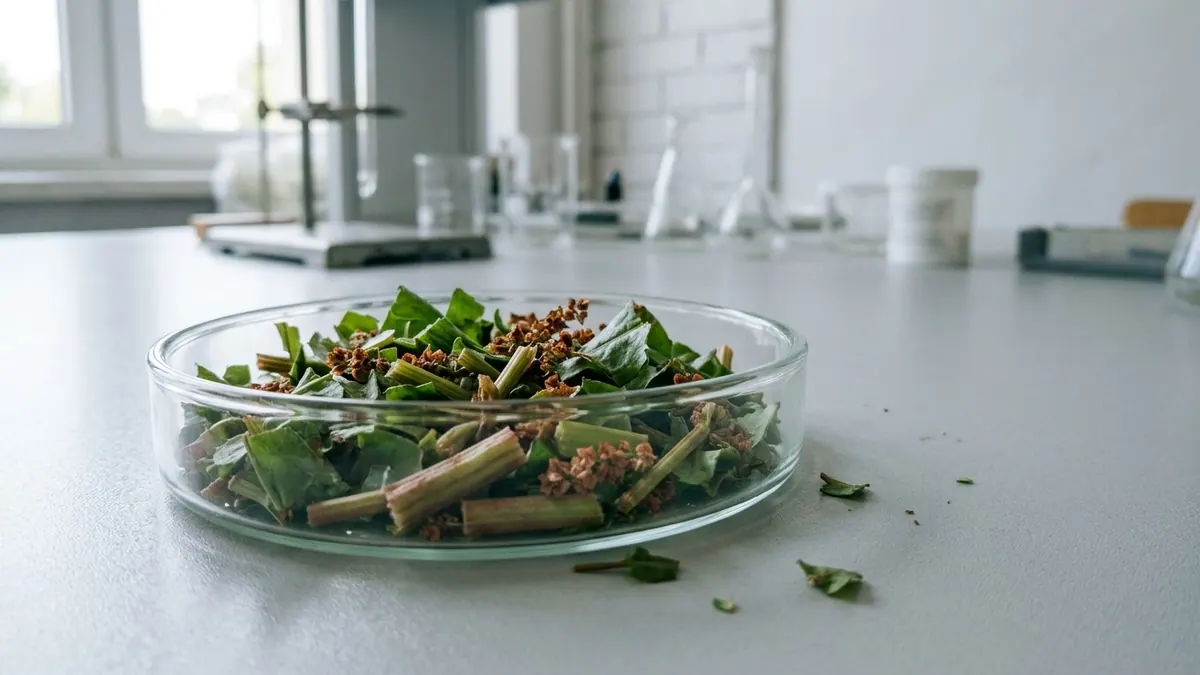
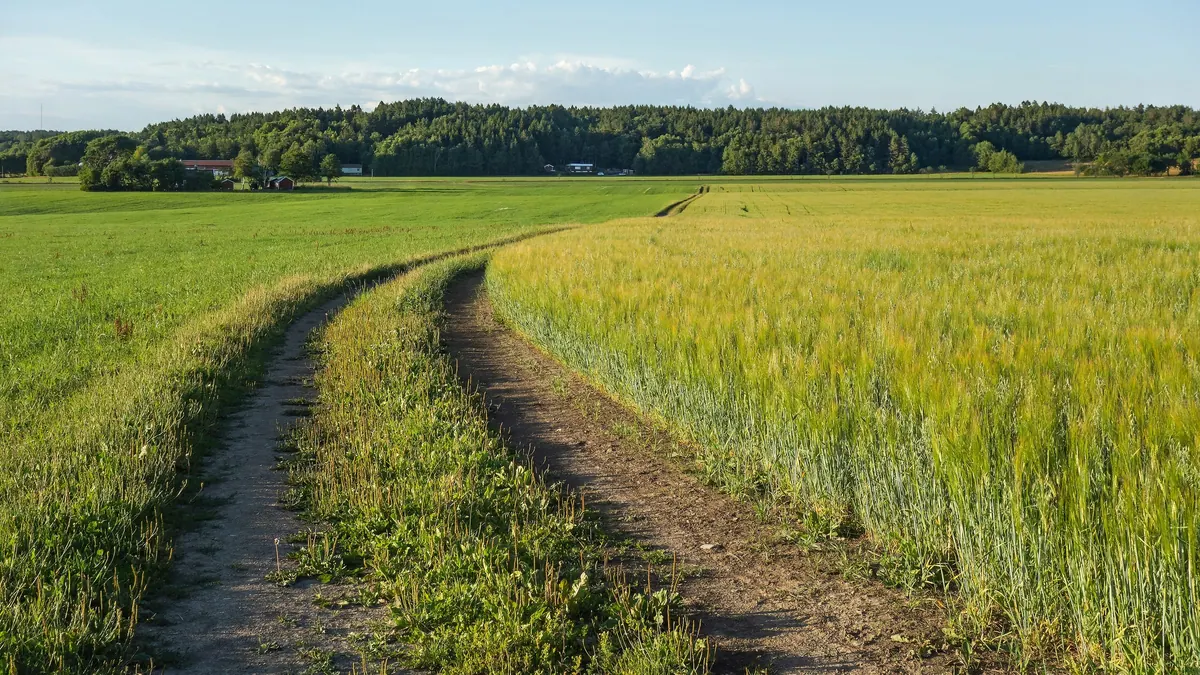
Illustration: FeedstockData (AI, Google Gemini)
- Weighted mean
- 271m³ CH₄/t VS
- Range
- 187–297m³ CH₄/t VS
- Records
- 5single study (5 samples)
- Publications
- 1source
- Temperatures
- 37 °Cof the test
Methane in biogas
Medium methane content · ≈ 5.2 kWh/m³ of biogas
estimate from the substrate type The collected studies contain no measurement. The interval follows from the approximate composition (carbohydrate-dominated (no protein or fat characteristics)) and the yields of compound groups according to FNR.
Rating for biogas plants
not rated — editorial rating for biogas plants
Not rated: no dry matter or volatile solids in the data. We calculate the rating when the dry matter and volatile solids of the material are known.
Add to the co-digestion calculator CSV data
BMP curves from 5 studies
Weighted mean Individual records
Dashed lines are a model curve (first-order kinetics, B(t) = B₀·(1 − e−kt)); the end point comes from the publication. All curves are model curves.
Cumulative methane production over the test [m³ CH₄/t VS]. The thick line is the weighted mean of all records (271); dots mark the end values given in the publications. Point at the chart to read values; click a legend item to hide or show a record.
Records and sources
Download CSV| Source | BMP m³ CH₄/t VS | Temperature | Sample | Curve |
|---|---|---|---|---|
| Mast et al. (2014) · 1 DOI | 187 | 37 °C · mesophilic | energy dock | end point (model curve) |
| Mast et al. (2014) · 2 DOI | 289 | 37 °C · mesophilic | energy dock | end point (model curve) |
| Mast et al. (2014) · 3 DOI | 290 | 37 °C · mesophilic | energy dock | end point (model curve) |
| Mast et al. (2014) · 4 DOI | 294 | 37 °C · mesophilic | energy dock | end point (model curve) |
| Mast et al. (2014) · 5 DOI | 297 | 37 °C · mesophilic | energy dock | end point (model curve) |
| Weighted mean | 271 | arithmetic mean 271, SD 47 | ||
Typical composition
- Dry matter (DM)
- 15% (range 9–28)
Median and range of the determinations reported in the publications behind this substrate's BMP records (read from: MY-D); dry matter: 5 determinations, volatile solids: 0 determinations.
Sources: Mast et al. (2014).
The composition of the raw material varies between batches — for plant calculations use an analysis of your own sample. The calculator inserts typical values automatically.
Process properties
Advantages
- Methane potential in the database: weighted mean 271 m³ CH₄/t VS (median 290; range 187–297; 5 records from 1 sources).
- Sorrel (Rumex schavnat) in a field experiment: SMY fell during the season from 0.297 to 0.187 Nm3/kg VS (Mast 2014).
Drawbacks and risks
- Yield depends strongly on the harvest date (Mast 2014).
Co-digestion — what to combine it with, what to watch out for
- combines well
group: Animal excreta (slurry, manure, poultry litter)
Co-digestion with excreta (slurry/solid manure) is the standard arrangement for plant biomass: they supply alkalinity and microflora.[1][2]
Dosing
No source-based dose limits.
Sources of the process data
- Mast, B.; Lemmer, A.; Oechsner, H.; Reinhardt-Hanisch, A.; Claupein, W.; Graeff-Hönninger, S. (2014) Methane yield potential of novel perennial biogas crops influenced by harvest date. Industrial Crops and Products 58, 194–203
- Weiland, P. (2010) Biogas production: current state and perspectives. Applied Microbiology and Biotechnology
- Hendriks, A.T.W.M.; Zeeman, G. (2009) Pretreatments to enhance the digestibility of lignocellulosic biomass. Bioresource Technology
The co-digestion calculator will assess a specific mixture containing this substrate.
What it is and where it comes from
Energy sorrel (Rumex patientia × R. tianschanicus), variety Uteusha, was bred in Ukraine and is sometimes grown in Poland as a perennial energy crop. It gives several cuts per season, and the biomass yield can be large. The dataset contains several records from one study in which material harvested at different dates was examined, under mesophilic conditions.
Properties relevant to digestion
Sorrel biomass is succulent, with a high water content in the young stage, and as it matures the share of lignified stalks rises. Plants of the genus Rumex contain oxalates, which can bind calcium and in large quantities affect the course of digestion, although at typical shares in a mixture the effect is not considered key. Ensiling is possible, and the material requires chopping. There is more protein than in typical grasses, which lowers the C/N ratio, but increases the risk of ammonia release at a large dose.
How to read the spread of results
Several records come from one study, and their variation mainly reflects harvest date and year. They therefore do not capture differences between laboratories, plantations and soil conditions. The result is also affected by plantation age, fertilisation, the form of the material (green forage, silage) and chopping. A common test protocol across the whole series means that the records are internally consistent, but may be difficult to transfer to other conditions.
In biogas plant practice
Energy sorrel is a niche crop, of interest to farms looking for perennial plants to supplement their feedstock base. It is harvested with a forage harvester and ensiled, and in the mix treated like other plant silages, with control of ammonia and process stability. Profitability depends on yield at local sites and on the costs of establishing the plantation. Before deciding, your own BMP test and a dosing trial are recommended. Because the dataset contains one study, and the plant is not widely grown, the data should be treated as a preliminary reconnaissance. Only your own BMP test and a trial crop will show how the material behaves in a specific plant and how it yields at local sites. It is also good to record cutting dates and yields from the start.
Methodology in brief
BMP is the amount of methane obtained from volatile solids (VS) in a batch test, given in m³ CH₄ per tonne of VS (numerically the same as NmL CH₄/g VS in the publications) and converted to normal conditions (0 °C, 101.325 kPa). The weighted mean gives each publication a total weight of 1, split equally between its results for the substrate — a paper testing twenty varieties does not outweigh a paper with a single sample. In inter-laboratory programmes the unit is the laboratory (total weight 1), and within it the weight of a test grows with the number of bottles (replicates). Results after pretreatment (e.g. thermal, chemical, enzymatic) are shown separately and are not included in the mean.
Solid lines are curves measured in the tests. Where a publication gives only the final result, we draw a first-order kinetic model, B(t) = B₀·(1 − e−kt): only the end point comes from the publication, and the shape of the curve serves purely as visualisation — do not read the production on a particular day from it. For this substrate k = 0.085 d−1 was assumed (median of rate constants k reported in the sources and/or fitted to the mean measured curves).
The statistics describe the spread of published results — a descriptive compilation, not a meta-analysis or a guarantee of plant yield.
Bibliography
- Mast, B.; Lemmer, A.; Oechsner, H.; Reinhardt-Hanisch, A.; Claupein, W.; Graeff-Hönninger, S. (2014). Methane yield potential of novel perennial biogas crops influenced by harvest date. Industrial Crops and Products 58, 194–203. DOI: 10.1016/j.indcrop.2014.04.017 DOI
All sources of the site: bibliography.
Other substrates in the group “Energy crops and whole-crop plants (WCS)”
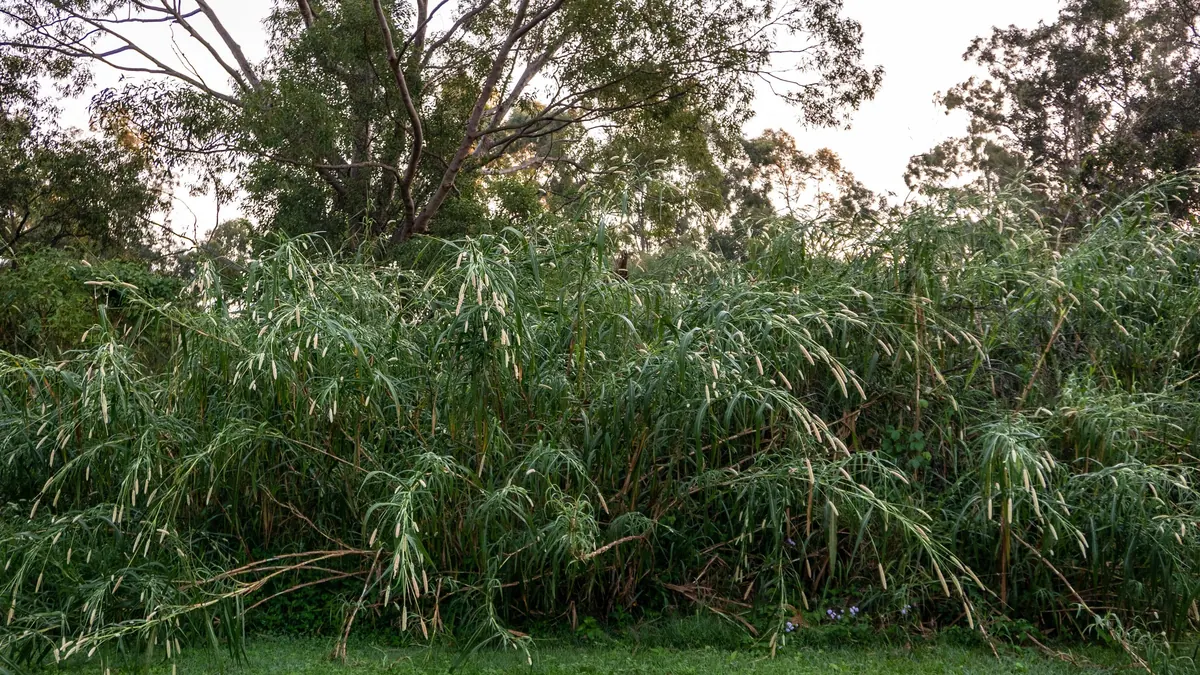
Pennisetum hybrid grass — BMP: 18 studies, weighted mean 266 m³ CH₄/t VS
266 m³ CH₄/t VS weighted mean from 18 studies
neutral — editorial rating for biogas plants≈52 %
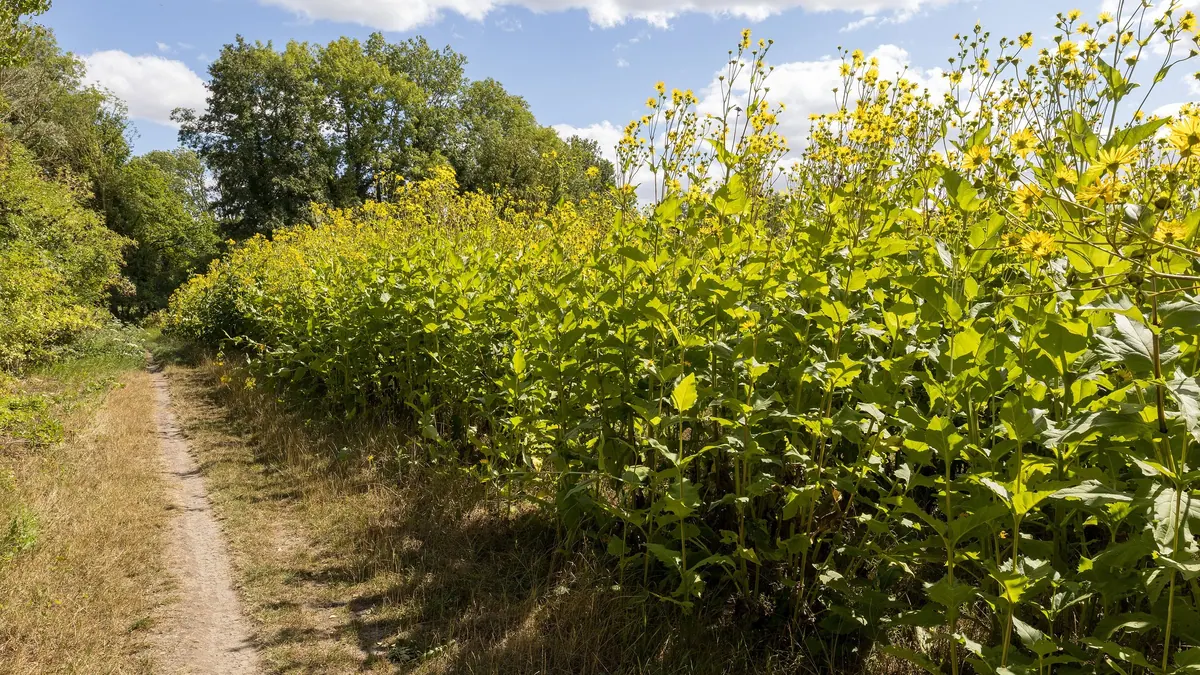
Cup plant — BMP: 8 studies, weighted mean 257 m³ CH₄/t VS
257 m³ CH₄/t VS weighted mean from 8 studies
good — editorial rating for biogas plants≈52 %
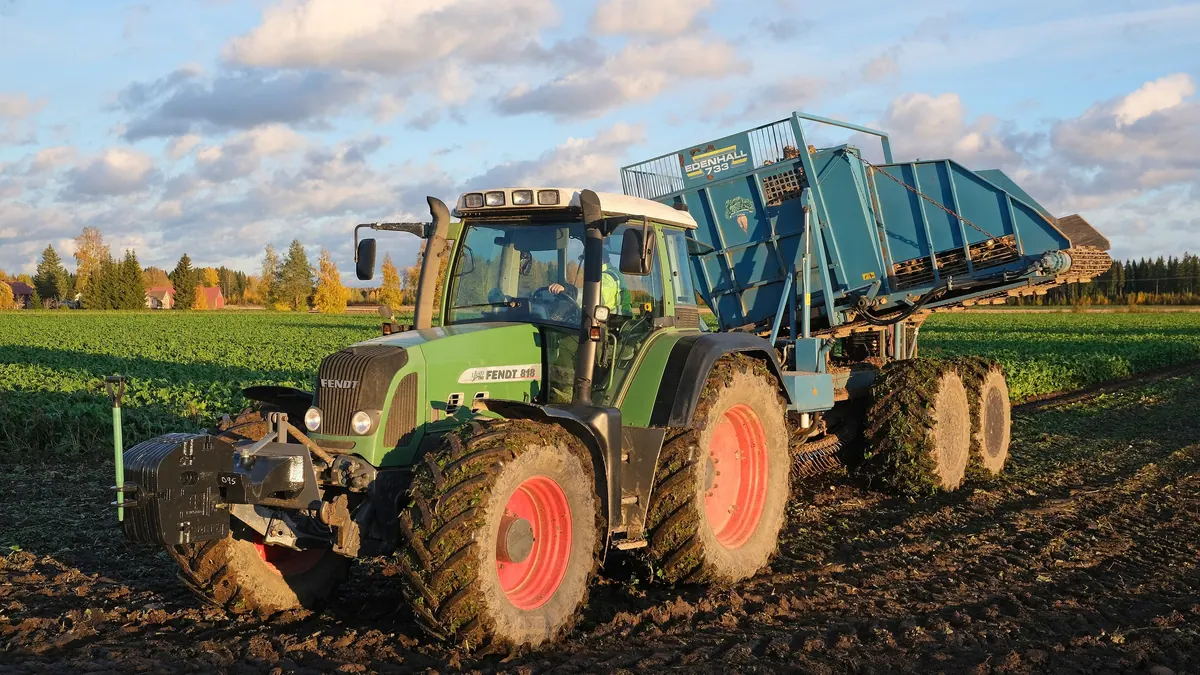
Beet roots (sugar/fodder beet) — BMP: 4 studies, weighted mean 397 m³ CH₄/t VS
397 m³ CH₄/t VS weighted mean from 4 studies
good — editorial rating for biogas plants≈52 %
Rye, whole crop — BMP: 8 studies, weighted mean 313 m³ CH₄/t VS
313 m³ CH₄/t VS weighted mean from 8 studies
good — editorial rating for biogas plants63 %