

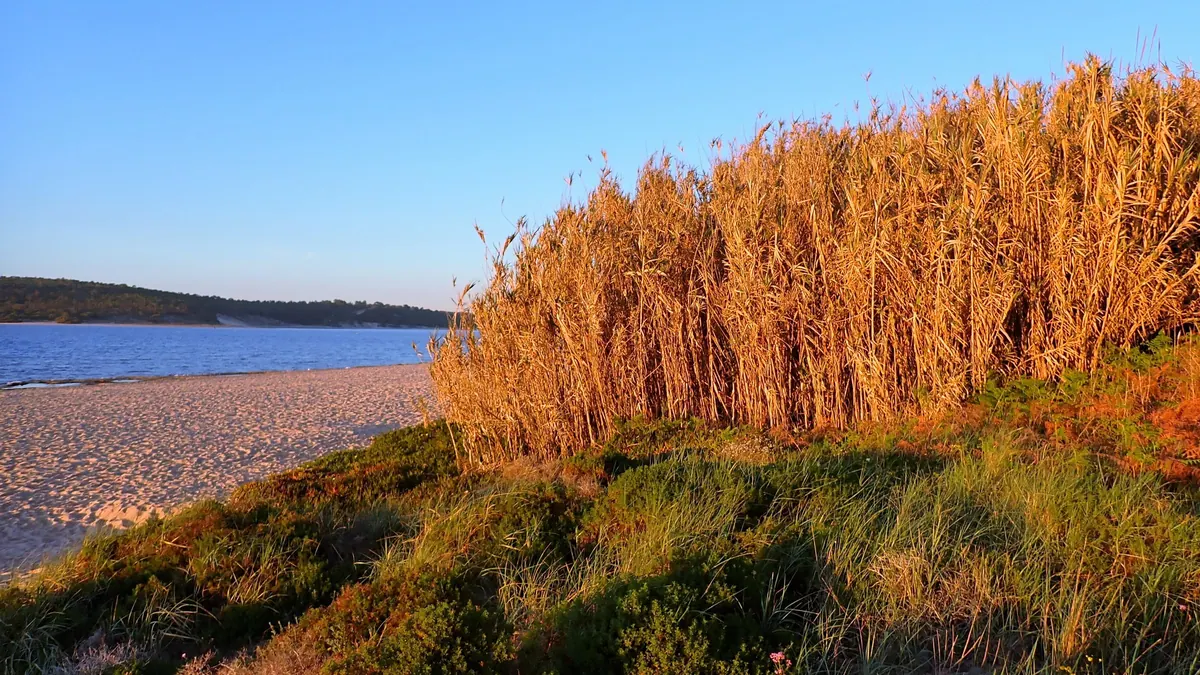
BMP testingEnergy crops and whole-crop plants (WCS)single study (3 samples)
Giant reed — BMP: 3 studies, weighted mean 252 m³ CH₄/t VS
Giant reed (Arundo donax) is a tall, perennial grass with a high yield and a high lignin content. The compilation is based on a single study with three fertilisation variants.
Photo Krzysztof Ziarnek, Kenraiz / Wikimedia Commons, licence CC BY-SA 4.0, source file; changes: cropping

- Weighted mean
- 252m³ CH₄/t VS
- Range
- 246–257m³ CH₄/t VS
- Records
- 3single study (3 samples)
- Publications
- 1source
- Temperatures
- —of the test
Methane in biogas
Medium methane content · ≈ 5.2 kWh/m³ of biogas
estimate from the substrate type The collected studies contain no measurement. The interval follows from the approximate composition (carbohydrate-dominated (no protein or fat characteristics)) and the yields of compound groups according to FNR.
Rating for biogas plants
not rated — editorial rating for biogas plants
Not rated: no dry matter or volatile solids in the data. We calculate the rating when the dry matter and volatile solids of the material are known.
Add to the co-digestion calculator CSV data
BMP curves from 3 studies
Weighted mean Individual records
Dashed lines are a model curve (first-order kinetics, B(t) = B₀·(1 − e−kt)); the end point comes from the publication. All curves are model curves.
Cumulative methane production over the test [m³ CH₄/t VS]. The thick line is the weighted mean of all records (252); dots mark the end values given in the publications. Point at the chart to read values; click a legend item to hide or show a record.
Records and sources
Download CSV| Source | BMP m³ CH₄/t VS | Temperature | Sample | Curve |
|---|---|---|---|---|
| Eller et al. (2020) · 1 DOI | 246 | — | A. donax, fertilization A | end point (model curve) |
| Eller et al. (2020) · 2 DOI | 252 | — | A. donax, fertilization B | end point (model curve) |
| Eller et al. (2020) · 3 DOI | 257 | — | A. donax, fertilization C | end point (model curve) |
| Weighted mean | 252 | arithmetic mean 252, SD 5 | ||
Process properties
Advantages
- Methane potential in the database: weighted mean 252 m³ CH₄/t VS (median 252; range 246–257; 3 records from 1 sources).
- Arundo donax: compared with common reed and bulrush it had the highest result (305 L CH4/kg VS at high fertilisation, Eller 2020).
Drawbacks and risks
- A lignocellulosic plant — requires size reduction (Hendriks 2009).
Co-digestion — what to combine it with, what to watch out for
- combines well
group: Animal excreta (slurry, manure, poultry litter)
Co-digestion with excreta (slurry/solid manure) is the standard arrangement for plant biomass: they supply alkalinity and microflora.[1][2]
Dosing
No source-based dose limits.
Practical requirements
- Shred: shredding increases the surface available for degradation and speeds it up, but does not necessarily raise the final gas yield (FNR 2010, Ch. 3 “Triturado”).
Sources of the process data
- Eller, F.; Ehde, P.M.; Oehmke, C.; Ren, L.; Brix, H.; Sorrell, B.K.; Weisner, S.E.B. (2020) Biomethane Yield from Different European Phragmites australis Genotypes, Compared with Other Herbaceous Wetland Species Grown at Different Fertilization Regimes. Resources 9(5), 57
- Weiland, P. (2010) Biogas production: current state and perspectives. Applied Microbiology and Biotechnology
- Hendriks, A.T.W.M.; Zeeman, G. (2009) Pretreatments to enhance the digestibility of lignocellulosic biomass. Bioresource Technology
- FNR (2010). Guía sobre el Biogás – Desde la producción hasta el uso (hiszp. wydanie „Leitfaden Biogas”, GIZ 2013)
The co-digestion calculator will assess a specific mixture containing this substrate.
What it is and where it comes from
Giant reed (Arundo donax) is a perennial grass reaching several metres in height, growing naturally in the Mediterranean zone and cultivated as an energy crop. It is resistant to water stress and gives a high dry matter yield. In some regions of the world it is treated as an invasive species. In Poland it is not a practical crop for climatic reasons. The compilation is based on a small number of records from a single study that compared three fertilisation variants, labelled A, B and C.
Properties relevant to digestion
Giant reed stalks are heavily lignified, with a high proportion of cellulose and lignin and a low protein content. This results in slow hydrolysis, a high C/N ratio and a tendency to form a floating crust. At a younger stage the plant is more digestible, but harvesting during the season reduces the yield and may weaken the plantation. The material requires thorough shredding, and its silica content increases wear on equipment. Mixing with slurry or other nitrogen-rich substrates improves process stability.
How to read the spread of results
The records come from a single study and differ in the fertilisation variant, so their variation shows the effect of agronomic practice rather than that of independent laboratories. Actual batches differ in harvest date, plantation age, site and climate. Further factors are the particle size, the form of the material and the test parameters: inoculum, substrate-to-inoculum ratio and incubation length. The description of the records does not state the temperature.
In biogas plant practice
For Polish biogas plants, giant reed is not a realistic substrate. In Mediterranean countries it is studied as a perennial crop on poorer soils, and in biogas plants it requires shredding, ensiling and combining with a nitrogen-rich substrate. Because of its invasive status, cultivation is restricted in some regions, and the restrictions must be checked locally. A BMP test is essential before any decision. In the crop balance it must be taken into account that giant reed plantations are permanent and difficult to remove, and local regulations on alien species may restrict their establishment. This remark is of a general nature and does not replace checking the regulations in force in a given area. Data from a single study do not allow conclusions to be drawn about the effect of fertilisation on the result.
Methodology in brief
BMP is the amount of methane obtained from volatile solids (VS) in a batch test, given in m³ CH₄ per tonne of VS (numerically the same as NmL CH₄/g VS in the publications) and converted to normal conditions (0 °C, 101.325 kPa). The weighted mean gives each publication a total weight of 1, split equally between its results for the substrate — a paper testing twenty varieties does not outweigh a paper with a single sample. In inter-laboratory programmes the unit is the laboratory (total weight 1), and within it the weight of a test grows with the number of bottles (replicates). Results after pretreatment (e.g. thermal, chemical, enzymatic) are shown separately and are not included in the mean.
Solid lines are curves measured in the tests. Where a publication gives only the final result, we draw a first-order kinetic model, B(t) = B₀·(1 − e−kt): only the end point comes from the publication, and the shape of the curve serves purely as visualisation — do not read the production on a particular day from it. For this substrate k = 0.085 d−1 was assumed (median of rate constants k reported in the sources and/or fitted to the mean measured curves).
The statistics describe the spread of published results — a descriptive compilation, not a meta-analysis or a guarantee of plant yield.
Bibliography
- Eller, F.; Ehde, P.M.; Oehmke, C.; Ren, L.; Brix, H.; Sorrell, B.K.; Weisner, S.E.B. (2020). Biomethane Yield from Different European Phragmites australis Genotypes, Compared with Other Herbaceous Wetland Species Grown at Different Fertilization Regimes. Resources 9(5), 57. DOI: 10.3390/resources9050057 DOI
All sources of the site: bibliography.
Other substrates in the group “Energy crops and whole-crop plants (WCS)”

Reed canary grass — BMP: 12 studies, weighted mean 290 m³ CH₄/t VS
290 m³ CH₄/t VS weighted mean from 12 studies
good — editorial rating for biogas plants≈53 %
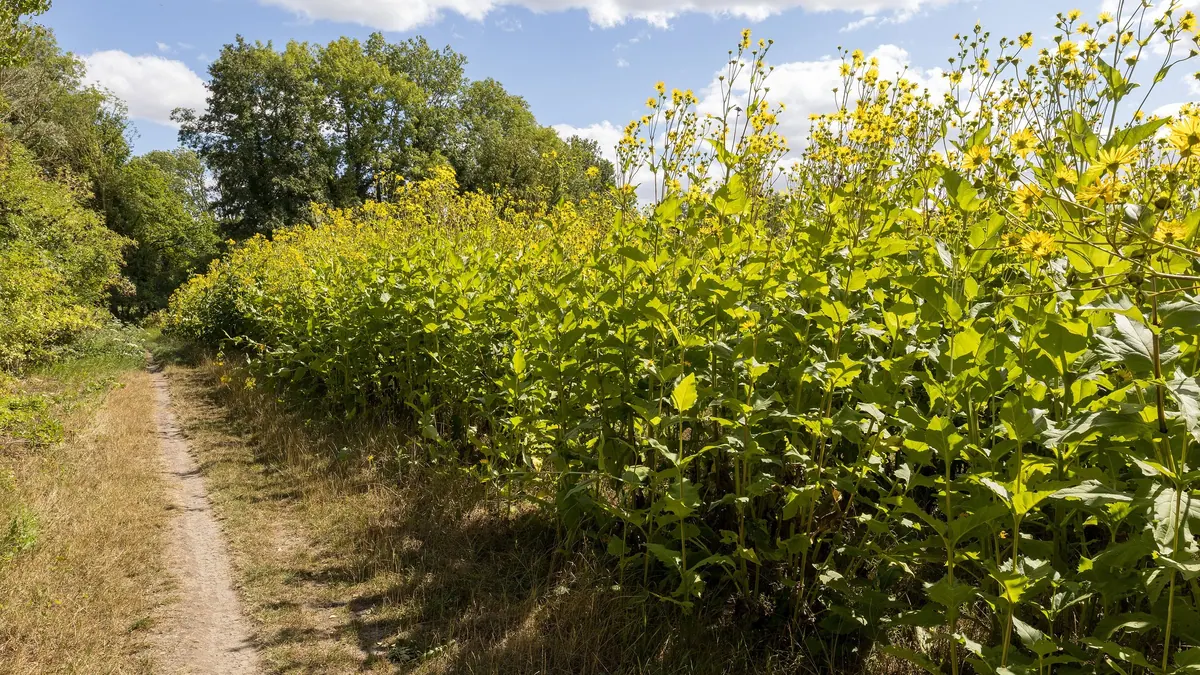
Cup plant — BMP: 8 studies, weighted mean 257 m³ CH₄/t VS
257 m³ CH₄/t VS weighted mean from 8 studies
good — editorial rating for biogas plants≈52 %
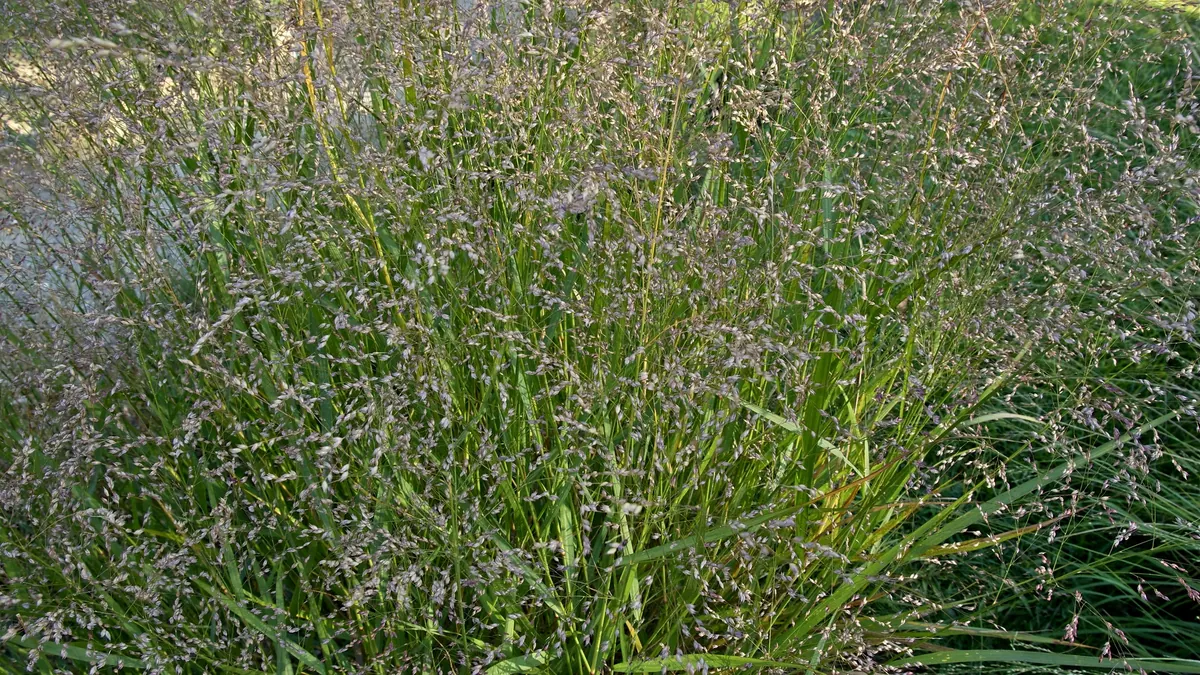
Switchgrass — BMP: 3 studies, weighted mean 180 m³ CH₄/t VS
180 m³ CH₄/t VS weighted mean from 3 studies
≈52 %
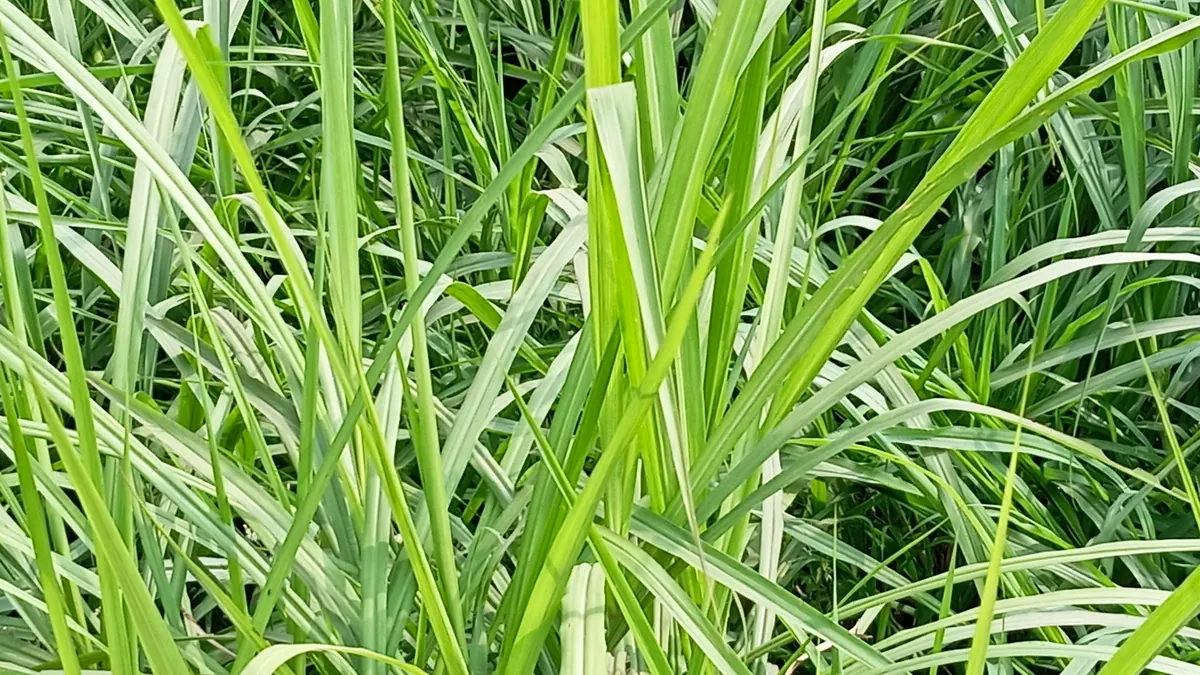
Napier grass — BMP: 35 studies, weighted mean 253 m³ CH₄/t VS
253 m³ CH₄/t VS weighted mean from 35 studies
good — editorial rating for biogas plants≈54 %