

BMP testingFruit, vegetables and their residues
Rambutan seeds — BMP: 3 studies, weighted mean 449 m³ CH₄/t VS
Rambutan seeds are a compact fruit waste richer in fat and tannins; they require thorough milling, and results depend on the freshness and condition of the fruit.
rating: goodCH₄ ≈ 52 % (estimate)
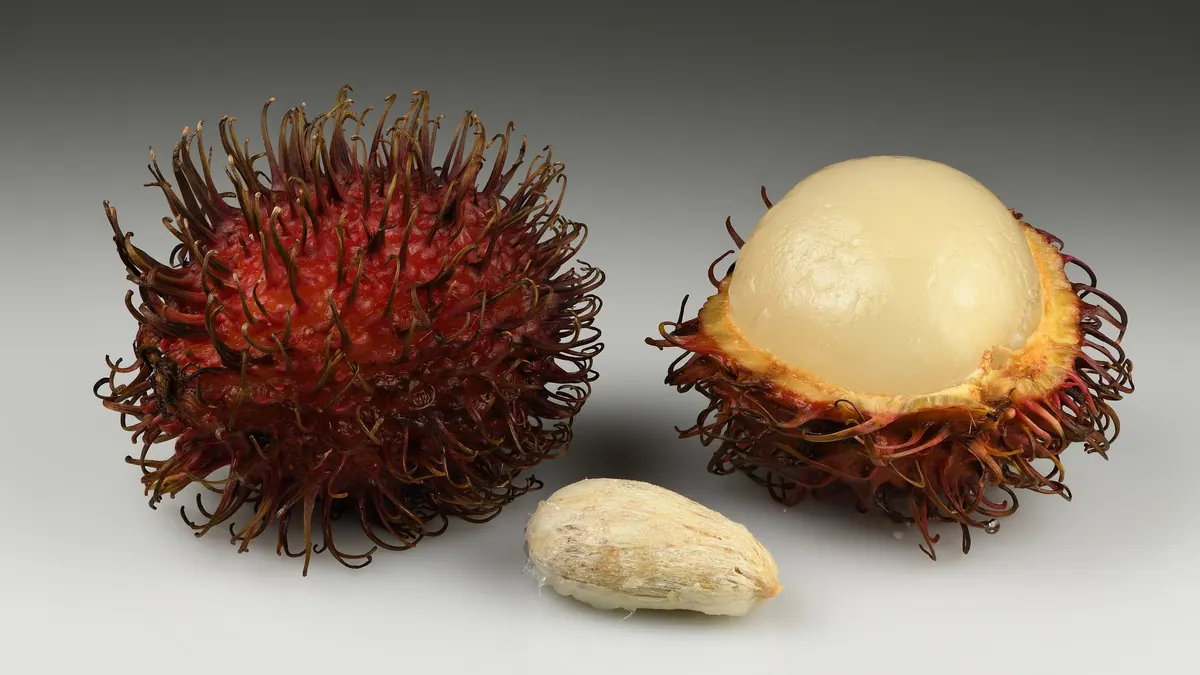
Photo Ivar Leidus / Wikimedia Commons, licence CC BY-SA 4.0, source file; changes: cropping

- Weighted mean
- 449m³ CH₄/t VS
- Range
- 383–527m³ CH₄/t VS
- Records
- 3studies
- Publications
- 2sources
- Temperatures
- 35 °Cof the test
Methane in biogas
Medium methane content · ≈ 5.2 kWh/m³ of biogas
estimate from the substrate type The collected studies contain no measurement. The interval follows from the approximate composition (protein from total nitrogen (N 1.2 % DM × 6.25)) and the yields of compound groups according to FNR.
Rating for biogas plants
good — editorial rating for biogas plantsStable, usually accepted without a fee
Potential per tonne of fresh matter: very high (250 m³ CH₄/t); no particular threats to stability. Handling costs: fibres, floating layer, slow degradation.
Why? Rating factors
Potential per tonne +3
- +3potential 250 m³ CH₄/t fresh matter (BMP 449 × DM 56.1 % × VS 99 %)
Process stability 0
- 0no factors
Handling and costs −1
- −0.5fibres, floating layer — shredding and intensive mixing
- −0.5slow degradation — long retention time
Total points: 2 · thresholds: ≥ 2.5 very good, ≥ 1 good, below — neutral; negative with cumulative process risk.
Add to the co-digestion calculator CSV data
BMP curves from 3 studies
Weighted mean Individual records
Dashed lines are a model curve (first-order kinetics, B(t) = B₀·(1 − e−kt)); the end point comes from the publication. All curves are model curves.
Cumulative methane production over the test [m³ CH₄/t VS]. The thick line is the weighted mean of all records (449); dots mark the end values given in the publications. Point at the chart to read values; click a legend item to hide or show a record.
Records and sources
Download CSV| Source | BMP m³ CH₄/t VS | Temperature | Sample | Curve |
|---|---|---|---|---|
| Zhao et al. (2016) DOI | 383 | — | Rambutan (Nephelium lappaceum) – Seed | end point (model curve) |
| Sanjaya et al. (2016) · 1 DOI | 504 | 35 °C · mesophilic | Rooten rambutan seed | end point (model curve) |
| Sanjaya et al. (2016) · 2 DOI | 527 | 35 °C · mesophilic | Fresh ripe rambutan seed | end point (model curve) |
| Weighted mean | 449 | arithmetic mean 472, SD 77 | ||
Typical composition
- Dry matter (DM)
- 56.1% (range 50.3–62)
- Volatile solids (VS)
- 99 % DM (range 99–99)
- Nitrogen
- 1.2 % DM
- C/N ratio
- 44.2
Median and range of the determinations reported in the publications behind this substrate's BMP records (read from: BCBPD, MY-D); dry matter: 2 determinations, volatile solids: 1 determination. C/N was calculated as the ratio of C and N content (% DM) from the same source.
Sources: Zhao et al. (2016); Sanjaya et al. (2016).
The composition of the raw material varies between batches — for plant calculations use an analysis of your own sample. The calculator inserts typical values automatically.
Process properties
Low confidence: the description is based on general characteristics of the substrate group, not on studies of this material. Treat it as a hint to be verified.
Advantages
- Methane yield in the compendium: median 504 (range 383–527) m³ CH₄/t VS, 3 records from 2 papers (weighted mean 449).
Drawbacks and risks
- Rambutan waste (chopped) gave a lower yield than ground banana peel (Odedina et al. (2017))
Dosing
The sources do not give a safe share of this substrate in the feed.
Introduce gradually, starting with a small dose and monitoring the process (e.g. FOS/TAC, pH, gas composition).
Sources of the process data
- Bio-energy conversion performance, biodegradability, and kinetic analysis of different fruit residues during discontinuous anaerobic digestion
- Mesophilic batch anaerobic digestion from fruit fragments
- Effects of size and thermophilic pre-hydrolysis of banana peel during anaerobic digestion, and biomethanation potential of key tropical fruit wastes
- Biochemical methane potential and biodegradability of complex organic substrates
- Effect of particle size on biogas generation from biomass residues
The co-digestion calculator will assess a specific mixture containing this substrate.
What it is and where it comes from
Rambutan seeds (Nephelium lappaceum) arise as a waste in processing the fruit into preserves or juices. The seed is large relative to the fruit, so it makes up a noticeable part of the processing plant's waste. In Poland rambutan is only an imported fruit, so the material is relevant only in comparative analyses and for plants in production regions.
Properties relevant to digestion
The seeds are compact, with a lower moisture content than the pulp. They contain fat (rambutan seeds are a source of edible fat), starch, protein and phenolic compounds, including tannins. A higher lipid content raises the gas potential, but also the risk of accumulation of long-chain fatty acids at high loading. Tannins can inhibit microorganisms to some extent. The structure of the seeds limits enzyme access, so milling is a condition for effective degradation.
How to read the spread of results
The dataset contains several records from several sources: seeds from a general database (no temperature given) and fresh seeds and seeds from spoiled fruit from a second study. The spread results from the variety, stage of maturity, degree of size reduction and the presence of pulp residues, as well as from sample preparation and the inoculum. The fat content is of great importance, because differences in lipid residue after extraction or processing change the result.
In biogas plant practice
Rambutan seeds are introduced after milling, at a limited share and together with materials that degrade quickly. Because of the fat content the dose must be adapted to the system's tolerance of LCFA. The seeds are relatively durable, but those collected from moist waste readily go mouldy. For plants in Poland they are of indirect significance only: they show the behaviour of the seeds of tropical fruits rich in fat.
If the seeds come from the production of preserves, they may contain pulp residues and sugar from syrup, which increases their susceptibility to acidification; such a batch should be assessed separately and dosed more cautiously than clean seeds.
The compact structure of the seeds also means that their gas is released more slowly than that from the pulp, so in short tests or with a short retention time in the digester part of the potential may remain unutilised and end up in the digestate.
Methodology in brief
BMP is the amount of methane obtained from volatile solids (VS) in a batch test, given in m³ CH₄ per tonne of VS (numerically the same as NmL CH₄/g VS in the publications) and converted to normal conditions (0 °C, 101.325 kPa). The weighted mean gives each publication a total weight of 1, split equally between its results for the substrate — a paper testing twenty varieties does not outweigh a paper with a single sample. In inter-laboratory programmes the unit is the laboratory (total weight 1), and within it the weight of a test grows with the number of bottles (replicates). Results after pretreatment (e.g. thermal, chemical, enzymatic) are shown separately and are not included in the mean.
Solid lines are curves measured in the tests. Where a publication gives only the final result, we draw a first-order kinetic model, B(t) = B₀·(1 − e−kt): only the end point comes from the publication, and the shape of the curve serves purely as visualisation — do not read the production on a particular day from it. For this substrate k = 0.245 d−1 was assumed (median of rate constants k reported in the sources and/or fitted to the mean measured curves).
The statistics describe the spread of published results — a descriptive compilation, not a meta-analysis or a guarantee of plant yield.
Bibliography
- Zhao, C.; Yan, H.; Liu, Y.; Huang, Y.; Zhang, R.; Chen, C.; Liu, G. (2016). Bio-energy conversion performance, biodegradability, and kinetic analysis of different fruit residues during discontinuous anaerobic digestion. Waste Management 52, 295–301. DOI: 10.1016/j.wasman.2016.03.028 DOI
- Sanjaya, A.P.; Cahyanto, M.N.; Millati, R. (2016). Mesophilic batch anaerobic digestion from fruit fragments. Renewable Energy 98, 135–141. DOI: 10.1016/j.renene.2016.02.059 DOI
All sources of the site: bibliography.
Other substrates in the group “Fruit, vegetables and their residues”
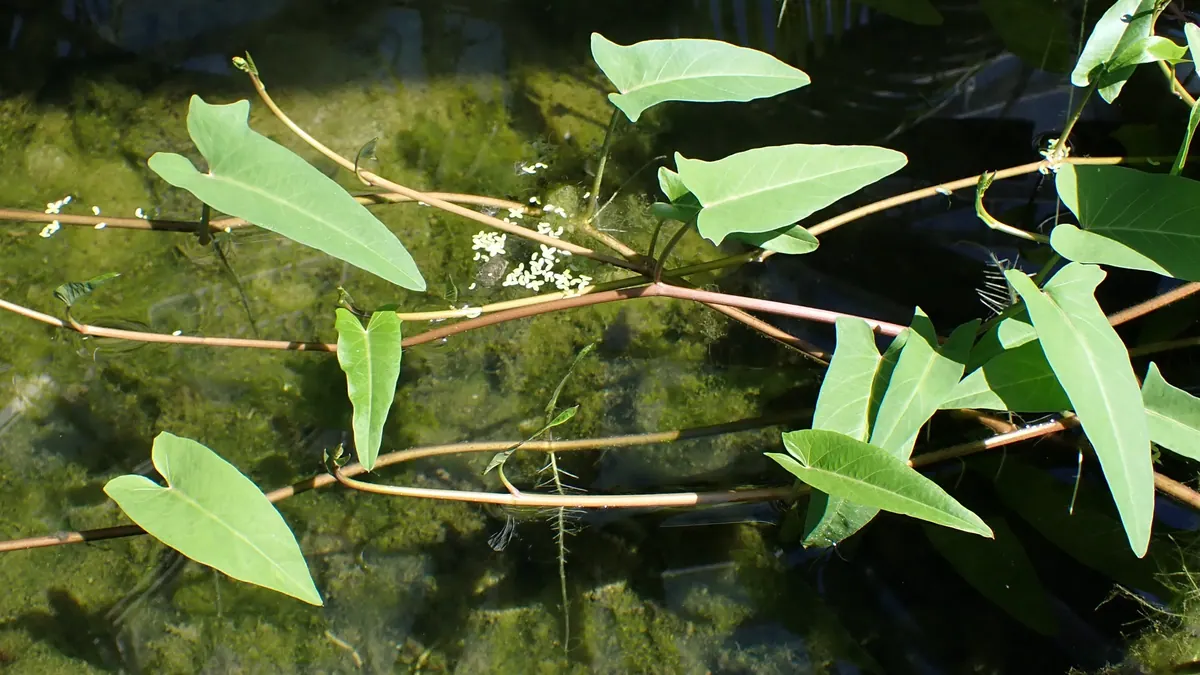
Water spinach — BMP: 2 studies, weighted mean 141 m³ CH₄/t VS
141 m³ CH₄/t VS weighted mean from 2 studies
neutral — editorial rating for biogas plants≈57 %
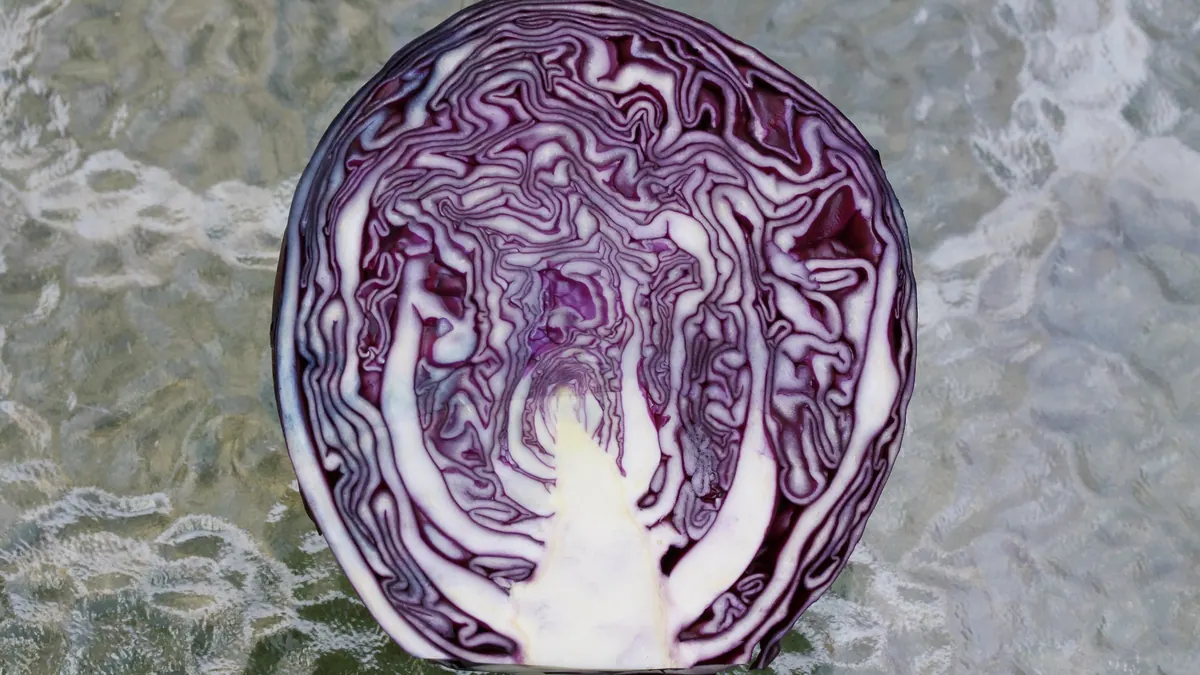
Head cabbage — BMP: 4 studies, weighted mean 260 m³ CH₄/t VS
260 m³ CH₄/t VS weighted mean from 4 studies
≈56 %
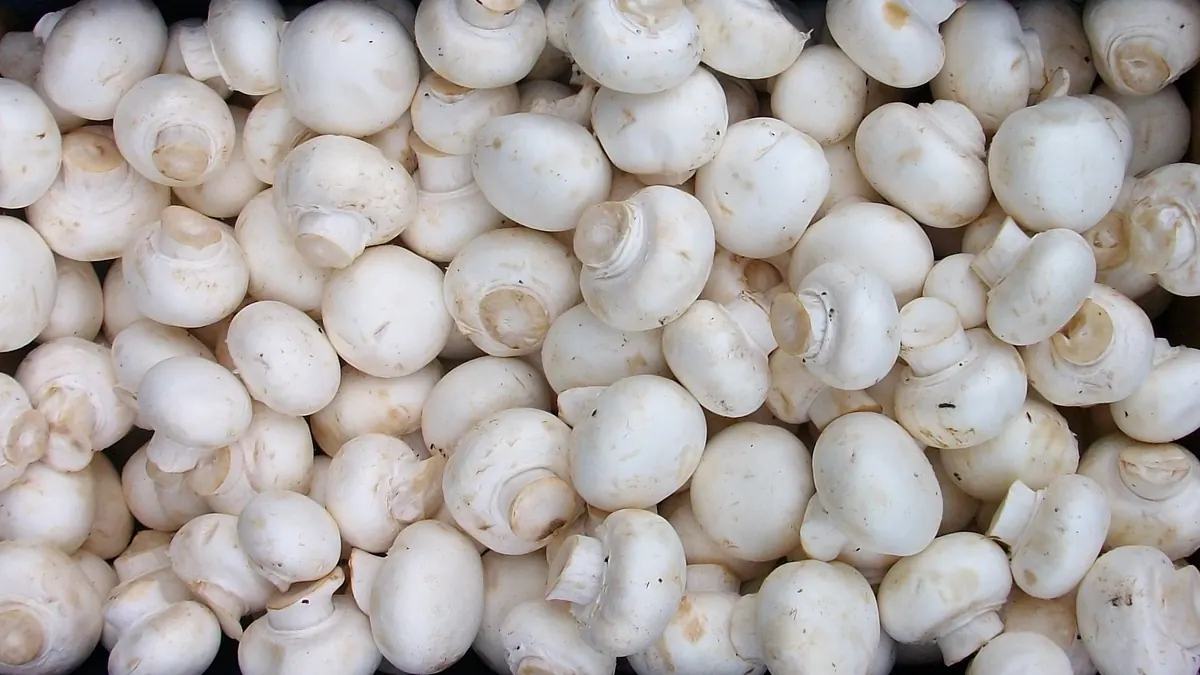
Mushroom fruiting bodies — BMP: 6 studies, weighted mean 345 m³ CH₄/t VS
345 m³ CH₄/t VS weighted mean from 6 studies
≈52 %
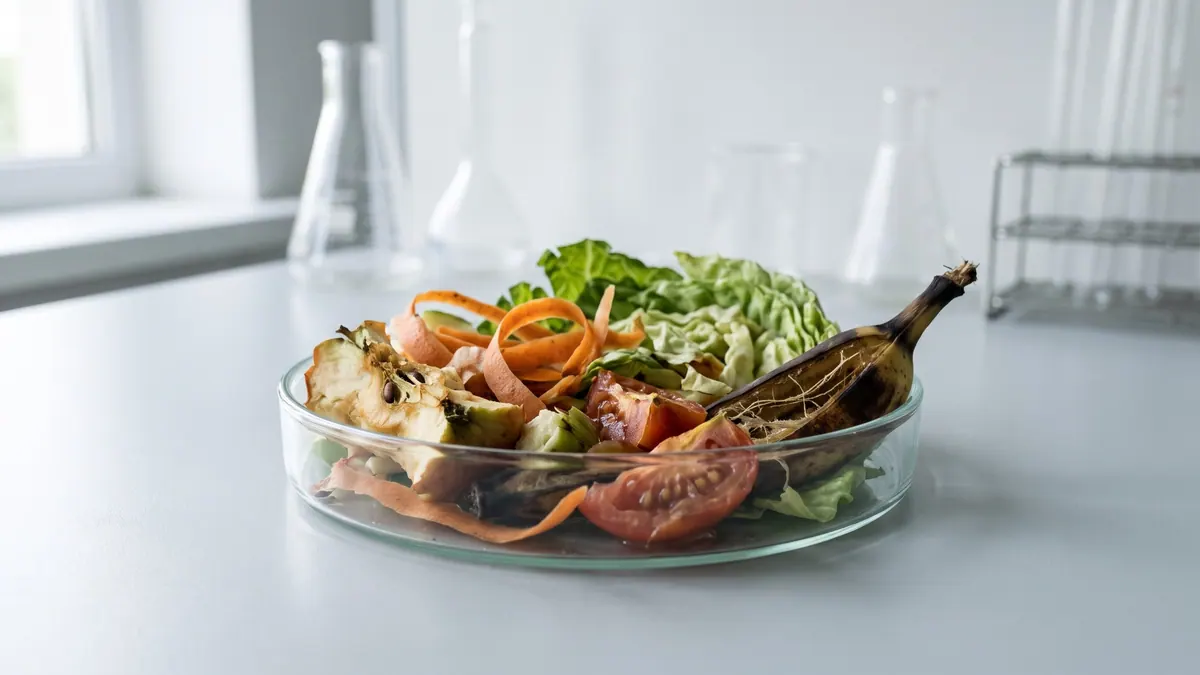
Fruit and vegetable waste (mixed) — BMP: 5 studies, weighted mean 305 m³ CH₄/t VS
305 m³ CH₄/t VS weighted mean from 5 studies
neutral — editorial rating for biogas plants≈55 %