

BMP testingAlgae and aquatic plants
Red seaweeds (Gracilaria, Palmaria) — BMP: 2 studies, weighted mean 206 m³ CH₄/t VS
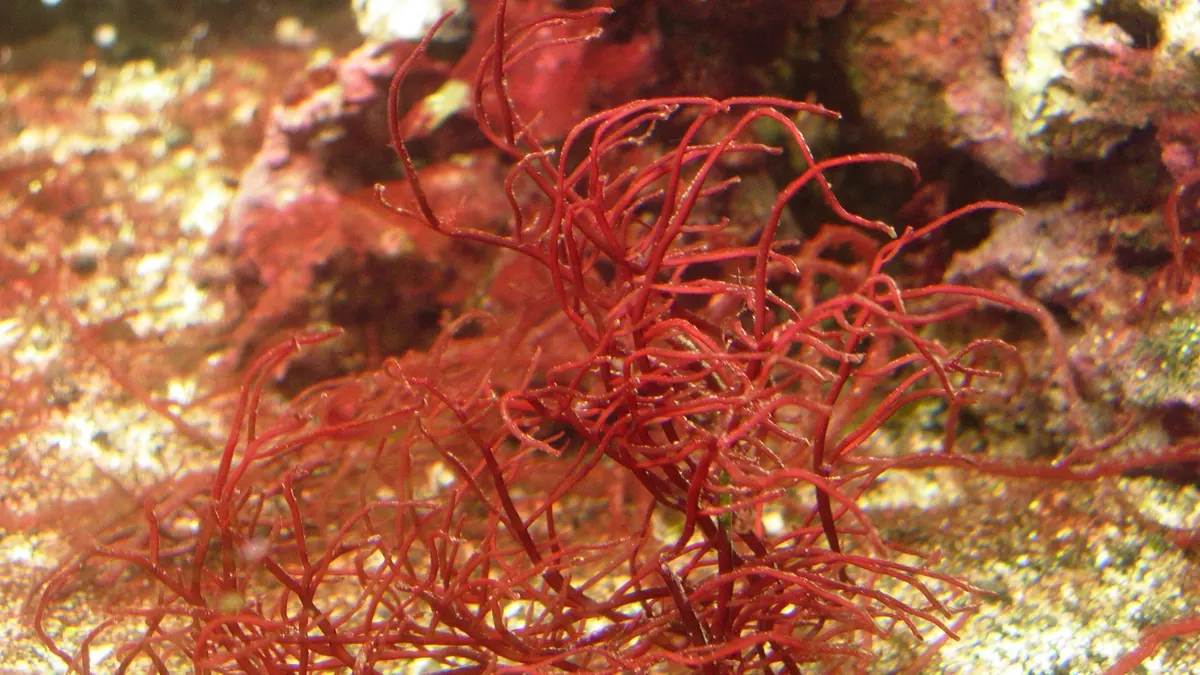
Red algae (Gracilaria, Palmaria) are marine macroalgae rich in polysaccharides; the compilation covers two studies and two species, so the spread results from differences in material.
Photo Emoody26 at English Wikipedia / Wikimedia Commons, licence CC BY 3.0, source file; changes: cropping

- Weighted mean
- 206m³ CH₄/t VS
- Range
- 132–279m³ CH₄/t VS
- Records
- 2studies
- Publications
- 2sources
- Temperatures
- 53 °Cof the test
Methane in biogas
Medium methane content · ≈ 5.2 kWh/m³ of biogas
estimate from the substrate type The collected studies contain no measurement. The interval follows from the approximate composition (carbohydrate-dominated (no protein or fat characteristics)) and the yields of compound groups according to FNR.
Rating for biogas plants
not rated — editorial rating for biogas plants
Not rated: no dry matter or volatile solids in the data. We calculate the rating when the dry matter and volatile solids of the material are known.
Add to the co-digestion calculator CSV data
BMP curves from 2 studies
Weighted mean Individual records
Dashed lines are a model curve (first-order kinetics, B(t) = B₀·(1 − e−kt)); the end point comes from the publication. All curves are model curves.
Cumulative methane production over the test [m³ CH₄/t VS]. The thick line is the weighted mean of all records (206); dots mark the end values given in the publications. Point at the chart to read values; click a legend item to hide or show a record.
Records and sources
Download CSV| Source | BMP m³ CH₄/t VS | Temperature | Sample | Curve |
|---|---|---|---|---|
| Jard et al. (2013) DOI | 279 | — | Palmaria palmata (Brittany) | end point (model curve) |
| Nielsen i Heiske (2011) DOI | 132 | 53 °C · thermophilic | Gracilaria vermiculophylla (Denmark) | end point (model curve) |
| Weighted mean | 206 | arithmetic mean 206, SD 104 | ||
Process properties
Low confidence: the description is based on general characteristics of the substrate group, not on studies of this material. Treat it as a hint to be verified.
Advantages
- Methane yield in the compendium: median 206 (range 132-279) m³ CH₄/t VS, 2 records from 2 studies (weighted mean 206).
- Palmaria palmata was identified as of interest for anaerobic digestion (Jard et al. (2013))
Drawbacks and risks
- Gracilaria vermiculophylla gave a lower yield than Saccharina latissima, but maceration increased it by 11% (Nielsen et al. (2011))
- The yield of macroalgae depends strongly on the species (Saccharina, Ulva, Gracilaria and Chaetomorpha differed in one test) (Nielsen et al. (2011))
Dosing
The sources do not give a safe share of this substrate in the feed.
Introduce gradually, starting with a small dose and monitoring the process (e.g. FOS/TAC, pH, gas composition).
Sources of the process data
The co-digestion calculator will assess a specific mixture containing this substrate.
What it is and where it comes from
Red algae (Rhodophyta) are a group of marine macroalgae. The dataset describes two species: Gracilaria vermiculophylla, known as a raw material for agar production, and Palmaria palmata, the edible dulse. They are obtained from coastal waters or from cultivation. They practically do not reach biogas plants in Poland, so the entry is a review of literature results and not a description of a national waste stream.
Properties relevant to digestion
The cell walls of red algae contain sulphated galactans (agar, carrageenans), which degrade more slowly than simple sugars, but they contain no lignin, which eases hydrolysis. The biomass is poor in cellulose, and in some species rich in protein. A problem is salinity and the sulphur content, from which hydrogen sulphide arises in the digester, inhibiting methanogenic microorganisms and burdening biogas cleaning. The presence of heavy metals and iodine in macroalgae is sometimes an additional limitation.
How to read the spread of results
The records come from different studies and concern different species, so they are not repetitions of the same measurement. The spread is affected by the species, the season and place of harvest (the composition changes seasonally), the method of preservation (fresh, dried, frozen), size reduction, adaptation of the inoculum to salt and the test temperature. One study used thermophilic conditions, and in the second record, read from the abstract, the temperature was not stated, which makes comparison difficult.
In biogas plant practice
Macroalgae are rather a supplement to the mix than a stand-alone substrate. They require rinsing of sand and salt, control of the sulphur concentration, adaptation of the inoculum and monitoring of H₂S. Because of the seasonality of supply and the costs of harvesting, the economics depend on location. In Poland the practical significance is minimal, but the material is a benchmark for research on marine biomass.
In planning it is also worth remembering seasonal variability: the composition of macroalgae changes during the year with insolation and the availability of nutrients. The best practice is a BMP test for the specific batch and parallel measurement of salinity and sulphur content, because it is these that decide whether the material can be dosed safely and in what share of the total ration.
Methodology in brief
BMP is the amount of methane obtained from volatile solids (VS) in a batch test, given in m³ CH₄ per tonne of VS (numerically the same as NmL CH₄/g VS in the publications) and converted to normal conditions (0 °C, 101.325 kPa). The weighted mean gives each publication a total weight of 1, split equally between its results for the substrate — a paper testing twenty varieties does not outweigh a paper with a single sample. In inter-laboratory programmes the unit is the laboratory (total weight 1), and within it the weight of a test grows with the number of bottles (replicates). Results after pretreatment (e.g. thermal, chemical, enzymatic) are shown separately and are not included in the mean.
Solid lines are curves measured in the tests. Where a publication gives only the final result, we draw a first-order kinetic model, B(t) = B₀·(1 − e−kt): only the end point comes from the publication, and the shape of the curve serves purely as visualisation — do not read the production on a particular day from it. For this substrate k = 0.102 d−1 was assumed (median of rate constants k reported in the sources and/or fitted to the mean measured curves).
The statistics describe the spread of published results — a descriptive compilation, not a meta-analysis or a guarantee of plant yield.
Bibliography
- Jard, G.; Marfaing, H.; Carrère, H.; Delgenes, J.; Steyer, J.; Dumas, C. (2013). French Brittany macroalgae screening: Composition and methane potential for potential alternative sources of energy and products. Bioresource Technology 144, 492–498. DOI: 10.1016/j.biortech.2013.06.114 DOI
- Nielsen, H.B.; Heiske, S. (2011). Anaerobic digestion of macroalgae: methane potentials, pre-treatment, inhibition and co-digestion. Water Science and Technology 64(8), 1723–1729. DOI: 10.2166/wst.2011.654 DOI
All sources of the site: bibliography.
Other substrates in the group “Algae and aquatic plants”
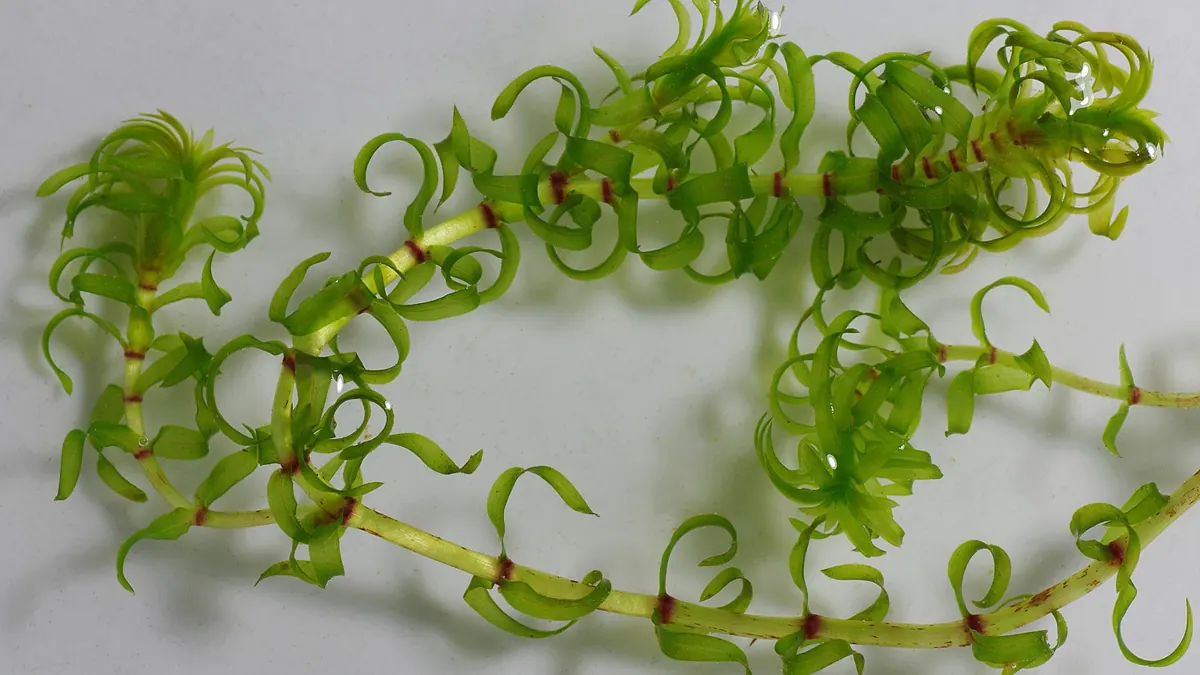
Western waterweed — BMP: 2 studies, weighted mean 218 m³ CH₄/t VS
218 m³ CH₄/t VS weighted mean from 2 studies
≈52 %
Chlamydomonas reinhardtii — BMP: 2 studies, weighted mean 346 m³ CH₄/t VS
346 m³ CH₄/t VS weighted mean from 2 studies
≈58 %
Microspora sp. — BMP: 2 studies, weighted mean 334 m³ CH₄/t VS
334 m³ CH₄/t VS weighted mean from 2 studies
≈52 %
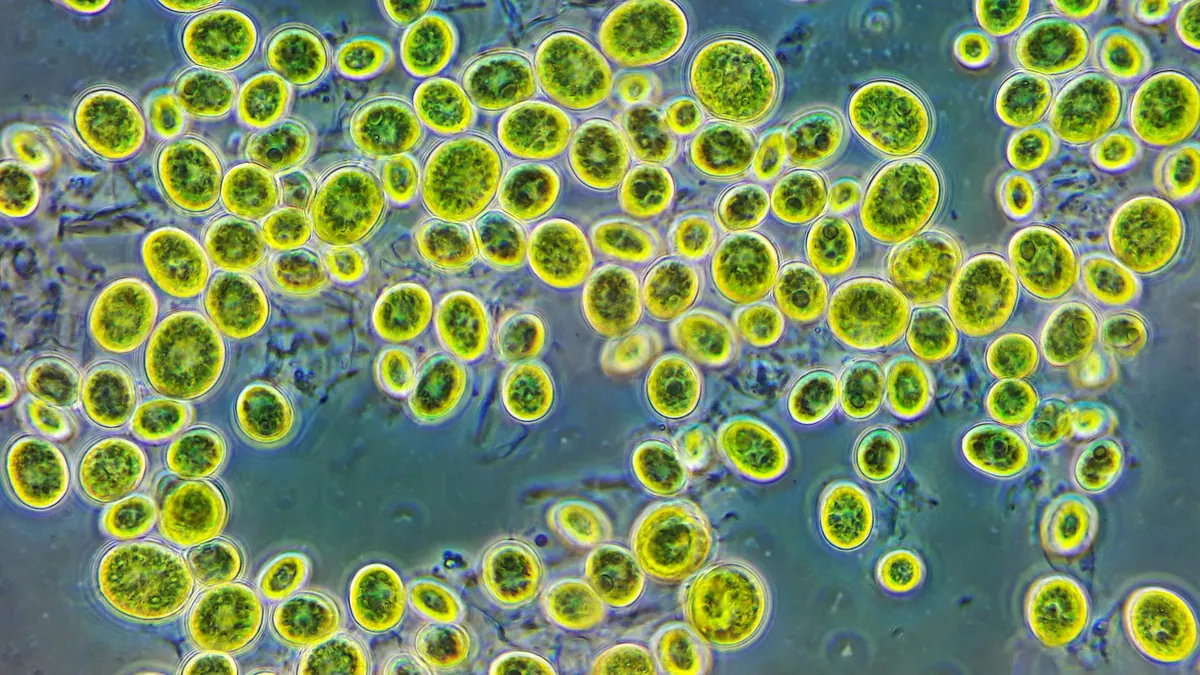
Chlorella sp. — BMP: 4 studies, weighted mean 229 m³ CH₄/t VS
229 m³ CH₄/t VS weighted mean from 4 studies
≈58 %