

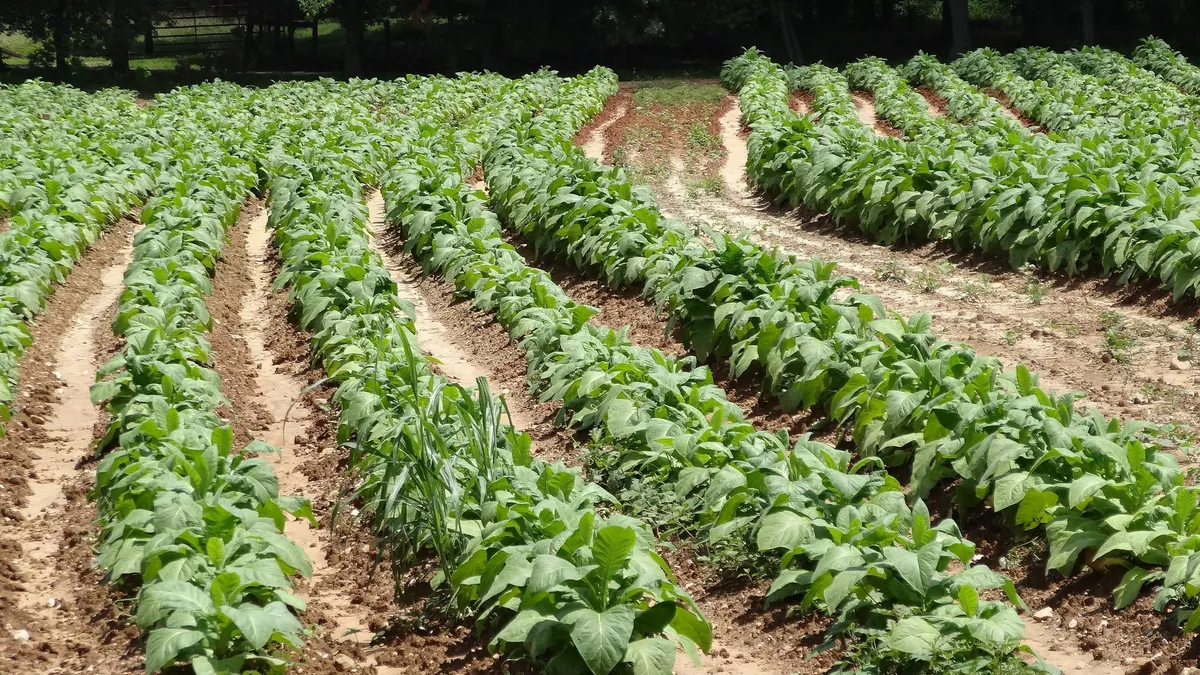
BMP testingStraws and crop residues
Tobacco stalks — BMP: 2 studies, weighted mean 139 m³ CH₄/t VS
Tobacco stalks are a lignocellulosic waste left after leaf harvest; raw stalks yield about 130-148 m³ CH₄/t VS in the literature, and clearly more only after pretreatment.
Photo Emw / Wikimedia Commons, licence CC BY-SA 3.0, source file; changes: cropping

- Weighted mean
- 139m³ CH₄/t VS
- Range
- 130–148m³ CH₄/t VS
- Records
- 2studies
- Publications
- 2sources
- Temperatures
- —of the test
Methane in biogas
Medium methane content · ≈ 5.2 kWh/m³ of biogas
estimate from the substrate type The collected studies contain no measurement. The interval follows from the approximate composition (carbohydrate-dominated (no protein or fat characteristics)) and the yields of compound groups according to FNR.
Rating for biogas plants
not rated — editorial rating for biogas plants
Not rated: no dry matter or volatile solids in the data. We calculate the rating when the dry matter and volatile solids of the material are known.
Add to the co-digestion calculator CSV data
BMP curves from 2 studies
Weighted mean Individual records
Dashed lines are a model curve (first-order kinetics, B(t) = B₀·(1 − e−kt)); the end point comes from the publication. All curves are model curves.
Cumulative methane production over the test [m³ CH₄/t VS]. The thick line is the weighted mean of all records (139); dots mark the end values given in the publications. Point at the chart to read values; click a legend item to hide or show a record.
Records and sources
Download CSV| Source | BMP m³ CH₄/t VS | Temperature | Sample | Curve |
|---|---|---|---|---|
| Li et al. (2019) DOI | 130 | — | Nicotiana tabacum L. Yunyan114 (tobacco stalk) | end point (model curve) |
| Zhang et al. (2020) DOI | 148 | — | Tobacco stalk TS116 (untreated, OL 20.2 g VS/L, F/I 1.1) | end point (model curve) |
| Weighted mean | 139 | arithmetic mean 139, SD 13 | ||
Process properties
Advantages
- Methane yield in the compendium: 130.2–148.1 m³ CH₄/t VS, 2 records from 2 papers (weighted mean 139.1).
- Alkaline pretreatment with hydrogen peroxide (7% AHP) increased the yield of tobacco stalks by 105.6% to 350.7 m³ CH₄/t VS (biodegradability 81.4%) in a batch test (Zhang et al. 2020).
- The digestate can be applied to arable land growing solanaceous crops: the CMV virus was inactivated under mesophilic and thermophilic conditions, and TMV only thermophilically after more than 20 days (Liu et al. 2015).
Drawbacks and risks
- Low yield of raw stalks; varieties with a lower lignin content gave more methane (Li et al. 2019).
- Lignocellulose recalcitrance limits digestion efficiency; pretreatment required (Wang et al. 2024).
Co-digestion — what to combine it with, what to watch out for
- combines well
group: Animal excreta (slurry, manure, poultry litter)
The highest result for tobacco stalks was achieved in co-digestion with wheat straw and pig slurry (Liu et al. 2015).[1]
Dosing
No source-based limits on the share in the mix. Liu et al. (2015): the highest yield of tobacco stalks (0.163 m3 CH4/kg VS, VS removal 59.1%) was obtained in co-digestion with wheat straw and pig slurry at 35 °C. The literature in the abstracts checked gives no threshold for nicotine inhibition.
Introduce gradually, starting with a small dose and monitoring the process (e.g. FOS/TAC, pH, gas composition).
Practical requirements
- Alkaline pretreatment with hydrogen peroxide (AHP) was the most effective of those tested (AHP, NaOH, KOH, Ca(OH)2, HCl, oxalic acid) (Zhang et al. 2020).
- For digestate intended for solanaceous crops, use thermophilic digestion for at least 20 days, because TMV is not destroyed under mesophilic conditions (Liu et al. 2015).
Sources of the process data
- Liu et al. (2015). Co-digestion of tobacco waste with different agricultural biomass feedstocks and the inhibition of tobacco viruses by anaerobic digestion. Bioresour. Technol.
- Li et al. (2019). Anaerobic digestion of tobacco stalk: biomethane production performance and kinetic analysis. Environ. Sci. Pollut. Res.
- Zhang et al. (2020). Effect of organic loading, feed-to-inoculum ratio, and pretreatment on the anaerobic digestion of tobacco stalks. Bioresour. Technol.
- Wang et al. (2024). Performance and mechanism of various microaerobic pretreatments on anaerobic digestion of tobacco straw. Bioresour. Technol.
The co-digestion calculator will assess a specific mixture containing this substrate.
What it is and where it comes from
Tobacco stalks (Nicotiana tabacum) are the lignified part of the plant that remains in the field or at the drying shed after the leaves are harvested. The largest quantities arise in China, where, according to the authors of the studies, this waste is a cause of serious environmental pollution when it is landfilled or burned. In Poland tobacco growing is small and regionally concentrated, so the stream is local in character. The compilation contains two records from two Chinese studies: stalks of the Yunyan114 variety (130.2 m³ CH₄/t VS; Li et al. 2019) and untreated TS116 stalks at the best loading and substrate-to-inoculum ratio (148.1 m³ CH₄/t VS; Zhang et al. 2020). The values come from publication abstracts.
Properties relevant to digestion
This is a typical lignocellulosic biomass. The authors of the first study compared four stalk varieties and indicated that the best result was obtained by the one with the lower lignin content, which confirms that it is lignin that limits the availability of cellulose to bacteria. The resistance of the lignocellulosic structure is also the main limitation identified in the study on microaerobic pretreatment of tobacco straw (Wang et al. 2024). Pretreatment has a clear effect: in the study by Zhang et al. (2020), of the tested methods (hydrogen peroxide in an alkaline medium, NaOH, KOH, Ca(OH)2, HCl, oxalic acid), the most effective was 7% alkaline hydrogen peroxide, which raised the yield by 105.6% to 350.7 m³ CH₄/t VS (biodegradability 81.4%). These values relate to material after treatment, so they are not counted among the records for the raw substrate.
How to read the spread of results
The two records come from two studies by the same team, but from different experiments and varieties, so the difference of 130-148 m³/t is consistent with the expected spread between varieties. The abstracts do not state the temperature or test duration for the records, and the Zhang et al. value is the best variant from a loading × S/I series, that is, an optimised result and not a typical one. For this reason the weighted average (about 139 m³/t) is only an indicative reference point. The result is also affected by the share of leaves and bark, the degree of shredding, the lignin content and the test length.
In biogas plant practice
Mono-digestion of raw stalks is unattractive because of the low yield. The highest result in co-digestion (0.163 m3 CH4/kg VS) was obtained with wheat straw and pig slurry at 35 °C, with a VS removal of the stalks of 59.1% (Liu et al. 2015). The same study shows an important hygiene issue: cucumber mosaic virus (CMV) was inactivated under both mesophilic and thermophilic conditions, whereas tobacco mosaic virus (TMV) was inactivated only in thermophilic digestion lasting more than 20 days. If the digestate is to be applied to solanaceous crops (e.g. potatoes, tomatoes), this must be taken into account. An own BMP test on the specific batch is necessary before design.
Methodology in brief
BMP is the amount of methane obtained from volatile solids (VS) in a batch test, given in m³ CH₄ per tonne of VS (numerically the same as NmL CH₄/g VS in the publications) and converted to normal conditions (0 °C, 101.325 kPa). The weighted mean gives each publication a total weight of 1, split equally between its results for the substrate — a paper testing twenty varieties does not outweigh a paper with a single sample. In inter-laboratory programmes the unit is the laboratory (total weight 1), and within it the weight of a test grows with the number of bottles (replicates). Results after pretreatment (e.g. thermal, chemical, enzymatic) are shown separately and are not included in the mean.
Solid lines are curves measured in the tests. Where a publication gives only the final result, we draw a first-order kinetic model, B(t) = B₀·(1 − e−kt): only the end point comes from the publication, and the shape of the curve serves purely as visualisation — do not read the production on a particular day from it. For this substrate k = 0.136 d−1 was assumed (median of rate constants k reported in the sources and/or fitted to the mean measured curves).
The statistics describe the spread of published results — a descriptive compilation, not a meta-analysis or a guarantee of plant yield.
Bibliography
- Li, L.; Wang, R.; Jiang, Z.; Li, W.; Liu, G.; Chen, C. (2019). Anaerobic digestion of tobacco stalk: biomethane production performance and kinetic analysis. Environmental Science and Pollution Research 26(14), 14250–14258. DOI: 10.1007/s11356-019-04677-2 DOI
- Zhang, H.; Wang, L.; Dai, Z.; Zhang, R.; Chen, C.; Liu, G. (2020). Effect of organic loading, feed-to-inoculum ratio, and pretreatment on the anaerobic digestion of tobacco stalks. Bioresource Technology 298, 122474. DOI: 10.1016/j.biortech.2019.122474 DOI
All sources of the site: bibliography.
Other substrates in the group “Straws and crop residues”
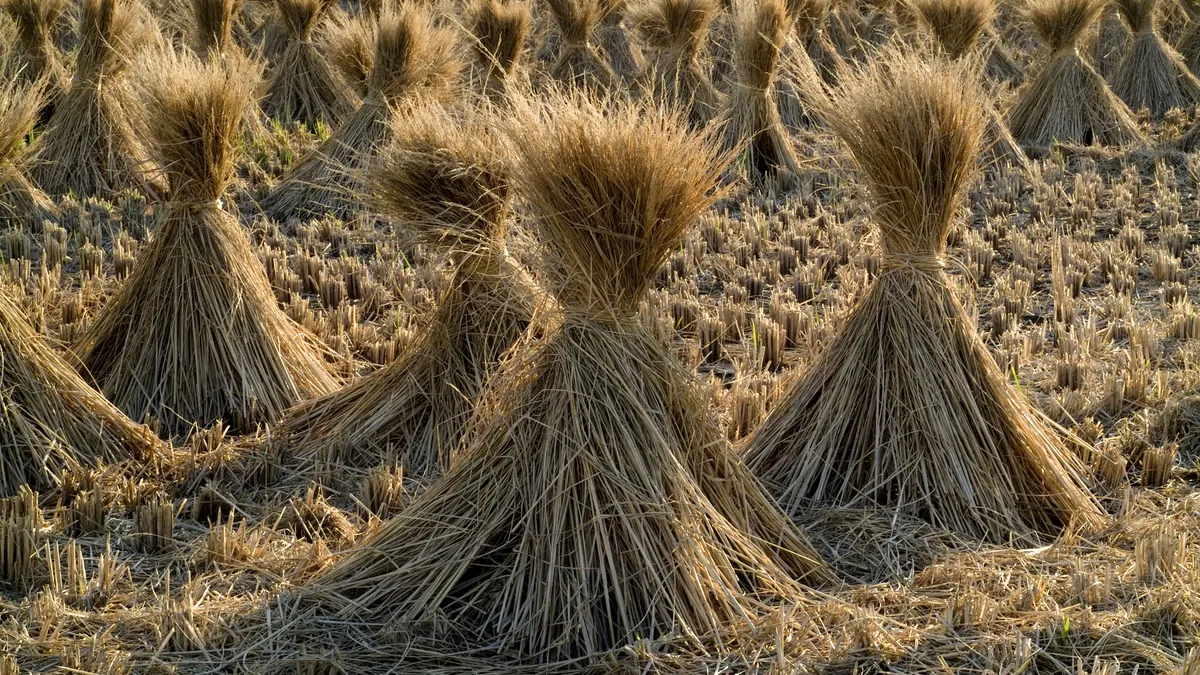
Rice straw — BMP: 12 studies, weighted mean 262 m³ CH₄/t VS
262 m³ CH₄/t VS weighted mean from 12 studies
good — editorial rating for biogas plants≈52 %
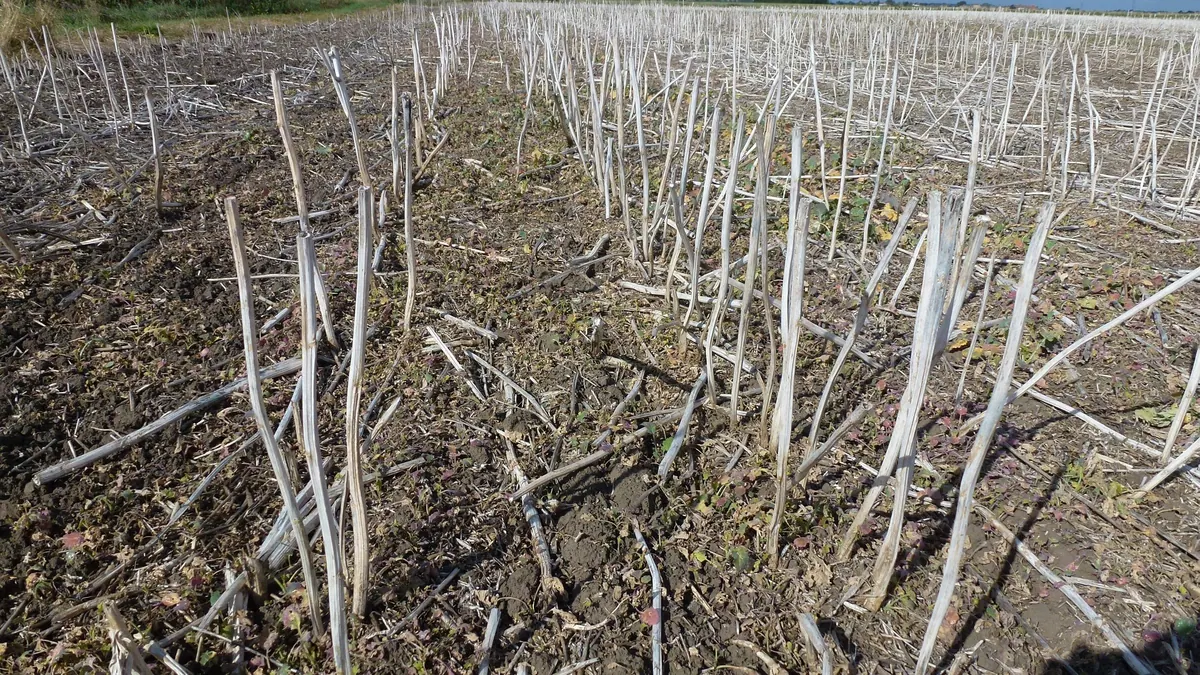
Rapeseed straw — BMP: 2 studies, weighted mean 241 m³ CH₄/t VS
241 m³ CH₄/t VS weighted mean from 2 studies
good — editorial rating for biogas plants≈53 %
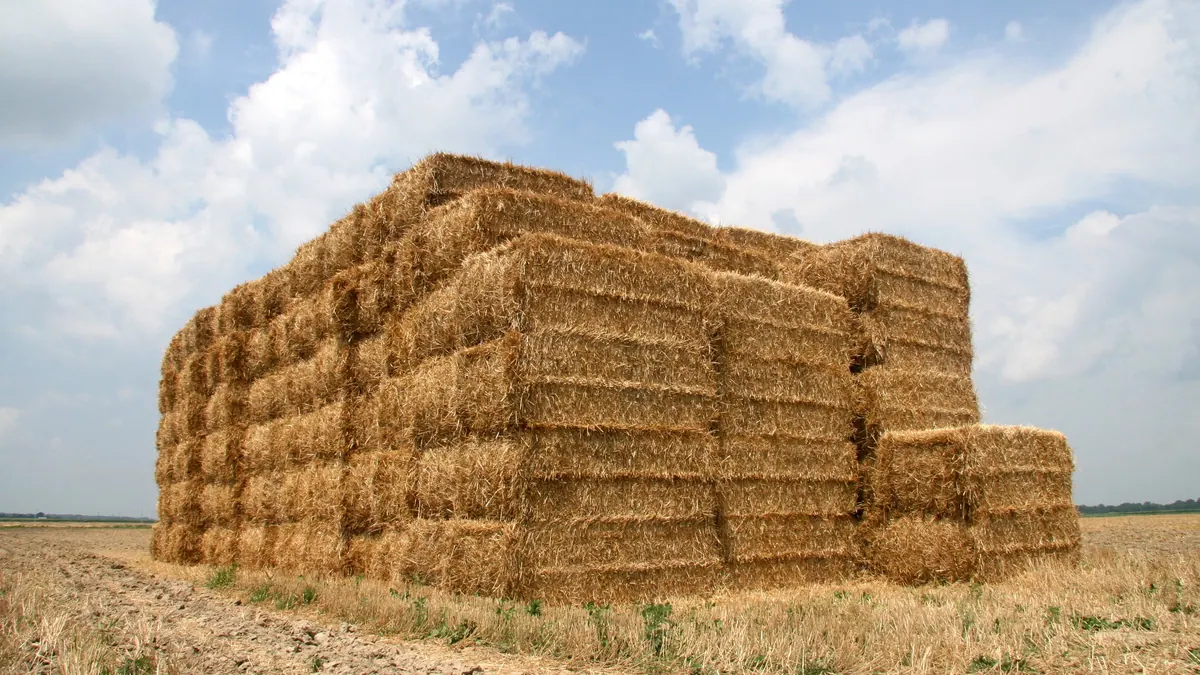
Wheat straw — BMP: 92 studies, weighted mean 261 m³ CH₄/t VS
261 m³ CH₄/t VS weighted mean from 92 studies
good — editorial rating for biogas plants≈52 %
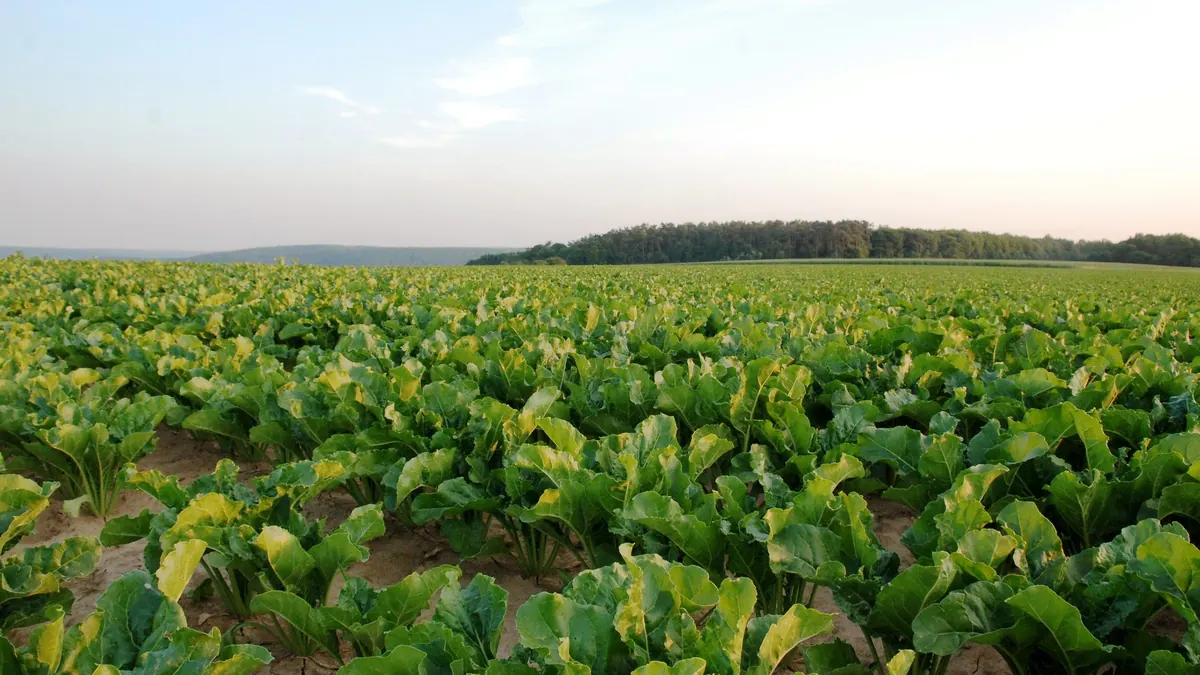
Beet leaves and tops — BMP: 18 studies, weighted mean 308 m³ CH₄/t VS
308 m³ CH₄/t VS weighted mean from 18 studies
neutral — editorial rating for biogas plants68 %