

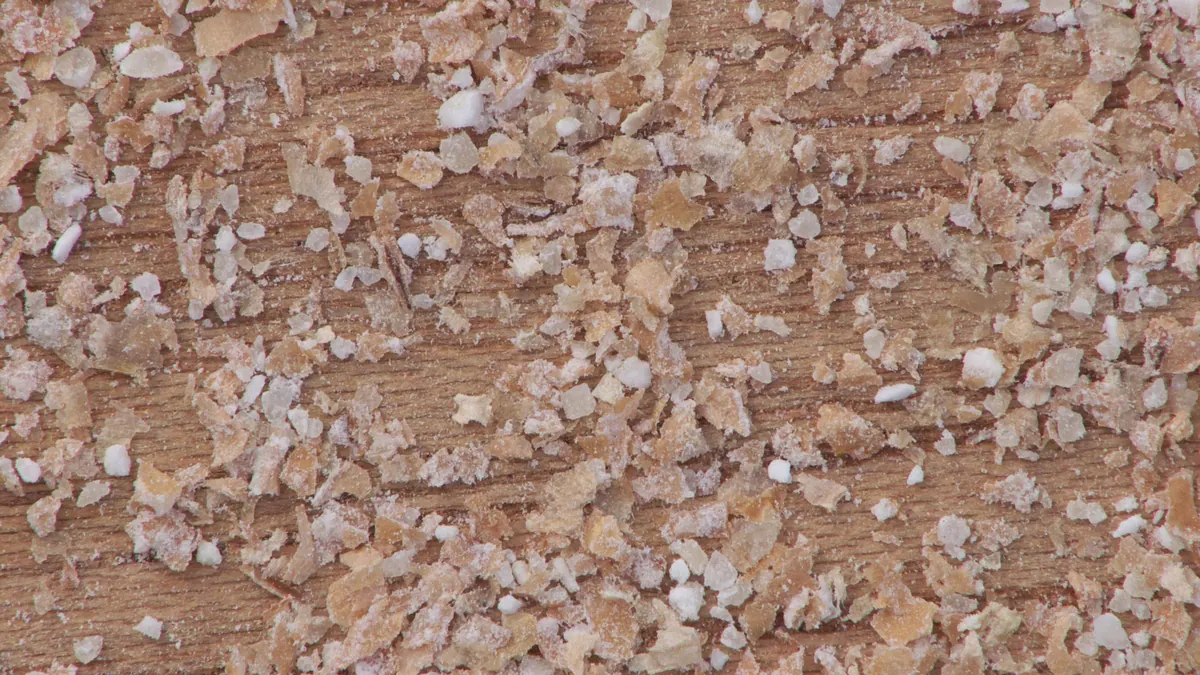
BMP testingGrain, bran, feed and fodder
Wheat bran — BMP: 2 studies, weighted mean 330 m³ CH₄/t VS
Wheat bran is a by-product of grain milling, rich in fibre, residual starch and protein. The compilation is based on a small number of records from several studies.
rating: very goodCH₄ ≈ 52 % (estimate)
Photo Rasbak / Wikimedia Commons, licence CC BY-SA 3.0, source file; changes: cropping

- Weighted mean
- 330m³ CH₄/t VS
- Range
- 330–330m³ CH₄/t VS
- Records
- 2studies
- Publications
- 2sources
- Temperatures
- 36 °C, 38 °Cof the test
Methane in biogas
Medium methane content · ≈ 5.2 kWh/m³ of biogas
estimate from the substrate type The collected studies contain no measurement. The interval follows from the approximate composition (carbohydrate-dominated (no protein or fat characteristics)) and the yields of compound groups according to FNR.
Rating for biogas plants
very good — editorial rating for biogas plantsWorth accepting even for free or with a payment to the supplier
Potential per tonne of fresh matter: very high (263 m³ CH₄/t); no particular threats to stability. Handling costs: fibres, floating layer.
Why? Rating factors
Potential per tonne +3
- +3potential 263 m³ CH₄/t fresh matter (BMP 330 × DM 86.9 % × VS 91.8 %)
Process stability 0
- 0no factors
Handling and costs −0.5
- −0.5fibres, floating layer — shredding and intensive mixing
Total points: 2.5 · thresholds: ≥ 2.5 very good, ≥ 1 good, below — neutral; negative with cumulative process risk.
Add to the co-digestion calculator CSV data
BMP curves from 2 studies
Weighted mean Individual records
Dashed lines are a model curve (first-order kinetics, B(t) = B₀·(1 − e−kt)); the end point comes from the publication. All curves are model curves.
Cumulative methane production over the test [m³ CH₄/t VS]. The thick line is the weighted mean of all records (330); dots mark the end values given in the publications. Point at the chart to read values; click a legend item to hide or show a record.
Records and sources
Download CSV| Source | BMP m³ CH₄/t VS | Temperature | Sample | Curve |
|---|---|---|---|---|
| Kolbl et al. (2014) DOI | 330 | 38 °C · mesophilic | Wheat Bran | end point (model curve) |
| Luna-delRisco et al. (2011) | 330 | 36 °C · mesophilic | grain mill - Bran | end point (model curve) |
| Weighted mean | 330 | arithmetic mean 330, SD 0 | ||
Typical composition
- Dry matter (DM)
- 86.9% (range 79.4–94.4)
- Volatile solids (VS)
- 91.8 % DM (range 91.4–92.2)
Median and range of the determinations reported in the publications behind this substrate's BMP records (read from: MY-D); dry matter: 2 determinations, volatile solids: 2 determinations.
Sources: Kolbl et al. (2014); Luna-delRisco et al. (2011).
The composition of the raw material varies between batches — for plant calculations use an analysis of your own sample. The calculator inserts typical values automatically.
Process properties
Low confidence: the description is based on general characteristics of the substrate group, not on studies of this material. Treat it as a hint to be verified.
Advantages
- Methane potential in the database: weighted mean 330 m³ CH₄/t VS (median 330; range 330–330; 2 records from 2 sources).
- A milling by-product; described in Kolbl 2014 and Lunadelrisco 2011.
Co-digestion — what to combine it with, what to watch out for
- combines well
group: Animal excreta (slurry, manure, poultry litter)
Co-digestion with excreta (slurry/solid manure) is the standard arrangement for plant biomass: they supply alkalinity and microflora.[1][2]
Dosing
No source-based dose limits.
Sources of the process data
- Kolbl, S.; Paloczi, A.; Panjan, J.; Stres, B. (2014) Addressing case specific biogas plant tasks: Industry oriented methane yields derived from 5L Automatic Methane Potential Test Systems in batch or semi-continuous tests using realistic inocula, substrate particle sizes and organic loading. Bioresource Technology 153, 180–188
- Weiland, P. (2010) Biogas production: current state and perspectives. Applied Microbiology and Biotechnology
- Hendriks, A.T.W.M.; Zeeman, G. (2009) Pretreatments to enhance the digestibility of lignocellulosic biomass. Bioresource Technology
- Luna-delRisco, M.; Normak, A.; Orupõld, K. (2011) Biochemical methane potential of different organic wastes and energy crops from Estonia. Agronomy Research 9(1–2), 331–342
The co-digestion calculator will assess a specific mixture containing this substrate.
What it is and where it comes from
Wheat bran arises in mills during the milling of grain into flour: it is the outer layers of the kernel together with the germ and remnants of the endosperm. It is used as feed, in food and as an industrial raw material. As a biogas plant substrate it is costly and competes with feed uses. The compilation covers several records from several studies: wheat bran and bran from a grain mill, under mesophilic conditions.
Properties relevant to digestion
Bran has a lot of dietary fibre (cellulose, hemicellulose, arabinoxylans), protein and residual starch and fats. Degradation is faster than for straw because readily available compounds occur alongside the fibre. The material is dry and dusty and needs wetting. A high protein content means ammonia release at high doses. When damp, bran quickly goes mouldy and loses value, which must be monitored during storage. In the digester it can form lumps if it is not mixed well.
How to read the spread of results
The records do not exhaust the variability. The composition of bran depends on the wheat variety, the extraction rate (the more thoroughly the grain is milled, the less starch remains in the bran), granulation and the type of mill. Further factors are the degree of size reduction, the form of the material (loose or pelleted), the inoculum, the substrate-to-inoculum ratio and the test temperature (36 to 38 °C in these studies). Results from different mills can therefore differ significantly.
In biogas plant practice
Bran is a good, readily fermentable supplement, but its feed price usually exceeds its energy value at a biogas plant. It may make sense for batches that are spoiled, damp or fail feed standards. It should be added gradually, monitoring ammonia, and wetted before feeding. Before signing a supply agreement it is worth checking the waste classification and running a BMP test. It should also be taken into account that bran is fine and dusty, so when dosing it care must be taken to limit dust and the risk of dust explosion in the loading areas, in line with the safety rules applicable to bulk materials. Because the compilation contains few records and mills differ in technology, before purchase it is worth testing the specific batch and checking its composition, including starch and fat content, because these determine the rate of digestion. It is also good to agree a fixed product specification with the supplier.
Methodology in brief
BMP is the amount of methane obtained from volatile solids (VS) in a batch test, given in m³ CH₄ per tonne of VS (numerically the same as NmL CH₄/g VS in the publications) and converted to normal conditions (0 °C, 101.325 kPa). The weighted mean gives each publication a total weight of 1, split equally between its results for the substrate — a paper testing twenty varieties does not outweigh a paper with a single sample. In inter-laboratory programmes the unit is the laboratory (total weight 1), and within it the weight of a test grows with the number of bottles (replicates). Results after pretreatment (e.g. thermal, chemical, enzymatic) are shown separately and are not included in the mean.
Solid lines are curves measured in the tests. Where a publication gives only the final result, we draw a first-order kinetic model, B(t) = B₀·(1 − e−kt): only the end point comes from the publication, and the shape of the curve serves purely as visualisation — do not read the production on a particular day from it. For this substrate k = 0.257 d−1 was assumed (median of rate constants k reported in the sources and/or fitted to the mean measured curves).
The statistics describe the spread of published results — a descriptive compilation, not a meta-analysis or a guarantee of plant yield.
Bibliography
- Kolbl, S.; Paloczi, A.; Panjan, J.; Stres, B. (2014). Addressing case specific biogas plant tasks: Industry oriented methane yields derived from 5L Automatic Methane Potential Test Systems in batch or semi-continuous tests using realistic inocula, substrate particle sizes and organic loading. Bioresource Technology 153, 180–188. DOI: 10.1016/j.biortech.2013.12.010 DOI
- Luna-delRisco, M.; Normak, A.; Orupõld, K. (2011). Biochemical methane potential of different organic wastes and energy crops from Estonia. Agronomy Research 9(1–2), 331–342. https://www.semanticscholar.org/paper/25cf2d7bba4758136830a9a02caf3ecd997173bb source
All sources of the site: bibliography.
Other substrates in the group “Grain, bran, feed and fodder”
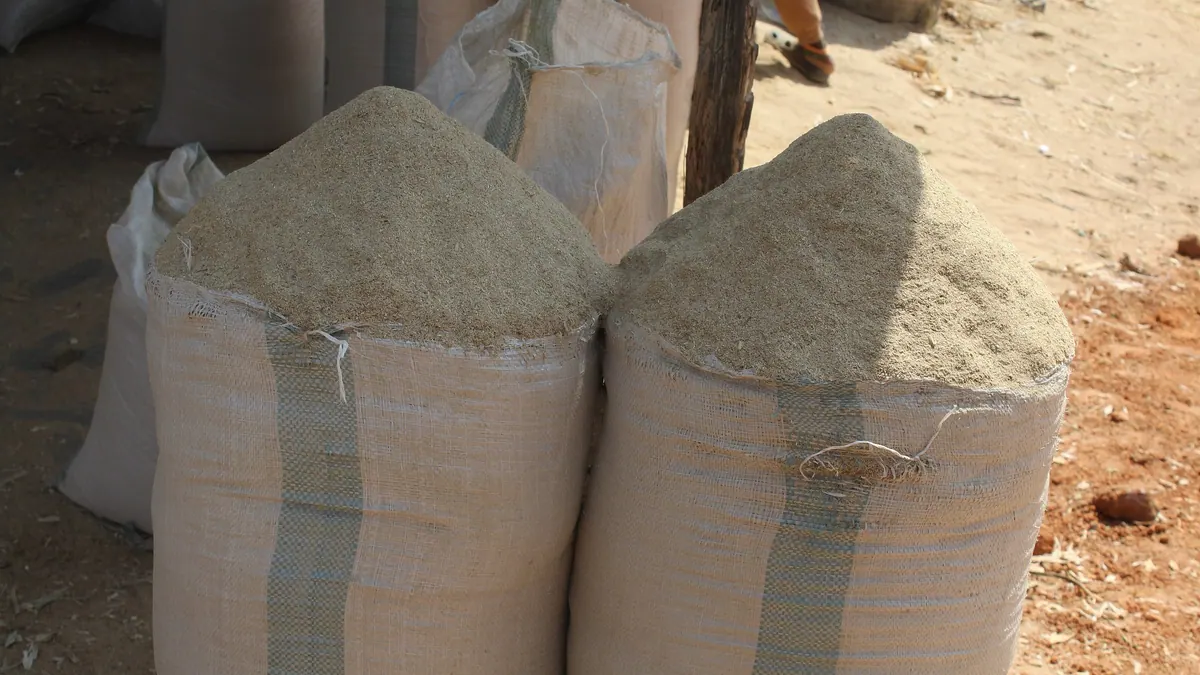
Cereal residues (screenings, dust, silo losses) — BMP: 10 studies, weighted mean 324 m³ CH₄/t VS
324 m³ CH₄/t VS weighted mean from 10 studies
good — editorial rating for biogas plants≈53 %
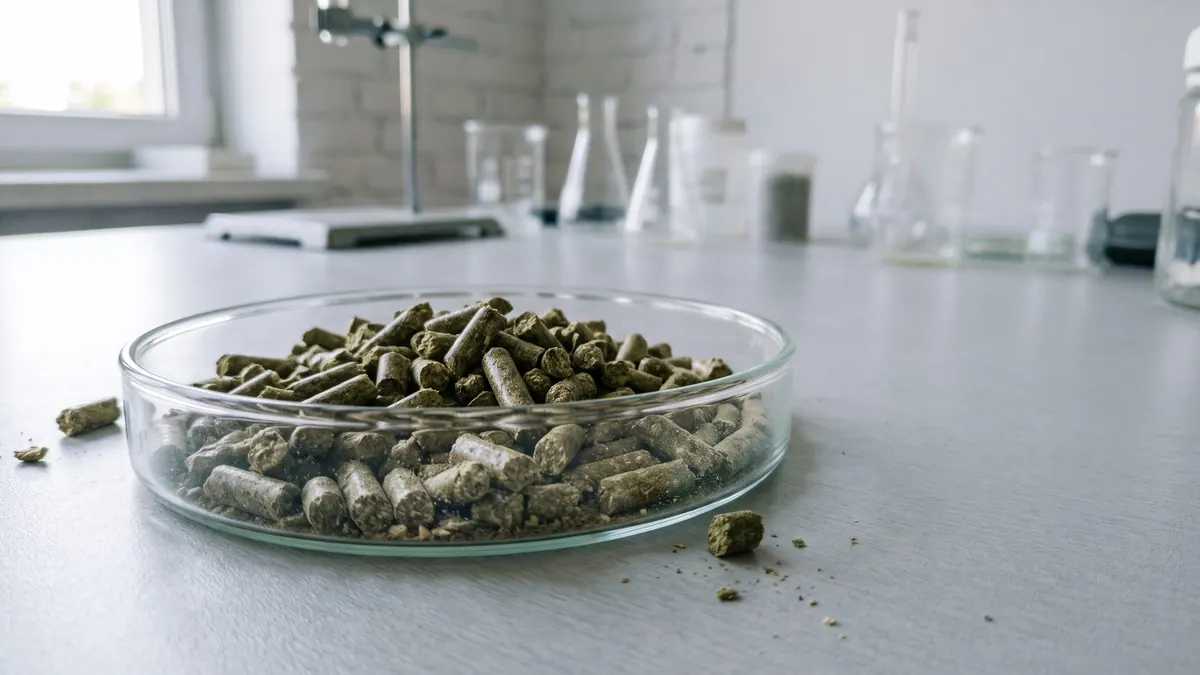
Rabbit and rodent feed pellets — BMP: 12 studies, weighted mean 330 m³ CH₄/t VS
330 m³ CH₄/t VS weighted mean from 12 studies
≈52 %
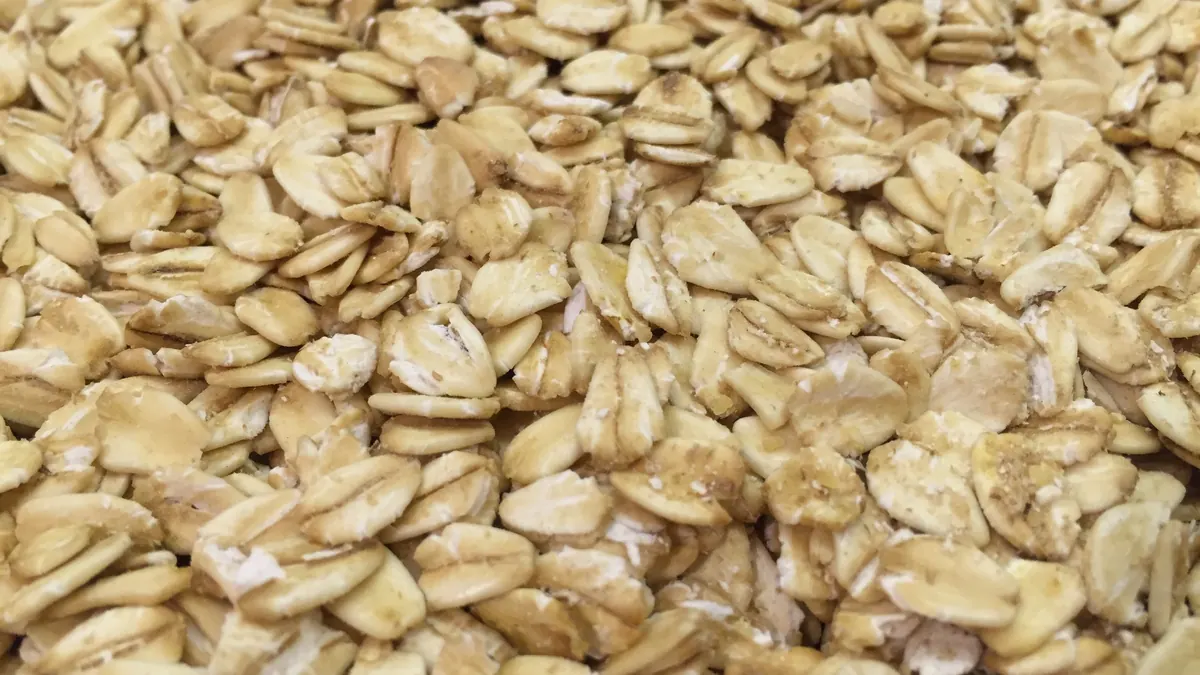
Cereal flakes (oat, corn) — BMP: 2 studies, weighted mean 376 m³ CH₄/t VS
376 m³ CH₄/t VS weighted mean from 2 studies
≈52 %
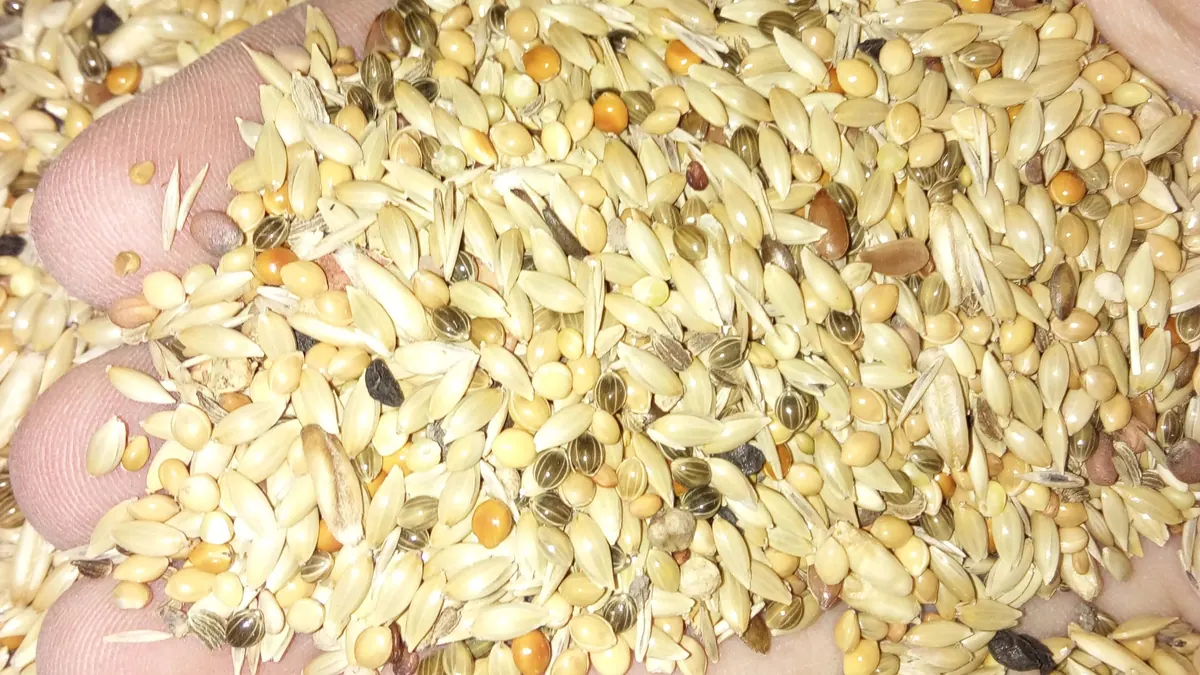
Bird feed (seed mix) — BMP: 10 studies, weighted mean 387 m³ CH₄/t VS
387 m³ CH₄/t VS weighted mean from 10 studies
≈52 %