BiogasExplainer
Slurry as a base substrate: yield, buffering role and dilution of the mix
Slurry gives a low methane yield per tonne, but it performs important functions: buffer, water, microorganisms, trace elements and lower emissions from storage. What is known about its role and limitations.
Other language versions: polski.
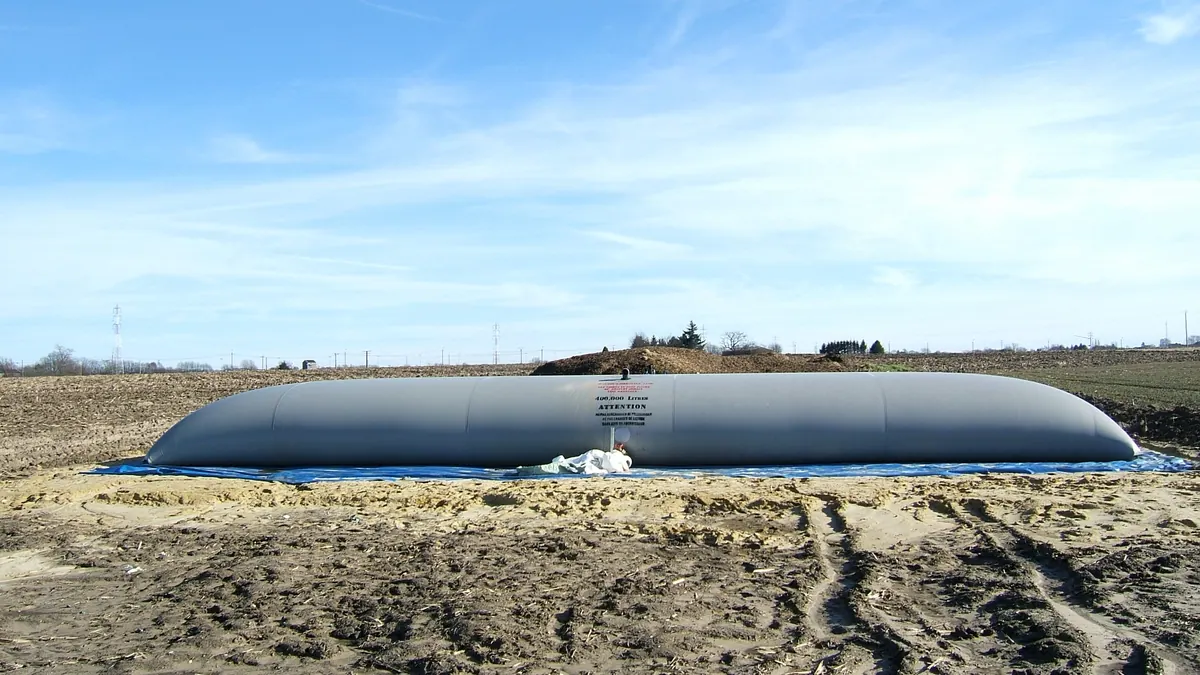

Slurry is a liquid natural fertiliser with low dry matter (usually a few per cent, e.g. 4–10% depending on species and dilution), whose biogas yield per tonne of fresh mass is small, but which makes an ideal base for co-digestion. It supplies water, alkalinity, microorganisms and trace elements, evens out the mix and makes pumping easier, and its digestion also reduces methane emissions from storage. Slurry alone, however, can hardly deliver profitable energy production, so it is usually supplemented with substrates of higher energy content.
Composition and differences
| Type | Dry matter (indicative) | Nitrogen | Notes |
|---|---|---|---|
| Cattle slurry | approx. 6–10% | moderate | fibres, straw, good buffering capacity |
| Pig slurry | approx. 3–7% | higher share of ammonium | lower C/N, faster hydrolysis |
| Cattle manure (bedded) | approx. 20–25% | lower | needs size reduction, a lot of fibre |
| Poultry droppings | approx. 25–50% | very high | ammonia risk |
The values in the table are indicative; they depend on feeding, bedding, house-washing water and the way of storage. For biogas plant planning, use analyses from the specific farms.
Yield per tonne
The methane potential of slurry per VS is usually moderate (several dozen per cent lower than maize silage), and per tonne of fresh mass it is very low because of the high dilution. An example with explicit assumptions: cattle slurry TS 8%, VS 80% of TS, BMP 200 m³ CH₄/t VS (an example value; determine your own from a test):
- VS in a tonne: 1,000 kg × 0.08 × 0.80 = 64 kg,
- methane: 64 × 0.200 = 12.8 m³ CH₄/t.
For comparison, maize silage (TS 33%, VS 95%, BMP 340) gives: 313 kg VS × 0.34 = approx. 106 m³ CH₄/t. The difference is more than eightfold per tonne. That is why slurry acts as a base, not as the main source of energy.
Functions in the mix
- Buffer. The content of ammonium and carbonates stabilises the pH and raises the TAC.
- Water and dilution. It keeps the suspension pumpable despite a large amount of silage.
- Microorganisms. It contains a natural methanogenic and hydrolytic flora, which speeds up start-up.
- Trace elements. It supplies Co, Ni, Se and others, which limits deficiencies.
- Manure management. It lets the farm make use of the manure, and the digestate has better fertiliser properties (homogeneous, nitrogen in ammonium form).
Dilution and pitfalls
Too large a share of slurry lowers the OLR and HRT, reducing the volumetric efficiency of the digester and increasing the amount of digestate to store and spread. Very dilute slurry (after washing, with rainwater) is not worth transporting far — the cost exceeds the energy gain. In plants with high nitrogen (pig slurry, poultry droppings) the risk of ammonia inhibition rises, especially under thermophilic conditions.
Climate effect
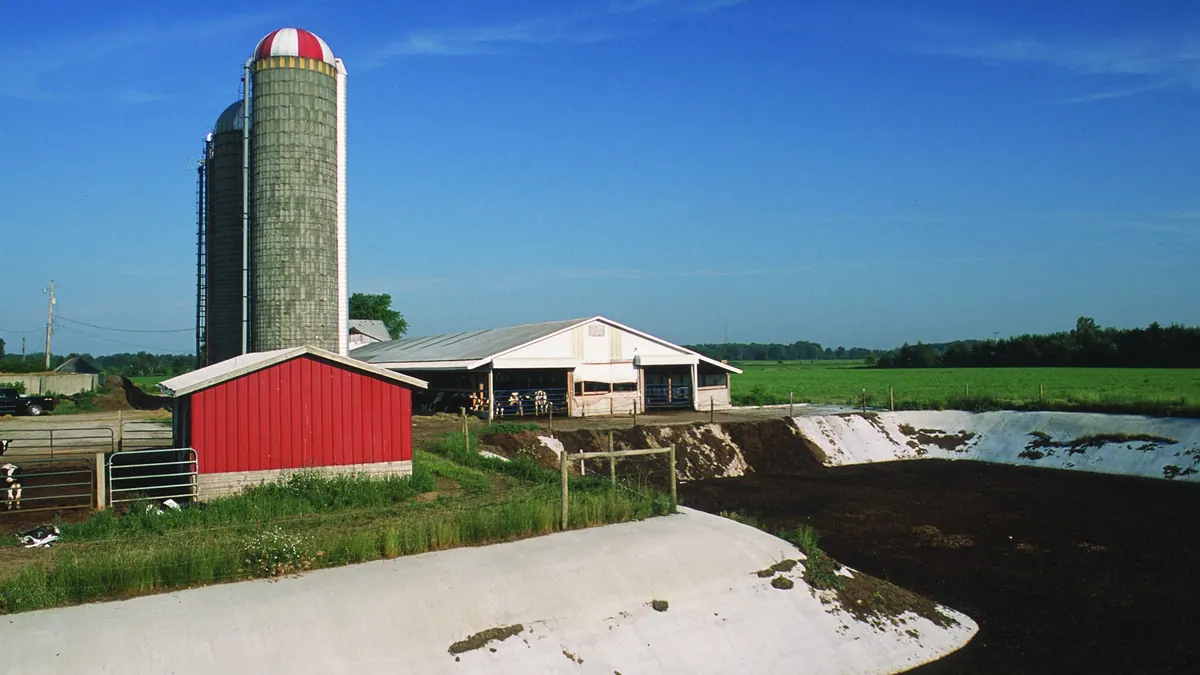
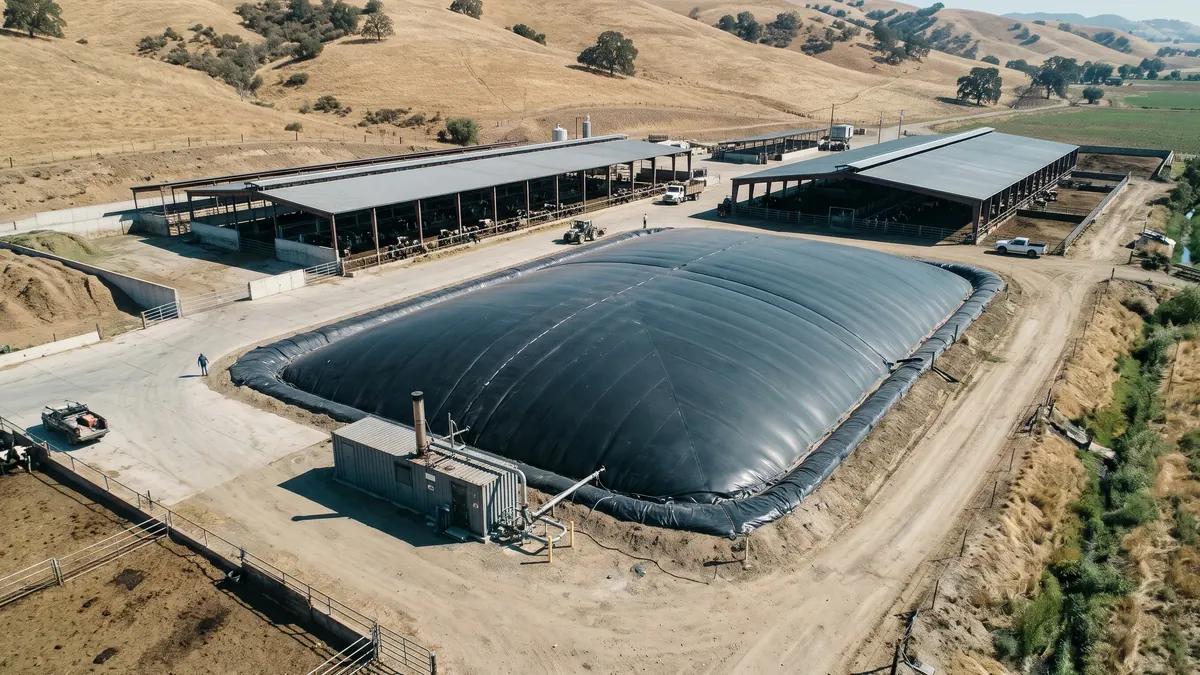
Storing slurry in open tanks causes methane emissions, the greater the higher the temperature and the longer the time. Digestion in a closed digester and gas-tight storage of the digestate with gas recovery limit these emissions. The scale of the reduction has to be estimated for the specific system, because it depends on the storage system, temperature and time.
Example balance for a farm
A herd of 300 dairy cows produces, per year, in the order of several to a dozen or so thousand m³ of slurry, depending on the housing system and feeding. From this amount, under the assumptions given above, you will obtain several dozen to over a hundred thousand m³ of CH₄ per year — energy sufficient to power only a small plant. That is why farms often add silage and waste.
Practical tips
- Measure TS and nitrogen in the slurry (variability over time is large).
- Mix the pre-storage tank before sampling to avoid sediment stratification.
- Control the share of sand and stones (sand bedding) — settling tanks and separators.
- Do not feed slurry with a high content of antibiotics or disinfectants without an assessment.
- Keep a constant share of slurry in the mix so as not to disturb the buffer.
- Take seasonality into account: in summer, with cattle on pasture, there is less slurry.
Slurry is therefore the cornerstone of co-digestion: it contributes little energy, but a lot of stability and climate benefits.
Storage and preparation before digestion
The pre-storage tank should be covered and mixed to limit stratification and emissions. Slurry in channel tanks under slatted floors has a different composition (more urea in fresh slurry) than after months of storage, when part of the organic matter has already decomposed and methane has escaped to the atmosphere. The fresher the slurry, the greater its energy potential, which is why frequent emptying of the channels and delivery to the biogas plant at short intervals is often recommended.
Effect on the digestate
Digestion increases the share of ammonium nitrogen in total nitrogen and raises the pH, which improves nitrogen availability for plants, but also increases the risk of ammonia losses during storage and application. Details and good practice are described in separate articles on digestate.
Sources
Related articles