Servicing a CHP gas engine: oil, spark plugs, valves and major overhauls
What to service, when and why in a biogas cogeneration unit: oil changes, spark plugs, valve inspection, major overhauls and the effect of gas quality on costs.
Other language versions: polski.
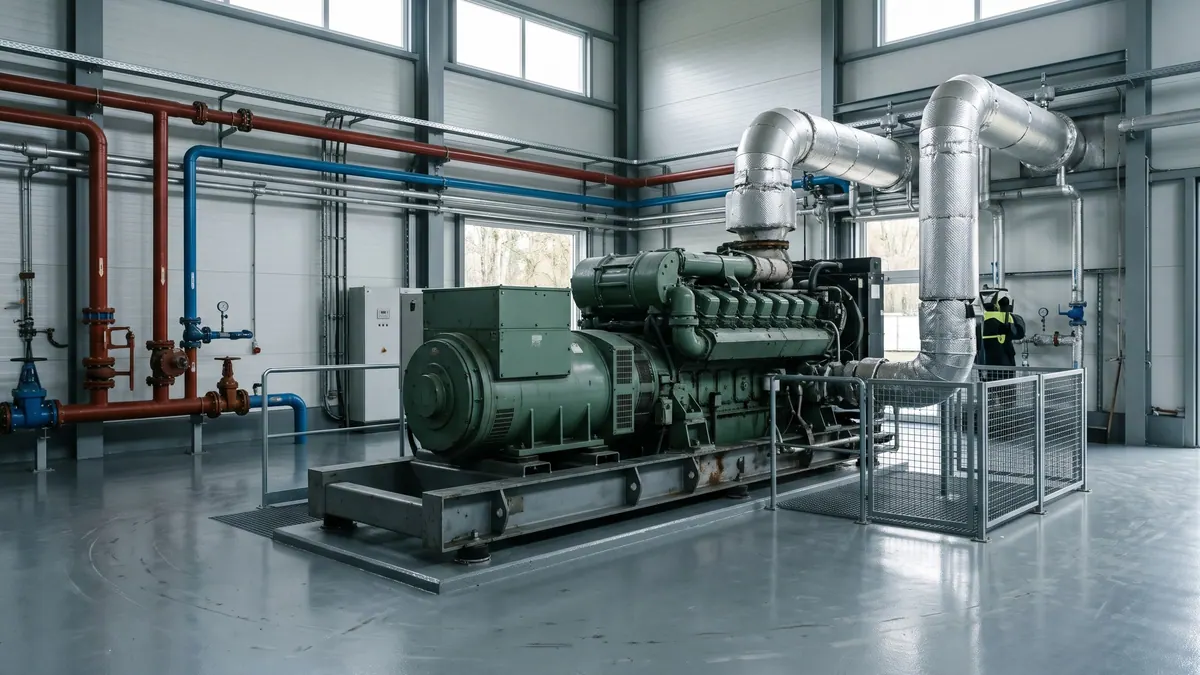
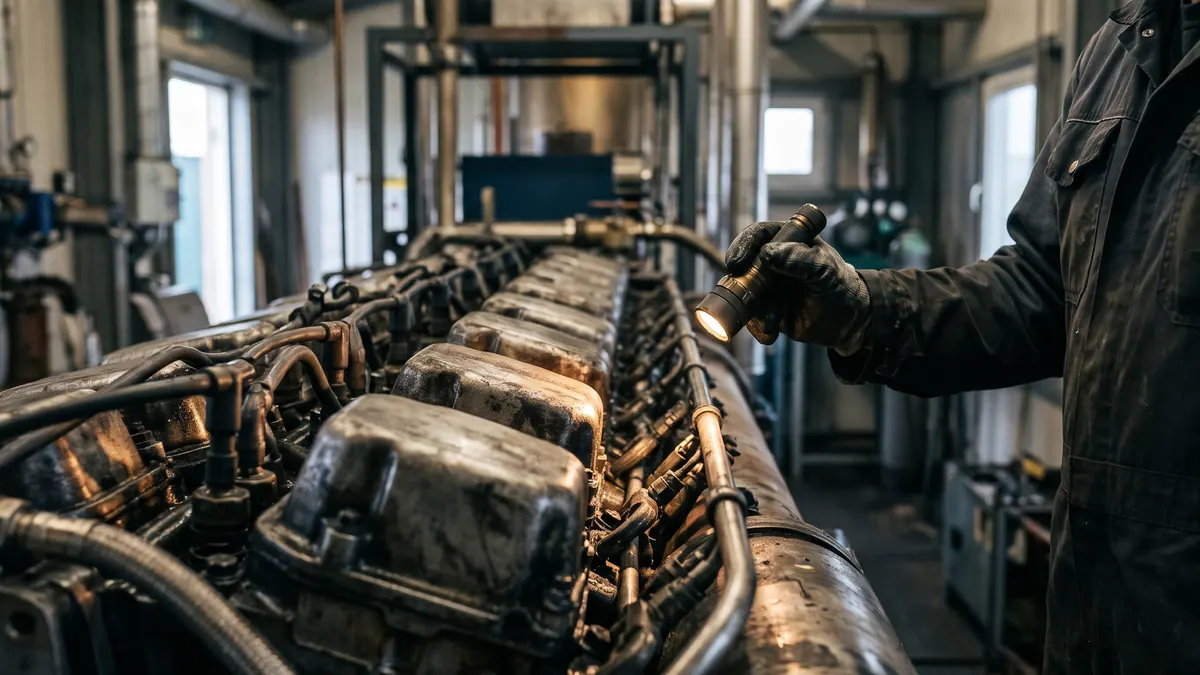
A gas engine in a CHP unit runs at a biogas plant for as many as 7,500–8,500 hours a year, so planned servicing is key to availability and costs. The basic work is changing the oil and filters, replacing the spark plugs, checking the valve clearances and the cooling system, and periodic major overhauls; the exact intervals are given by the manufacturer and adjusted to gas quality and the results of oil analysis. The best insurance policy is clean, dry, desulphurised gas.
Schedule of typical activities
The intervals below are illustrative — in every case the manufacturer's documentation and warranty conditions apply.
| Activity | Indicative frequency | Notes |
|---|---|---|
| Oil level check, visual inspection, readings | daily | recorded in the log |
| Oil and oil filter change | every few hundred to about 2,000 hours, depending on the engine and oil | basis: oil analysis |
| Replacement of air and gas filters | in line with the DTR, several times a year | clogged filters reduce output |
| Spark plug replacement | every few thousand hours | more often at low load |
| Valve clearance check/adjustment | every few thousand hours | affects efficiency and noise |
| Cooling system inspection, coolant replacement | annually or in line with the DTR | clean exchangers |
| Medium overhaul (cylinder heads, gaskets) | after a dozen or so to several dozen thousand hours | sequence set by the manufacturer |
| Major overhaul (pistons, liners, bearing shells, turbocharger) | after several dozen thousand hours | often replacement with an exchange unit |
Engine oil
Biogas introduces acids into the oil (from H₂S and CO₂), which consumes the alkaline additives. The most important oil analysis parameters:
- base number (TBN) — a fall below the limit value is a signal to change,
- acid number (TAN) and nitration/oxidation,
- viscosity and water content,
- wear metals (Fe, Cu, Pb, Al) and Si (siloxanes or contamination),
- soot and fuel content.
Regular analysis (e.g. every 250–500 hours) makes it possible to extend change intervals beyond the minimum ones, and also to detect premature wear. Use only oils approved for the given engine and gas.
Spark plugs and the ignition system
Spark plugs wear through electrode erosion; biogas with highly variable composition and low load increases carbon build-up. Symptoms: poorer stability of operation, increased ignition delay, misfires. Replace the full set, not individual plugs, and check the coils and leads.
Valves and cylinder heads
Valves and seats are sensitive to deposits (sulphides, siloxanes) and overheating. Loss of tightness is visible in compression pressure measurements and in a rise in oil consumption. Endoscopic inspections make it possible to assess the condition of the combustion chambers without dismantling.
Effect of gas quality on servicing costs
| Contaminant | Consequence | Remedy |
|---|---|---|
| H₂S | corrosion, fall in TBN, deposits | desulphurisation, activated carbon filter |
| Moisture | condensate, corrosion, oil dilution | gas drying (cooling) |
| Siloxanes | SiO₂ deposits | activated carbon filters (gas from treatment plants, landfills) |
| NH₃ and organohalogen compounds | corrosion | control of substrates |
| CH₄ fluctuations | knocking, unstable operation | process stabilisation, gas mixing in the tank |
Example cost calculation
Assumptions: a 500 kW engine, 8,000 h/year, energy produced about 4,000 MWh/year. The servicing cost, calculated in PLN/kWh, covers parts, labour, oil and an overhaul reserve. A change in this coefficient of PLN 0.01/kWh means PLN 40 thousand a year. A reduction in the failure rate and an extension of oil life by 20–30% therefore translate into clear savings, but while observing the warranty requirements.
Organisation of servicing
- A service contract with the manufacturer or a certified service provider; clear response times.
- A stock of critical parts (spark plugs, filters, gaskets, sensors).
- An operating log: hours, starts, failures, analysis results.
- Planning outages outside peak production or in periods of low heat demand.
- Remote monitoring of engine parameters (exhaust temperatures, oil pressure, knock).
- Training operators to recognise early symptoms.
Typical mistakes
- extending oil change intervals without analysis,
- omitting the cleaning of heat exchangers,
- running with gas of high H₂S content without safeguards,
- no reserve for a major overhaul in the budget,
- changing the type of oil without the manufacturer's consent.
Systematic, documented servicing and good gas quality make it possible to achieve high availability of the unit and predictable costs, and this translates directly into the financial result of the installation.
Diagnostics based on operating data
Modern engine controllers record the temperatures of individual cylinders, ignition delay, the excess air ratio and the knock signal. A spread of exhaust temperatures between cylinders of more than several dozen degrees often indicates a problem with a spark plug, a valve or gas injection. A rise in oil consumption at constant load suggests wear of the rings or valve seals. It is worth setting alarms for deviations from the average of recent weeks, and not only absolute thresholds.
Overhaul or replacement with an exchange unit
Many service providers offer replacement of the engine with a reconditioned one with a warranty, which shortens the downtime to a few days. Compare the cost of such a replacement with an on-site overhaul (replacement of parts, labour, longer downtime). In the valuation, include the lost revenue from energy and heat for each day of downtime and the cost of hiring a replacement unit, if one is available.
Sources
Questions and answers
What shortens the life of a biogas engine the most?
Hydrogen sulphide and moisture in the gas, operation at low load, infrequent oil changes and neglected cooling. Good desulphurisation and gas drying are the cheapest way to ensure engine durability.