Law and regulationGuide
Digestate as a fertiliser: the Minister of Agriculture permit and the requirements of the fertilisers act
To sell digestate as an organic fertiliser, a permit from the Minister of Agriculture is needed. We describe the steps: testing, opinions of units, UPPZ documents, labelling, supervision and restrictions on use.
Other language versions: polski.
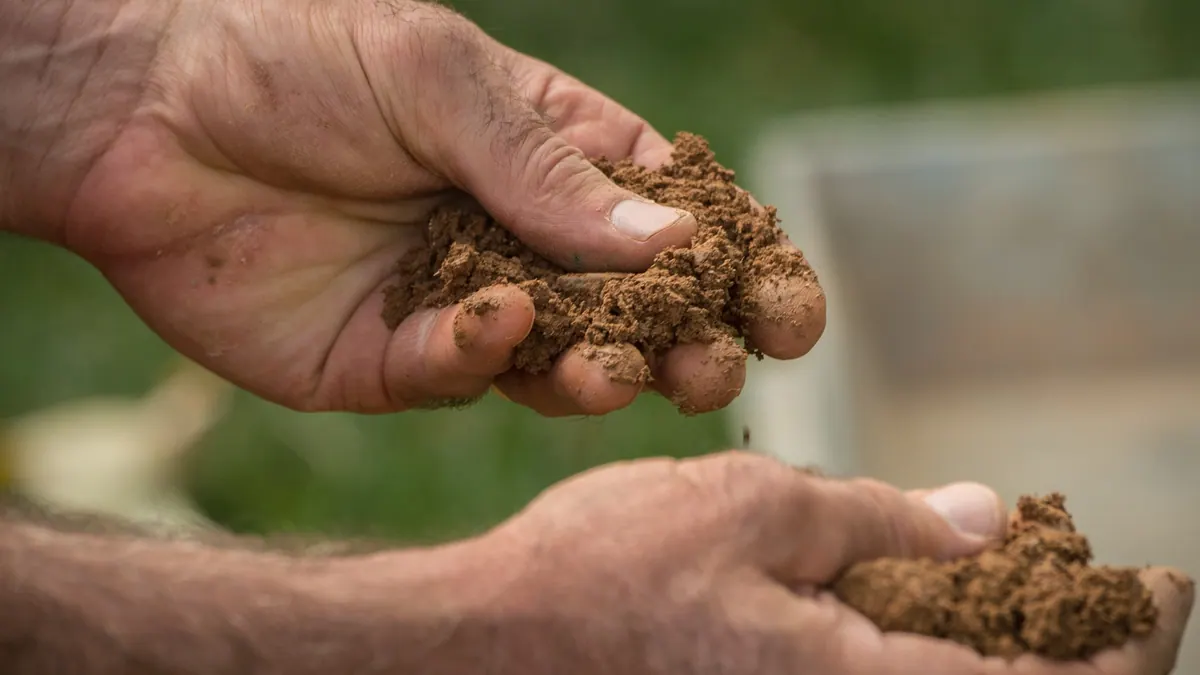

To sell digestate as an organic fertiliser, you must obtain a permit from the minister responsible for agriculture. The rule is introduced by Article 3(2) in conjunction with Article 4 of the Act of 10 July 2007 on fertilisers and fertilisation: organic fertilisers (as well as organo-mineral ones, mineral ones without the "EC FERTILISER" mark and plant growth aids) are placed on the market on the basis of a permit. Below are the steps and the obligations after obtaining it — under the legal position of July 2022.
Step 1: establish whether you need a permit at all
Not everything requires a permit. Under Article 3(1), the following may be placed on the market without one, among others: fertilisers made by mixing types marked "EC FERTILISER", fertilisers corresponding to the types of agricultural liming materials, and natural fertilisers in accordance with Regulation 1069/2009. Natural fertilisers disposed of for direct agricultural use, however, require a written agreement under pain of nullity. Digestate from the digestion of waste, or processed into a commercial form, usually does not fall within these exceptions, so a permit is needed — or another route, e.g. R10 recovery.
On 16 July 2022 Regulation 2003/2003 (the "EC FERTILISER" marking) ceased to apply and Regulation 2019/1009 on EU fertilising products began to apply. This text describes the national route.
Step 2: look after the plant (if the feedstock contains UPPZ)
If the fertiliser was made from animal by-products or contains them (e.g. from manure, slurry, kitchen waste), the plant must be approved by the county veterinary officer. A copy of the decision approving the plant, together with the veterinary number, or a declaration that it has been obtained, is attached to the permit application.
Step 3: commission the tests
The scope of tests before placing on the market includes physicochemical analyses (organic matter content, nutrients, heavy metals) and biological ones (Salmonella, viable eggs of intestinal parasites, indicator bacteria). For fertilisers from UPPZ the scope is wider. The tests are carried out by the laboratories indicated in the provisions — according to IUNG-PIB these include the Institute of Fertilisers (Instytut Nawozów Sztucznych), IUNG, PIWet-PIB, the Institute of Environmental Protection (Instytut Ochrony Środowiska) and the Institute of Rural Health (Instytut Medycyny Wsi), or accredited units. For compost and digestion residues in samples taken to monitor the process in biogas plants, the permissible count of E. coli and indicator bacteria is 5000 cfu/g, and Salmonella and viable parasite eggs must not be present.
Step 4: collect the opinions of the units
The minister issues the decision after obtaining the opinions of authorised units, based on tests, that the fertiliser:
- is suitable for fertilising plants or soils (supplies nutrients, improves yield or fertility);
- meets the minimum and declared quality requirements;
- does not contain contaminants above the permissible values;
- does not endanger the health of people, animals or the environment when used in accordance with the instructions.
In practice the opinions are issued by, among others, IUNG (quality and suitability), the Institute of Rural Health (impact on human health), PIWet-PIB (impact on animal health and veterinary requirements for fertilisers from UPPZ) and the Institute of Environmental Protection (impact on the environment).
Step 5: submit the application
The application is submitted by the producer (for a fertiliser produced in Poland), the importer or an entity placing on the market a fertiliser from another EU country. It contains the applicant's details (NIP, KRS number, if any), the name and type of the fertiliser, and the following are attached: test results, opinions, a draft of the instructions for use and storage (for soil improvers and stimulants), a copy of the civil partnership agreement (if applicable) and the veterinary decision for fertilisers from UPPZ.
What the permit gives
The permit is issued for an indefinite period (Article 7), but the minister may withdraw it when quality requirements are not observed, when a risk to health or the environment emerges, or when a fertiliser from UPPZ ceases to meet the requirements of Regulation 1069/2009.
Labelling, packaging and supervision
On the packaging, or in the documents for bulk goods, only the information specified in Article 9 is placed: the permit number, the declared content of components, the form or solubility, the trade name, the details of the producer or importer, the net mass, the shelf life and the instructions for use. Packaging may be done only with the written consent of the producer and after agreeing the packaging. Supervision of trade has been exercised since 1 July 2020 by the State Plant Health and Seed Inspection Service (Państwowa Inspekcja Ochrony Roślin i Nasiennictwa; previously the Agricultural and Food Quality Inspection), of use — by the Environmental Protection Inspectorate, and of fertilisers from UPPZ also by the Veterinary Inspectorate.
Restrictions on use
Only fertilisers admitted to the market are used. It is prohibited to apply fertilisers to frozen, flooded, water-saturated and snow-covered soil (soil that thaws during the day at least at the surface is not frozen) and to apply liquid natural fertilisers during the growing period of plants consumed directly. A farmer applying digestate must also comply with the nitrates programme (dates, doses, distances from water).
How this relates to other routes
A permit for an organic fertiliser is one of several routes for digestate. The alternatives are R10 recovery (digestate remains waste and goes to land under the conditions of the 2015 regulation), recognition as a by-product after notification to the marshal, or end-of-waste status. The permit gives the greatest commercial freedom: the product has a number, a declared composition and a label, and may be sold in bags and further than to neighbouring farms. You pay for this with the time and cost of testing and the need to maintain a repeatable composition.
A sample set of documents for the application file
- Applicant's details: name, address, NIP, possibly KRS and the civil partnership agreement.
- Product description: trade name, type, form (liquid, solid), feedstock and technology.
- Laboratory test reports: heavy metals, nutrients, organic matter, microbiology and parasitology.
- Opinions of authorised units on suitability, quality, contaminants and safety.
- The county veterinary officer's decision approving the plant (for fertilisers from UPPZ).
- A draft of the instructions for use and storage (for soil improvers and stimulants).
- Proof of payment of fees, if required.
Preparing the complete set before submitting the application shortens the proceedings, because the authority does not have to request missing items.
Common mistakes
- Assuming that a declaration of composition is enough — for organic fertilisers, tests and opinions are needed.
- No veterinary decision for a fertiliser from UPPZ.
- Changing the feedstock recipe without checking whether the parameters still correspond to the permit.
- Packing digestate into bags without the consent of the fertiliser producer (when packaging someone else's product).
This text is for information purposes only and does not constitute legal advice; before an investment or formal decision, check the current wording of the provisions and consult a lawyer or the competent authority.
Sources
Questions and answers
Was a permit always needed to sell digestate in 2022?
As an organic fertiliser, yes, as a rule (Article 3(2) and Article 4). Exceptions concerned, among others, natural fertilisers compliant with Regulation 1069/2009 and fertilisers labelled “EC FERTILISER”, and after 16 July 2022, EU fertilising products.
Related articles