Market and investmentAnalysis
Denmark: green gas in the grid, slurry and biomethane as a model for agriculture
Denmark has one of the largest shares of biogas and biomethane in the gas grid in Europe, based largely on slurry. We discuss the role of support, agriculture, the operator Energinet and lessons for Poland.
Other language versions: polski.
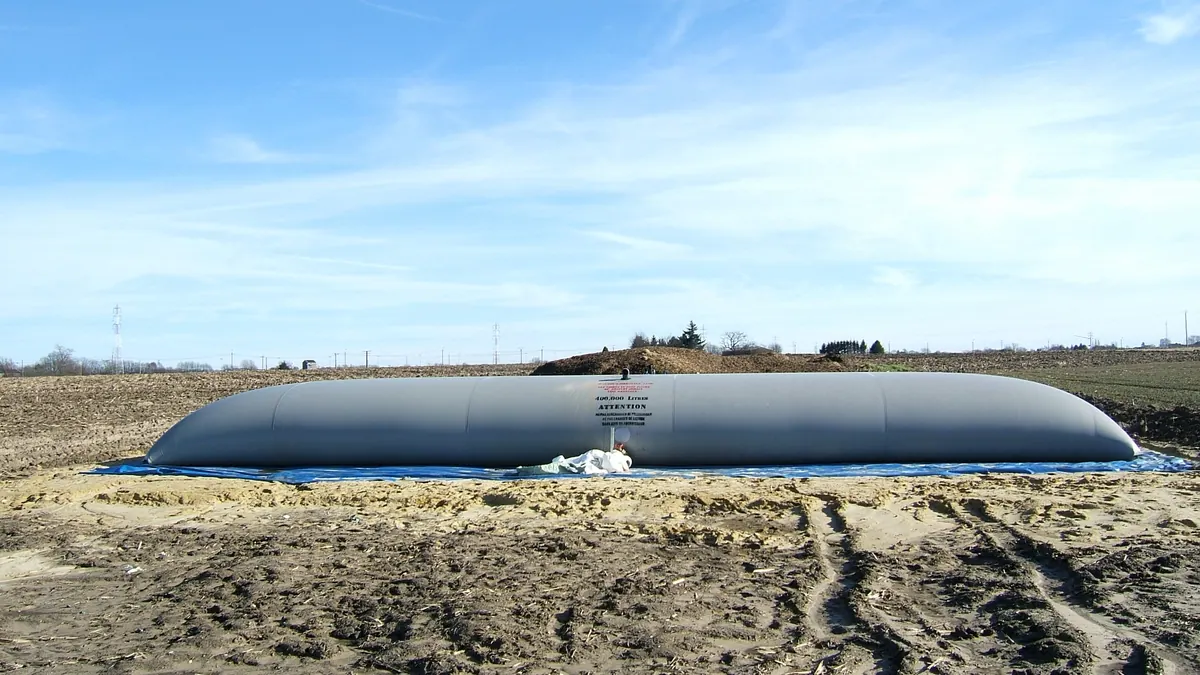

Denmark is one of the countries with the largest share of renewable gas in the gas grid in Europe: according to data published by the system operator Energinet, biomethane (upgraded biogas) has in recent years accounted for more than one third of the gas consumed in the grid, and the pace of growth was very fast after 2012. A significant part of the feedstock is slurry and manure from intensive livestock farming, supplemented by residues from agriculture and processing. The Danish example matters for Poland for two reasons: it shows how to shift biogas from electricity and heat production to biomethane, and how to link manure management with energy and climate. Exact values (share, volume) change, so we give them as orders of magnitude and refer readers to Energinet statistics.
Where the growth came from
- A change in the support system. Denmark's energy agreements from the beginning of the previous decade changed the incentives: support for biogas was directed at injecting biomethane into the grid and using it in heating, industry and transport, instead of at electricity production. The mechanism was based on subsidies per unit of energy, later adjusted, among other things, to state aid rules and to auctions.
- A dense gas grid and an operator interested in integration. Energinet publishes data on the share of renewable gas and maintains a register of guarantees of origin for gas.
- The structure of agriculture. Large livestock farms with a considerable scale of manure production form a natural feedstock base. Collective biogas plants collect slurry from many farms and return the digestate.
- Climate targets. Reducing emissions from agriculture and energy is part of policy, and biogas is linked to targets for methane and N₂O.
- Export and trade. Renewable gas from Denmark can flow into the interconnected German grid, and guarantees of origin are traded.
The model: slurry as the base feedstock
Slurry has a low biogas potential per tonne of fresh matter because it is diluted with water, so Danish plants often add co-substrates (processing residues, straw, intermediate crops) and use digestate separation. At the same time, slurry gives a favourable carbon footprint thanks to the credit for avoided methane emissions from storage. This does, however, require logistics: transporting large volumes and returning the digestate to farms.
Worked example (illustrative)
Assumptions: a collective biogas plant processes 150,000 t of slurry and 30,000 t of co-substrates per year. Assuming a yield of 20 m³ of biogas/t from slurry and 120 m³/t from co-substrates: 3.0 million + 3.6 million = 6.6 million m³ of biogas per year, which at 58% CH₄ gives about 3.8 million m³ of methane, i.e. about 38 GWh. Slurry accounts for only about 45% of the biogas, although it is 83% of the mass – which illustrates why co-substrates are economically important. Avoided emissions from storage depend on temperature and time; for an assumed 3 kg CH₄ per m³ of slurry this is 450 t CH₄ (about 12,600 t CO₂e at GWP₁₀₀ = 28) – an additional climate value, which the RED methodology converts through the manure credit.
Challenges
- competition for co-substrates and restrictions on energy crops,
- managing digestate under nitrogen limits,
- dependence on the support system and its changes,
- transport and logistics costs,
- odour nuisance and local acceptance.
Lessons for Poland
- Slurry and manure are a resource available on a large scale, but they require collective plants and good logistics.
- The support system should reward biomethane and its uses if the goal is injection into the grid.
- A register of guarantees of origin and transparent trading rules increase the value of the product.
- Linking energy with fertiliser management requires cooperation between farmers, grid operators and the administration.
The role of digestate management
Digestate from Danish biogas plants is returned to farms, which closes the nutrient cycle, but it is subject to strict limits on nitrogen and phosphorus fertilisation. That is why many plants use separation into a liquid and a solid fraction: the solid fraction (rich in phosphorus) can be transported over longer distances, and the liquid one applied locally. Logistics organised in this way is one of the key elements of the economics of collective projects and should be taken into account already at the planning stage.
Summary
Denmark shows that biomethane can become a lasting element of the gas system if incentives, infrastructure and agriculture are consistent. Current numerical data are worth checking at the source, because they change from year to year.
Sources
Related articles