Digestate and fertilisersGuide
Digestate granulation: fertiliser pellets from the solid fraction — process and profitability
How to turn the dried solid fraction of digestate into granulate or pellets: required moisture, process stages, quality parameters, costs and risks.
Other language versions: polski.
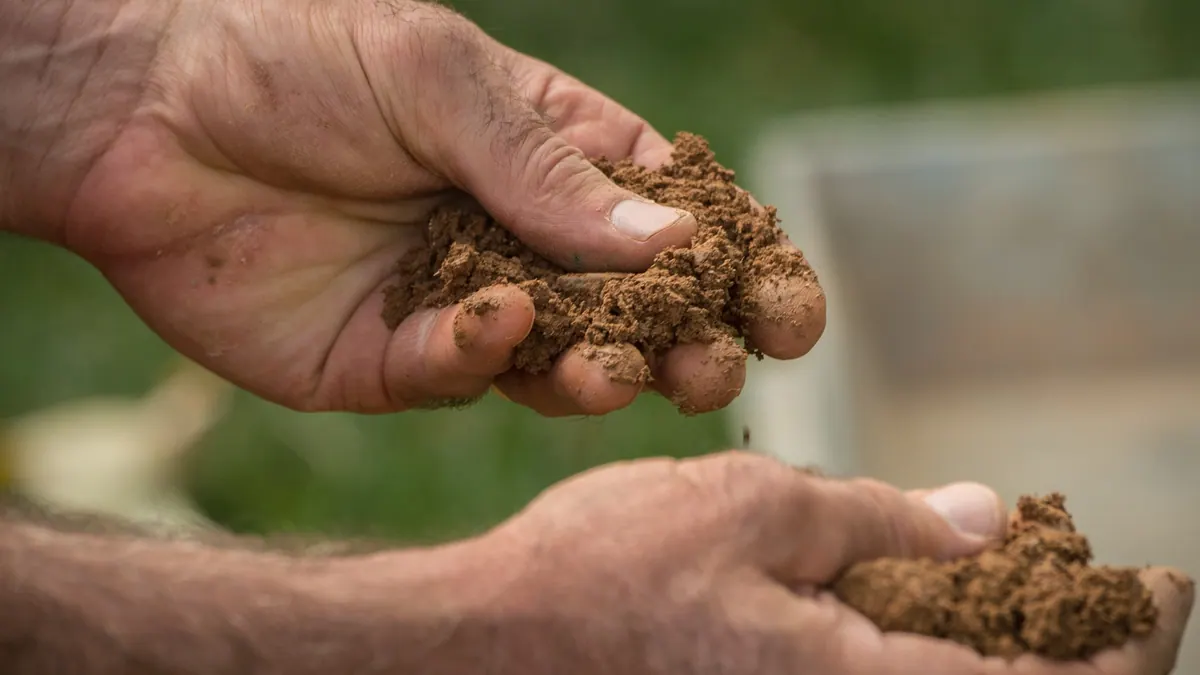

Digestate granulation consists in processing the dried solid fraction into uniform granules or pellets that can be stored, transported in bags or loose and applied with sowing machines. The basis is prior drying to a moisture content below about 10–15% and control of the product composition; the pressing process itself is simple, but the chain (separation, drying, air cleaning, granulation, packing) is costly. It is therefore worth checking the market of buyers and the legal requirements from the start.
Process stages
- Separation: separating the solid fraction from the digestate (TS about 20–30%).
- Drying: to a moisture content usually of the order of 10–15% or lower; material that is too wet does not form durable granules, and material that is too dry may crumble.
- Size reduction and screening: removing lumps, fibres and contaminants (stones, plastic).
- Conditioning: adding steam or a small amount of water, possibly binders (e.g. starch, bentonite) and supplementary components (e.g. phosphorus, potassium, ammonium sulphate from ammonia recovery).
- Pressing: a granulator with a ring or flat die, a pelletiser or a disc granulator.
- Cooling and screening: cooling the granules and separating the fine fraction (which is returned).
- Packing and storage in dry, ventilated rooms.
Quality parameters
| Parameter | Significance |
|---|---|
| Moisture | storage stability (typically below about 15%) |
| Granule strength | resistance to crumbling in transport |
| Granule size | matching to the seed drill |
| Content of N, P, K, S | fertiliser value, declaration on the label |
| Organic matter content | humus-forming value |
| Heavy metals, contaminants | admissibility of sale and application |
| Microbiological purity | safety, especially for food crops |
Economic example (illustrative)
Assumptions: 330 t per year of dried solid fraction (from the example in the article on drying), granulation and packing with own costs of X PLN/t (energy, labour, depreciation, packaging). Granulate with a content of about 2% N, 2% P₂O₅ and 1% K₂O has a low concentration of nutrients compared with mineral fertilisers; its market price depends more on its organic and ecological value than on the macronutrient content. Revenue is the sum of the selling price less costs; in many cases the calculation is on the verge of profitability, unless the heat is free and the sale takes place on the market of products for horticulture and organic farming or in fertiliser packages. The numerical values are worth calculating for your own situation — do not adopt prices from other people's offers.
Risks and requirements
- Regulations: placing a fertiliser on the market requires meeting the requirements of fertiliser law; a product from digestate can be labelled as an EU fertilising product on the basis of Regulation 2019/1009 if the criteria are met, or function under the national route. The route should be verified for your substrates (digestate from manure is treated differently from that from biowaste).
- Dust and fire: granulation produces organic dusts — explosion risk assessment, extraction, earthing, temperature control.
- Emissions: air from the dryer and cooler requires cleaning of NH₃ and odours.
- Caking and mould where there is moisture in the store.
- Variability of composition — requires control batches and analyses.
Improving product quality
- Enrichment with ammonium sulphate from NH₃ recovery or with ash/potassium salts.
- Mixing with other organic materials (e.g. compost).
- Choice of a binder that limits crumbling.
- Standardisation of the recipe and quality control of each batch.
Checklist before investing
- Market: who will buy, at what price, in what quantities and packaging.
- Law: product status, required tests, registrations.
- Energy balance: where heat and electricity come from, how much 1 tonne of finished granulate costs.
- Ability to maintain constant quality of the raw material.
- A plan in case of no sales (store, alternative use).
Granulation can make sense for larger plants with their own heat and access to the organic fertiliser market; on a small scale it is easier and cheaper to use the solid fraction on neighbouring farms or through composting.
Alternatives to granulation
Not every biogas plant needs granulate. The solid fraction can be composted (stabilisation, lower risk of odours), sold loose to local farmers as a phosphorus–organic fertiliser or delivered to producers of organic fertilisers who already have a product registration route. The choice depends on the distance to buyers and the availability of heat. A simple comparative calculation of costs per tonne (transport of the wet fraction vs. drying and granulation) often shows that at distances of several dozen kilometres transporting the raw fraction can be cheaper than processing it.
Quality control
Introduce a procedure for taking samples from each batch of granulate: moisture, strength (crumbling test), N–P–K composition, and possibly metals and pathogens. Keep a batch register that allows the origin of the raw material to be traced.
Sources
Related articles