Digestate and fertilisersEvent
EBA report: digestate could replace part of mineral fertilisers – more than 16% of nitrogen and up to 30% of phosphorus
The EBA report "Digestate in Europe: State of Play in 2026" estimates the value of digestate at more than EUR 1 billion per year. Technically it could replace more than 16% of nitrogen, up to 30% of phosphorus and up to 10% of potassium from mineral fertilisers.
Other language versions: polski.
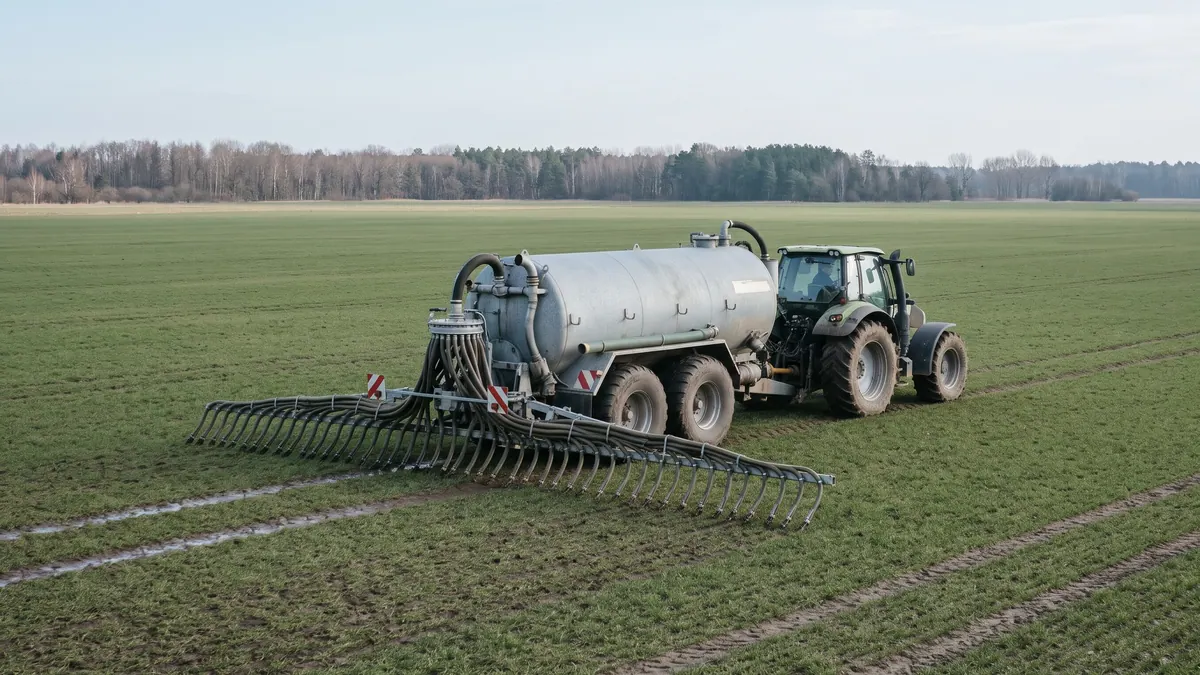
The European Biogas Association (EBA) published in May 2026 the report "Digestate in Europe: State of Play in 2026". It shows that digestate – a by-product of digestion – has a fertiliser and environmental value exceeding EUR 1 billion per year and could replace a significant part of the mineral fertilisers used in Europe. The report appeared at a time when the EU is promoting a reduction in dependence on imported fertilisers.
Figures from the report
In 2024 European biogas plants produced about 25 million tonnes of dry matter of digestate. Agricultural feedstocks dominate, in which manure makes up about 60% of the input. The technical potential for replacing mineral fertilisers was estimated as follows:
| Nutrient | Replacement potential |
|---|---|
| Nitrogen (N) | more than 16% |
| Phosphorus (P) | up to 30% |
| Potassium (K) | up to 10% |
By 2050, about 177 million tonnes of fertilisers could be produced from nutrient-rich waste streams, including 9.7 million tonnes of nitrogen, 1.7 million tonnes of phosphorus and 0.8 million tonnes of potassium.
Demands
The report ties in with the Commission's Fertiliser Action Plan and proposes: extending the RENURE criteria to digestate, simplifying the rules on digesting animal by-products, and using the eco-schemes of the Common Agricultural Policy to reward the use of digestate. In February 2026 the Commission adopted an amendment to the Nitrates Directive introducing RENURE from manure; the EBA calls for products from digestion not to be overlooked.
Why it matters
Mineral fertilisers are energy-intensive, because nitrogen ones are made from natural gas. Fertiliser prices rose in 2021–2022 and again amid geopolitical tensions, so the value of digestate as a substitute is growing. For a biogas plant the revenue from digestate is usually small or negative (transport and spreading costs), but a change in regulation could reverse this if digestate gains the status of a fertiliser product with clear parameters.
Significance for the industry in Poland
Polish agricultural biogas plants are closely tied to farms – digestate returns to the fields of the substrate suppliers. For biomethane projects at farms (such as the planned slurry-based installations) digestate is a condition for closing the loop. The key questions are: whether Poland will allow RENURE; how digestate will be treated in the Nitrates Directive (the 170 kg N/ha limit); and what trade in digestate as a fertiliser looks like in practice (rules on fertilisers, waste and by-products). Operators should document the composition and quality of digestate, because this is the basis for its treatment as a fertiliser.
For farmers it is an economic question: the prices of mineral fertilisers and the availability of their own natural fertilisers determine the profitability of cooperation with a biogas plant.
What to watch
The report gives technical potential, not real potential: the actual percentage of replacement depends on logistics, the seasonality of application, deadlines and the restrictions of NVZ zones. The source communication does not develop the issue of nitrates legislation, so the compatibility of the demands with the directive should be checked in the full report.
Sources
Related articles