Law and regulationExplainer
Environmental permits for biogas plants: emissions, integrated permit and notifications
A biogas plant may require an integrated permit, an emissions permit, a waste processing authorisation or only a notification. We explain what applies when and according to which thresholds.
Other language versions: polski.
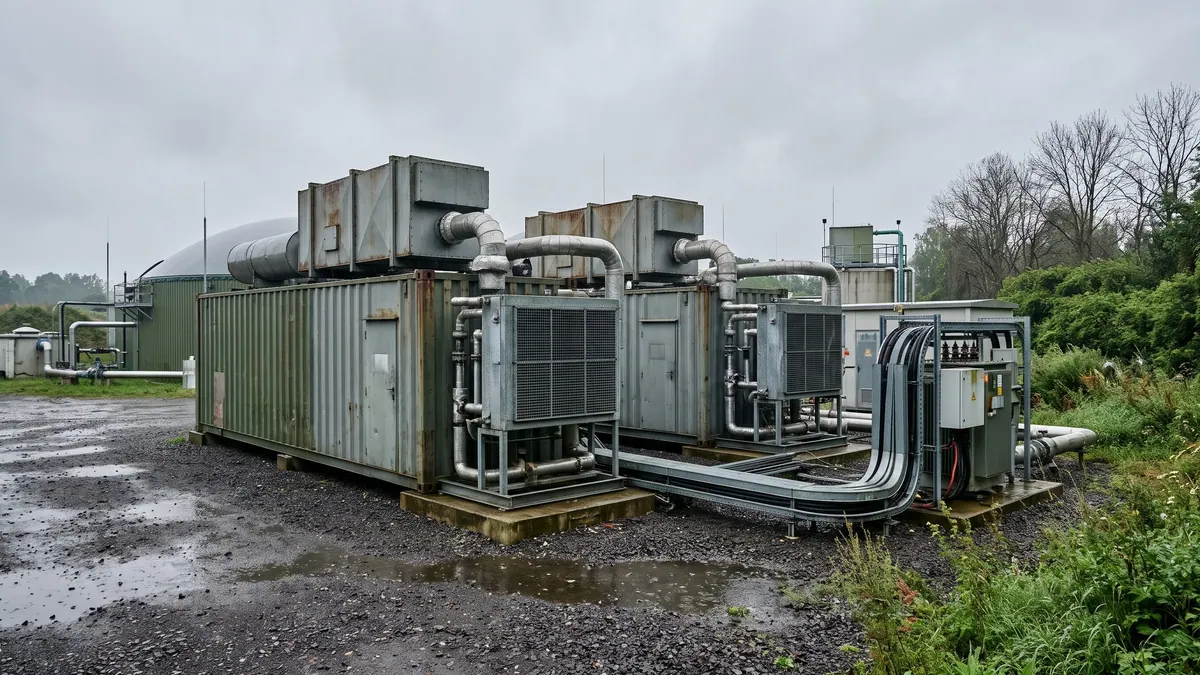
A biogas plant usually needs several environmental decisions in addition to the building permit, and which of them and to what extent depends on capacity, the type of substrates and the scale of waste processing. The Environmental Protection Law (POŚ) lists the integrated permit, the permit for introducing gases or dust into the air, the permit for generating waste and the notification of an installation. We describe the position as of August 2023.
A map of decisions
| Document | When | Authority |
|---|---|---|
| Integrated permit (Article 201 POŚ) | installations from the regulation on types of installations that may cause significant pollution | environmental protection authority |
| Permit for introducing gases or dust (Article 181) | emissions requiring a permit, where there is no integrated permit | environmental protection authority |
| Permit for generating waste (Article 181) | generating waste in quantities requiring a permit | environmental protection authority |
| Notification of an installation (Article 152) | the emission does not require a permit, but the installation may affect the environment | environmental protection authority |
| Authorisation for waste processing (Article 41 of the Waste Act) | processing or collecting waste | marshal or starost |
If an installation has an integrated permit, it does not need separate emissions permits, waste generation permits or water-law permits for water abstraction and wastewater discharge (Article 182).
When an integrated permit applies
The Regulation of the Minister of the Environment of 27 August 2014 on types of installations that may cause significant pollution lists for waste management, among others:
- recovery or disposal of hazardous waste with biological treatment above 10 t per day,
- disposal of waste other than hazardous with biological treatment above 50 t per day,
- recovery of such waste with biological treatment above 75 t per day,
- recovery or disposal using anaerobic digestion – from 100 t per day.
An agricultural biogas plant using slurry and silage usually does not exceed these thresholds. A waste-processing biogas plant receiving larger quantities of waste may exceed them, and then the application for an integrated permit covers everything: emissions to air, wastewater, waste, noise.
The air emissions permit and notifications
Cogeneration engines, the boiler, the gas flare and upgrading with discharge of waste gas are sources of emissions. If an emission from the installation requires a permit, it is obtained as a permit for introducing gases or dust into the air, and if not – the installation is notified to the environmental protection authority. For fuel combustion sources with a nominal thermal capacity of 1 MW to 50 MW (taking the aggregation rule into account) the notification contains additional information: PKD code, REGON, thermal capacity, type of fuel, applicable emission standards, date of commissioning, planned operating time and load. If the operating time of such a source is limited, a declaration of not exceeding the hour limit is submitted.
A practical tip: thermal capacity is calculated for a set of connected devices (several engines on one site may add up), so define the installation and check the aggregation rule before choosing the mode.
Waste: authorisation and generation
If a biogas plant receives waste as a substrate, it carries out processing activity and needs an authorisation under Article 41 of the Waste Act. The authority is usually the starost, and the marshal – for projects always having a significant effect on the environment and for municipal installations, among others. Generating its own waste (for example ash, spent filters, sludge) is subject to a waste generation permit if it exceeds the statutory thresholds, and otherwise to record-keeping and reporting obligations. Digestate has a separate regime described in the guides on fertilisers.
Order and typical mistakes
- The decision on environmental conditions.
- The building permit.
- Emissions permits and notifications, and the waste processing authorisation – before operation begins.
Typical mistakes: changing substrates without updating the authorisation; increasing cogeneration capacity without notifying the change; lack of emission measurements; confusing a notification with a permit. The authority may also impose an obligation to limit impact or halt operations if the environment is endangered.
What to do first
- Calculate the maximum daily mass of waste processed and compare it with the thresholds.
- List all emission sources and their capacity.
- Commission the draft permit or notification from a contractor with experience in biogas.
- Plan emission monitoring, periodic measurements and records.
Best available techniques
Installations covered by an integrated permit must meet requirements related to best available techniques (BAT). For waste processing, the BAT conclusions adopted by Commission Implementing Decision (EU) 2018/1147 apply. The application for an integrated permit must therefore show how the installation relates to them: among other things in the management of incoming waste, odour emission control, storage and monitoring. It is additional work, but also a document which, once obtained, makes inspections and talks with the bank easier.
Changes to the installation
A change in the type or quantity of substrates processed, the addition of an engine or a change in the method of upgrading may require a change to the permit or an update of the notification. A safe rule is to consult the planned change with the authority before implementing it and to keep the documentation. The lack of current documents may result in an obligation to limit impact, increased charges for the use of the environment or administrative fines, and, in case of danger, a halt to operations.
This text is for information only and does not constitute legal advice; before an investment or formal decision, check the current wording of the legislation and consult a lawyer or the relevant authority.
Sources
- Ustawa z 27 kwietnia 2001 r. – Prawo ochrony środowiska — Internetowy System Aktów Prawnych
- Rozporządzenie Ministra Środowiska z 27 sierpnia 2014 r. w sprawie rodzajów instalacji mogących powodować znaczne zanieczyszczenie — Internetowy System Aktów Prawnych
- Dyrektywa 2010/75/UE w sprawie emisji przemysłowych — EUR-Lex
Questions and answers
What if emissions from an installation do not require a permit?
If an installation may have a negative impact on the environment and its emissions do not require a permit, it is subject to notification to the environmental protection authority (Article 152 of the Environmental Protection Law, Prawo ochrony środowiska).
When does a biogas plant need an integrated permit?
An integrated permit is needed for installations covered by the IED Directive on industrial emissions, and for waste recovery in an anaerobic digestion process the threshold under Annex I to the IED is 100 Mg of waste per day.
Related articles