Law and regulationGuide
Environmental impact report for a biogas plant: what it must contain (Article 66 of the Environmental Impact Assessment Act)
The environmental impact report is the most important annex to an application for an environmental decision. We explain what Article 66 requires, who writes it and how to describe odours, noise and transport.
Other language versions: polski.
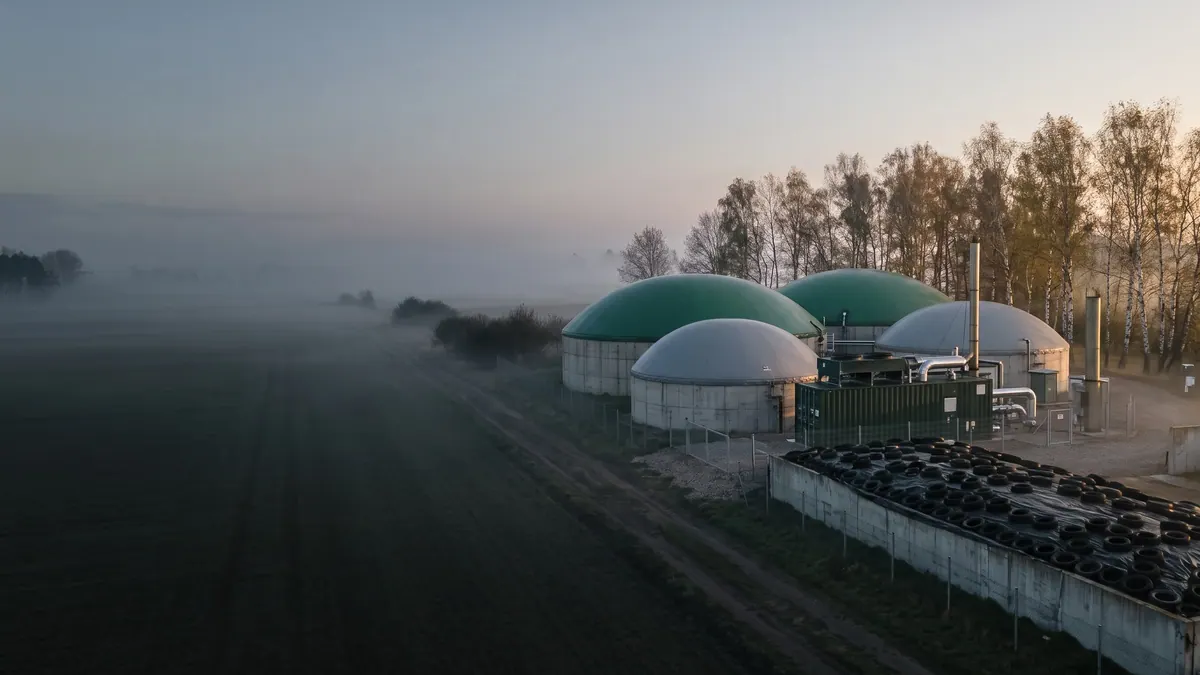
The environmental impact report of a project is the document on which the decision on environmental conditions is based for a biogas plant that processes waste or requires an assessment. Its content is set by Article 66 of the Environmental Impact Assessment Act. The report is meant to enable the authority and the public to assess the effects on nature, people and waters before the decision is issued. The entry describes the position as of October 2023.
When a report is needed
A report is submitted with the application for an environmental decision for projects always having a significant effect on the environment (for example waste processing installations from 10 t per day) and where the authority, in an order, finds an obligation to carry out an assessment for potentially significant projects (after analysis of the information sheet, Article 63). For projects always having a significant effect, an information sheet may be submitted instead of a report, together with an application for determining the scope of the report.
Content of the report according to Article 66
The report must make it possible to analyse the criteria in Article 62(1) and must contain, among others:
- A description of the project: the entire scope, conditions of land use in the implementation and operation phases, main features of production processes, expected types and quantities of emissions and waste, information on biodiversity and use of resources (soil, water), energy demand, demolition works and an assessment of the risk of major accidents and disasters.
- A description of the natural elements affected: forms of nature protection, ecological corridors, properties of waters.
- The results of the nature survey together with the methodology – as an annex.
- Monuments and landscape in the vicinity.
- Cumulative impacts with other projects in the area.
- The consequences of not undertaking the project.
- Variants: the one proposed by the applicant, a rational alternative and the one most favourable for the environment, together with a justification of the choice and a comparison of impacts.
- A description of forecasting methods and of direct, indirect, secondary, cumulative, short-, medium- and long-term impacts.
- Measures for avoidance, mitigation and natural compensation, with an assessment of effectiveness.
The report also covers the effect on the climate (greenhouse gas emissions) and possible transboundary impact.
How to describe the specifics of a biogas plant
| Issue | What to show in the report |
|---|---|
| Odour | sources (substrate store, unloading, digestate), emissions, mitigation solutions: closed halls, negative pressure, biofilters, covering of tanks |
| Noise | engines, blowers, transport; calculations at the boundary of protected areas |
| Transport | number of trips, routes, delivery and collection hours, effect on local roads |
| Emissions to air | cogeneration engines, flare, boiler; dispersion calculations |
| Water and soil | digestate stores, protection against leaks, retention, wastewater |
| Accidents | fire, biogas explosion, tank leak; scenarios and measures |
| Nature | birds, bats, habitats; seasonality of the survey |
A strong point of a report is a good justification of the variants: why a given location, technology (closed digestate store), separation of transport. Variants "for form's sake only" are one of the most common reasons for calls for supplementary information.
Who writes the report
Article 74a of the Environmental Impact Assessment Act contains requirements for the author or the head of the team of authors: education in selected fields (including chemical, biological, earth sciences, technical sciences related to the environment, agricultural sciences) or higher education and documented experience in teams of report authors. The authority may regard an application with a report prepared by a person who does not meet the requirements as incorrect.
Agreements and consultations
When an impact assessment is carried out, the authority agrees the conditions of implementation with the regional director for environmental protection and the water-law authority and seeks the opinion of the sanitary inspector (Article 77). The report is also made available to the public; parties and environmental organisations may submit comments and appeal against the decision, which lengthens the procedure but strengthens its durability.
Typical mistakes
- A report based on data from one season without a nature survey.
- Lack of a cumulative assessment where there is another biogas plant, farms or roads in the area.
- Omitting transport and noise at night.
- A mismatch between capacity and quantity of substrates and the later building design.
What to do first
- Establish the technological variant and the impact map.
- Commission a nature survey in the appropriate seasons.
- Collect measurements of the acoustic background and traffic data.
- Choose the author of the report in line with Article 74a.
- Consult the assumptions with the municipality and the community before submitting the application.
Data worth having before commissioning the report
| Area | Document or data |
|---|---|
| Technology | process diagram, balance of substrates and digestate, parameters of engines and upgrading |
| Location | cadastral map, plan or study, distances to buildings and protected areas |
| Transport | number and type of vehicles, routes, working hours |
| Nature | seasonal survey, data on Natura 2000 areas in the vicinity |
| Water | ground and water conditions, method of draining rainwater, protection of stores |
The fuller the data from the investor, the fewer assumptions in the report and the lower the risk that the authority will regard the description as insufficient.
After the decision is issued
The environmental decision is the basis for further consents for the implementation of the investment, and the Environmental Impact Assessment Act gives the parties to the proceedings and environmental organisations the right to appeal against the investment consent to the extent that the authority is bound by the environmental decision (Article 86g). Implementation should therefore correspond closely to the conditions of the decision, and any changes should be consulted with the authority.
This text is for information only and does not constitute legal advice; before an investment or formal decision, check the current wording of the legislation and consult a lawyer or the relevant authority.
Sources
Questions and answers
Can an information sheet be submitted instead of a report?
For projects that always have a significant impact, the applicant may submit an information sheet together with a request to determine the scope of the report (Article 69). The report must then be submitted after the decision on the scope has been issued.
Who can write an environmental impact report?
The author or the head of the team of authors must meet the requirements of Article 74a of the Act on Environmental Impact Assessments (ustawa ooś): relevant fields of study (including natural sciences, chemistry, technical fields related to the environment, agriculture) or higher education and experience in the author teams of reports.
Related articles