Waste and circular economyExplainer
Fires at landfills and illegal waste stores: scale, consequences and prevention
In 2018, 243 fires at dumps and landfills were recorded, in 2019 177 and in 2020 111. We explain where waste fires come from, what is released and how to reduce the risk.
Other language versions: polski.
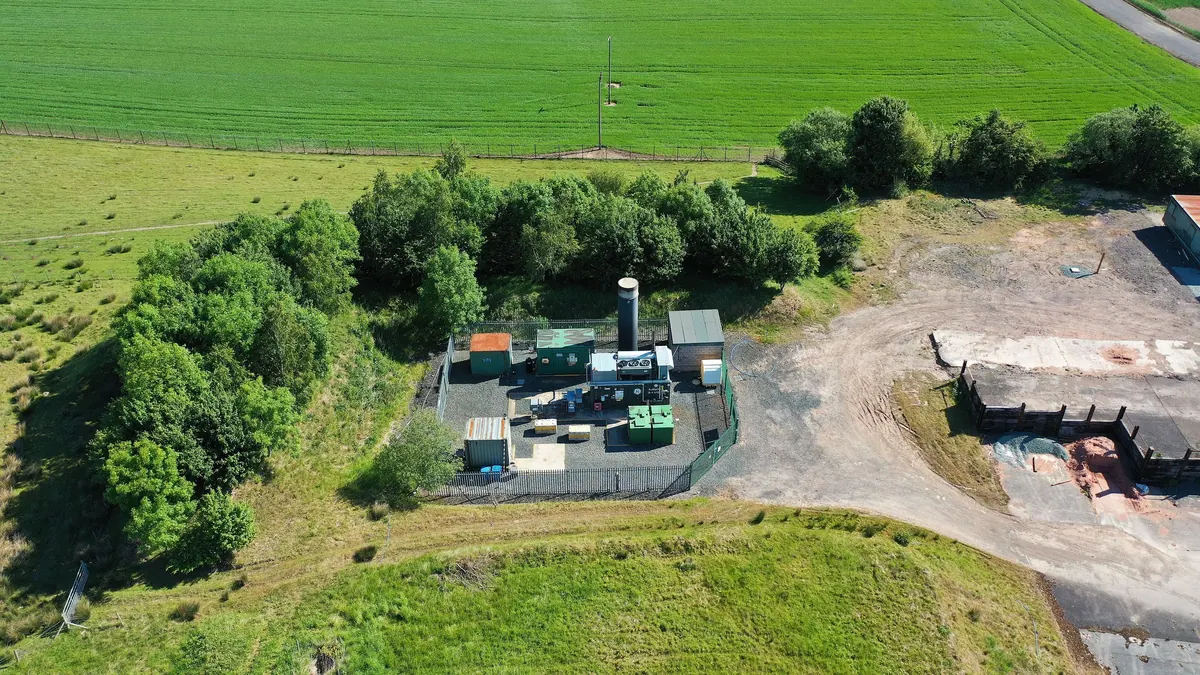

Fires at landfills and illegal waste stores are an environmental and safety problem in Poland, but the data show that after the peak in 2018 the number of recorded incidents fell: from 243 fires at dumps and landfills in 2018 to 177 in 2019 and 111 in 2020. The source of these figures is, however, attributed inconsistently (State Fire Service (PSP) or Statistics Poland (GUS)), and the compilations cover both legal landfills and wild dumps, so they do not constitute a complete, uniform series.
Scale of the problem
2018 was marked by a series of high-profile incidents at sites of illegal waste storage. The Ministry of Climate and Environment pointed to Zgierz, Trzebinia and Wszedzień, among others, as places where deliberate arson may have occurred to conceal illegal dumping. According to Radio Kielce, 2022 saw the fewest large fires at waste warehouses since 2018 (11), but this concerns only incidents classed as large and is not comparable with the earlier totals. The data for 2021 were incomplete (the PSP reported 57 incidents since the start of the year). There is therefore no basis for speaking of a growing trend; the problem is rather individual, very large and long-lasting fires.
What is released
Burning waste is a mixture of materials of differing composition, which is why the smoke is toxic:
- plastics (especially PVC) release dioxins and furans, which accumulate in organisms,
- tyres produce dense smoke containing sulphur oxides, polycyclic aromatic hydrocarbons (PAHs) and soot,
- batteries and accumulators contain heavy metals (lead, cadmium, mercury) and lithium compounds, which contaminate soil and water,
- landfill fires also emit carbon dioxide and methane if layers containing organic waste are smouldering.
The consequences depend on how long the fire lasts, the weather conditions and the way it is extinguished (water used in firefighting washes out contaminants).
Causes
- Illegal storage in abandoned halls and on wasteland, without safeguards.
- Deliberate arson, intended to destroy evidence or to "reduce" the amount of waste.
- Spontaneous combustion, when the decomposition of organic matter generates heat and ventilation is poor, especially in landfills with landfill gas (Landfill gas: formation, composition and degassing obligations).
- Gaps in infrastructure: when legal processing is expensive or unavailable, the temptation to dump illegally grows.
- Weak law enforcement: inspections and penalties must be effective and swift.
Prevention
- Inspections and monitoring: environmental protection inspectorates, the fire service, drones and thermal imaging cameras at higher-risk locations.
- Fire protection at legal facilities: separate storage zones, limits on pile height, hydrants, temperature monitoring.
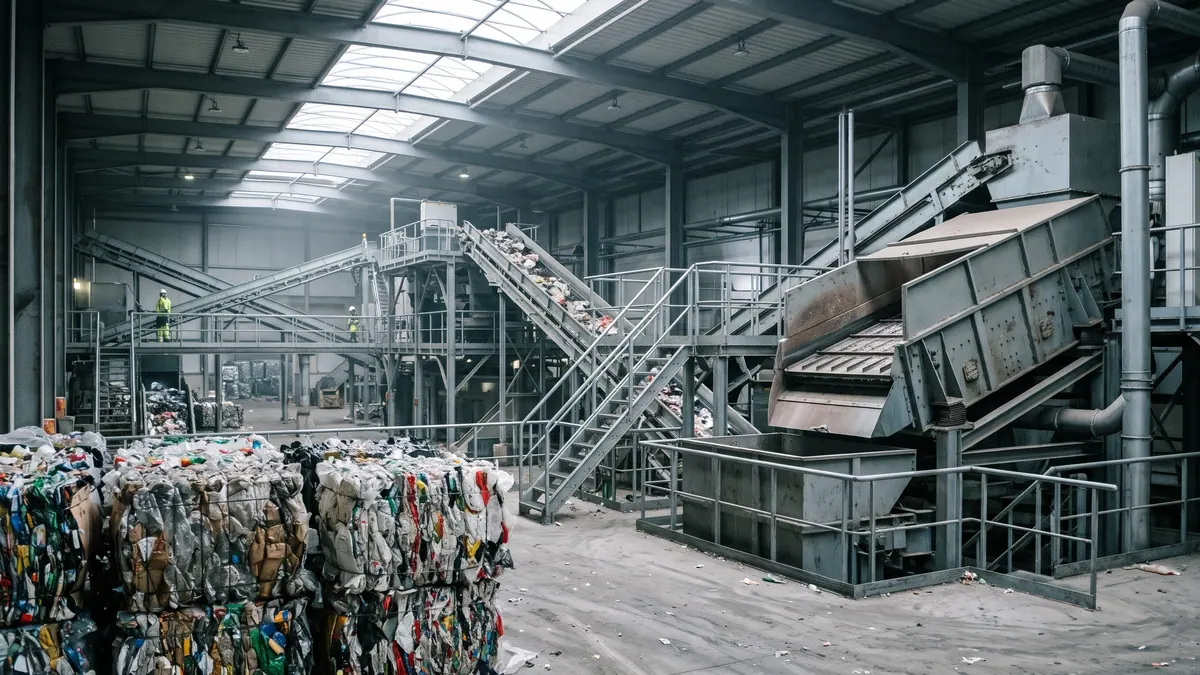
- Accessible, legal facilities: sorting plants, composting plants, biogas plants, recycling plants and thermal treatment plants; when they have processing capacity and competitive prices, the profitability of illegal practices falls.
- Education and transparency: residents reporting irregularities, clear information on what happens to waste.
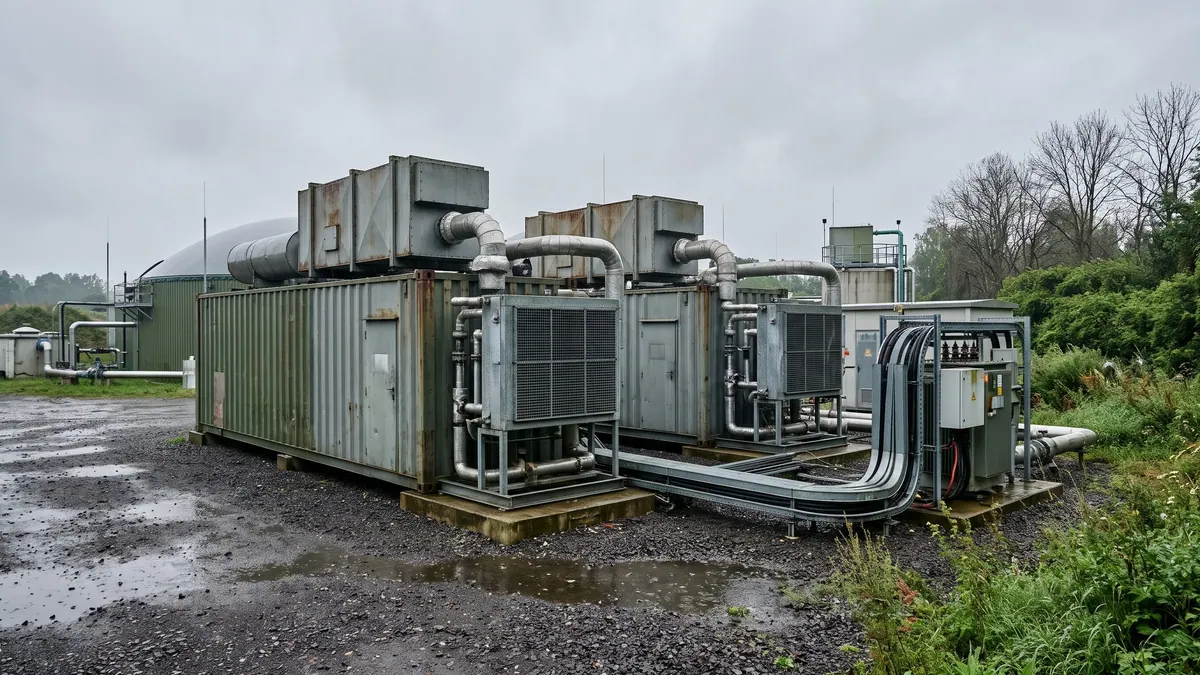
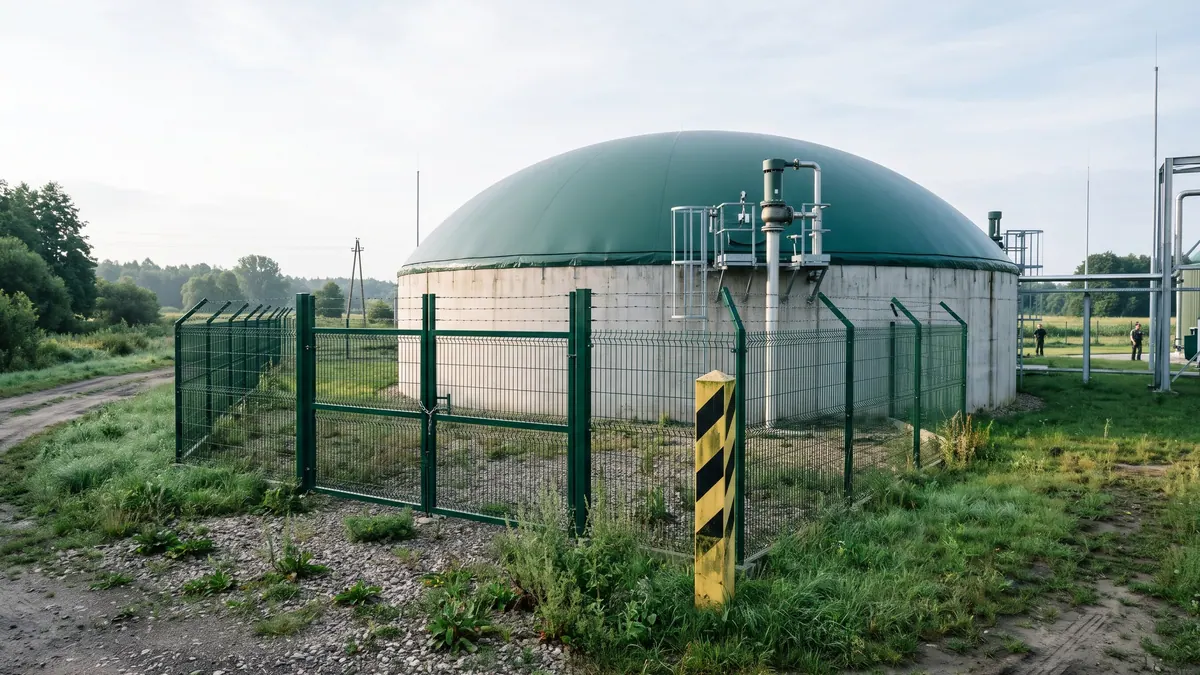
Biogas plants that process waste also have safety obligations; the principles of prevention and response at biogas plants are described in the article Fires at biogas plants.
Reducing waste fires therefore requires a combination of inspections, law enforcement and the building of legal infrastructure; none of these tools is sufficient on its own.
The role of landfill gas and smouldering waste
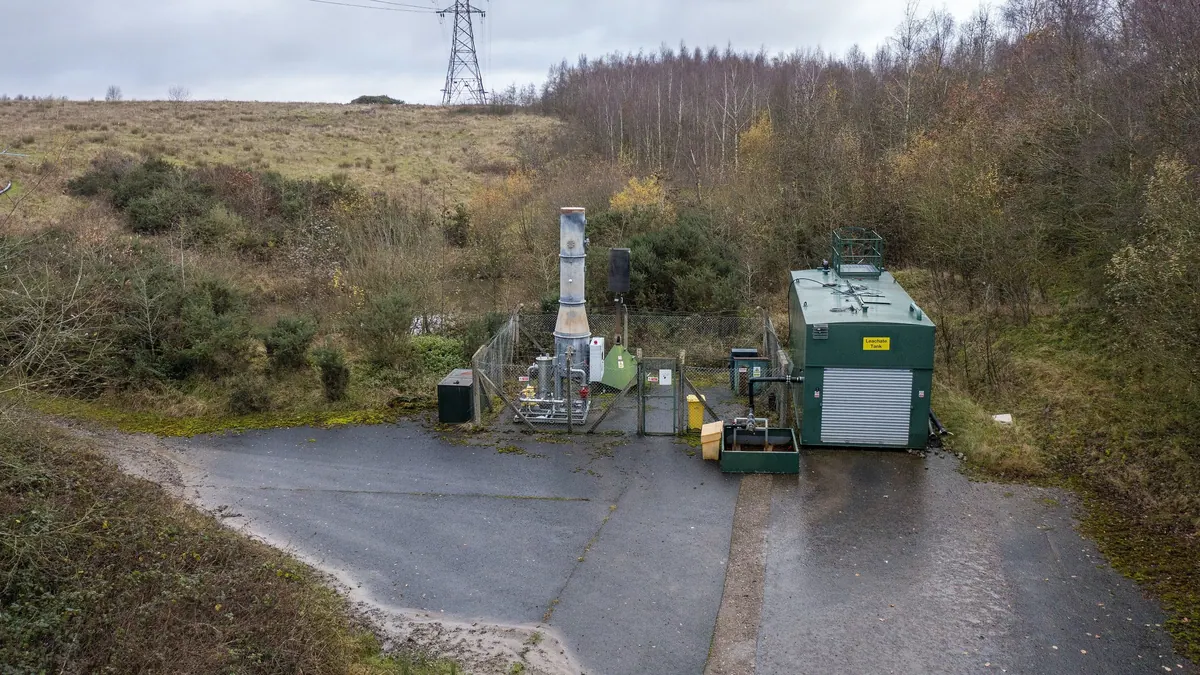
At operating and closed landfills there is a separate hazard: subsurface fires, in which material smoulders deep within the pile. They are favoured by drying out, air being drawn in through leaks and the accumulation of landfill gas, which contains flammable methane. Effective degassing, temperature control in the waste body and a tight cover limit this risk. Extinguishing such fires is difficult, because water may not reach the seat of the fire, and improper action increases the air supply.
What municipalities and residents can do
Municipalities are responsible for preventing wild dumps from forming (cleaning, inspection, selective waste collection points (PSZOK)), and residents for reporting illegal dumping. Effective cooperation with the environmental protection inspectorate and the fire service shortens response time and makes it possible to remove waste before a fire breaks out.
Consequences for residents
Smoke from waste fires may contain particulate matter and toxic compounds, which is why, in the event of a large fire, the emergency services recommend closing windows and limiting time outdoors downwind. After the fire is extinguished, it is often necessary to test the soil, water and air in the surrounding area, and the costs of removing the waste are often borne by municipalities or the State Treasury when the perpetrator cannot be identified.
Sources
Questions and answers
Why are waste fires particularly dangerous?
Mixtures of plastics, tyres, batteries and other materials burn, releasing dioxins, PAHs and heavy metals. Fires can last for days, and the smoke travels long distances.
Related articles