Waste-to-energyExplainer
Landfill gas: how it forms, what it consists of and who must degas a landfill
Landfill gas forms from the decomposition of biodegradable waste and usually contains about half methane. We describe the phases of its formation, composition, risks and the degassing obligations under the directive and national rules.
Other language versions: polski.
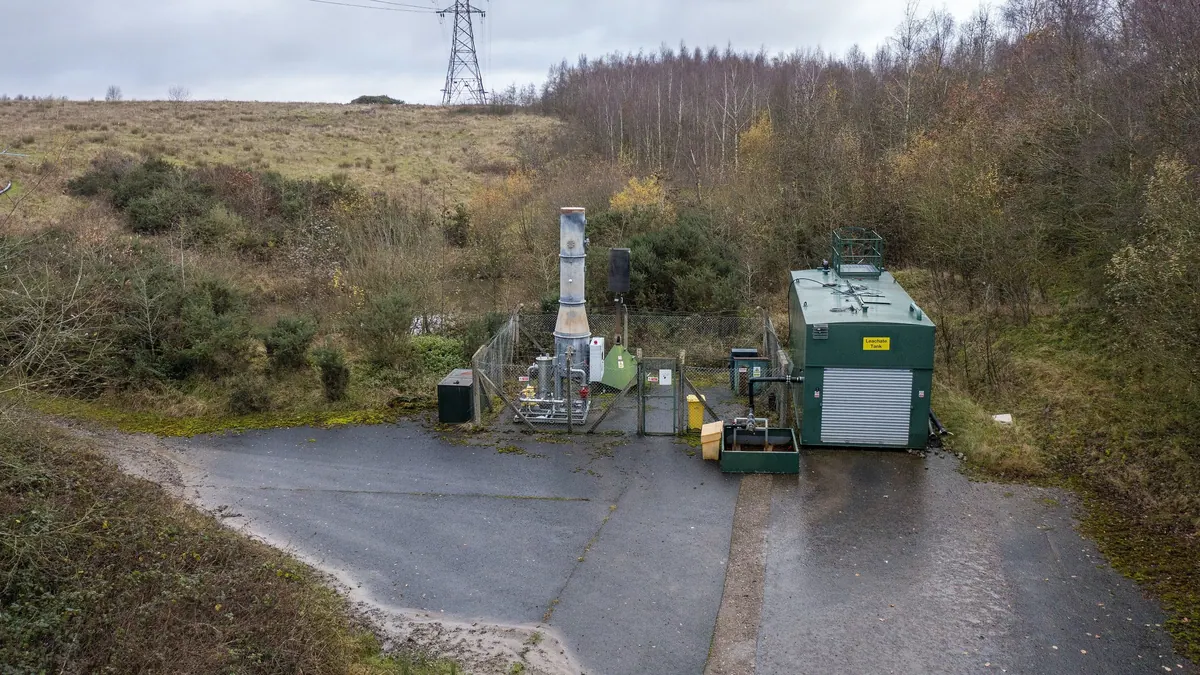

Landfill gas is a mixture of gases produced under anaerobic conditions by the decomposition of biodegradable waste deposited in a landfill; its main components are methane (CH₄) and carbon dioxide (CO₂). Directive 1999/31/EC imposes an obligation to control it: to collect and treat it, and then to use it for energy — or to burn it in a flare if use is not possible.
How it forms
The decomposition of waste in a landfill proceeds in several phases:
- Aerobic phase — shortly after waste is deposited, the remaining oxygen is consumed by microorganisms; mainly CO₂ and heat are produced.
- Acid phase — in the absence of oxygen, bacteria hydrolyse and ferment organic compounds into acids, alcohols, CO₂ and hydrogen.
- Unstable methanogenic phase — methanogens develop, and the methane share rises.
- Stable methanogenic phase — the methane share usually reaches several tens of per cent and persists for years.
- Decline phase — the available organic matter diminishes, and gas production falls.
The rate depends on the composition of the waste, moisture, temperature, compaction and the way of covering. Waste containing a lot of organic matter, e.g. kitchen, garden waste and paper, yields more gas than inert waste. Peak release usually falls in the first years after landfilling ends, and over the whole cycle production lasts as long as several decades.
Composition and properties
Typical landfill gas contains:
| Component | Significance |
|---|---|
| CH₄ (methane) | fuel; potent greenhouse gas; explosive limits in a mixture with air about 5–15% |
| CO₂ | lowers the calorific value |
| N₂, O₂ | indicate air being drawn in by the degassing system |
| H₂S, sulphur compounds | odour, corrosion, reduced engine life |
| Siloxanes | silica deposits in engines and turbines |
| Volatile organic compounds, chlorine and fluorine compounds | odour, corrosion, requirements for cleaning |
The calorific value of landfill gas is lower than that of natural gas and clearly depends on the CO₂ and nitrogen content. It should not be equated with agricultural biogas — it is more contaminated and variable.
Why degassing is mandatory
There are three reasons. First, the climate: methane is a greenhouse gas with a many times greater impact than CO₂ over a horizon of several decades, and landfills are a significant source of anthropogenic methane emissions in national inventories. Second, safety: gas migrating in the ground can accumulate in enclosed spaces and form an explosive mixture. Third, nuisance: odour and damage to vegetation on the reclaimed site.
Directive 1999/31/EC in Annex I requires measures to control the accumulation and migration of gas: landfill gas is to be collected, treated and used, and if it cannot be used to produce energy — burned. In Poland these requirements were transferred to the regulation of the Minister of the Environment of 30 April 2013 on landfills, which says that a landfill receiving biodegradable waste must be equipped with a gas extraction installation, and the gas itself must be treated — cleaned and used for energy, and if that is impossible, burned in a flare. Details on landfill gas monitoring are also set by the regulation and by the permits issued for a particular landfill.
What a degassing installation consists of
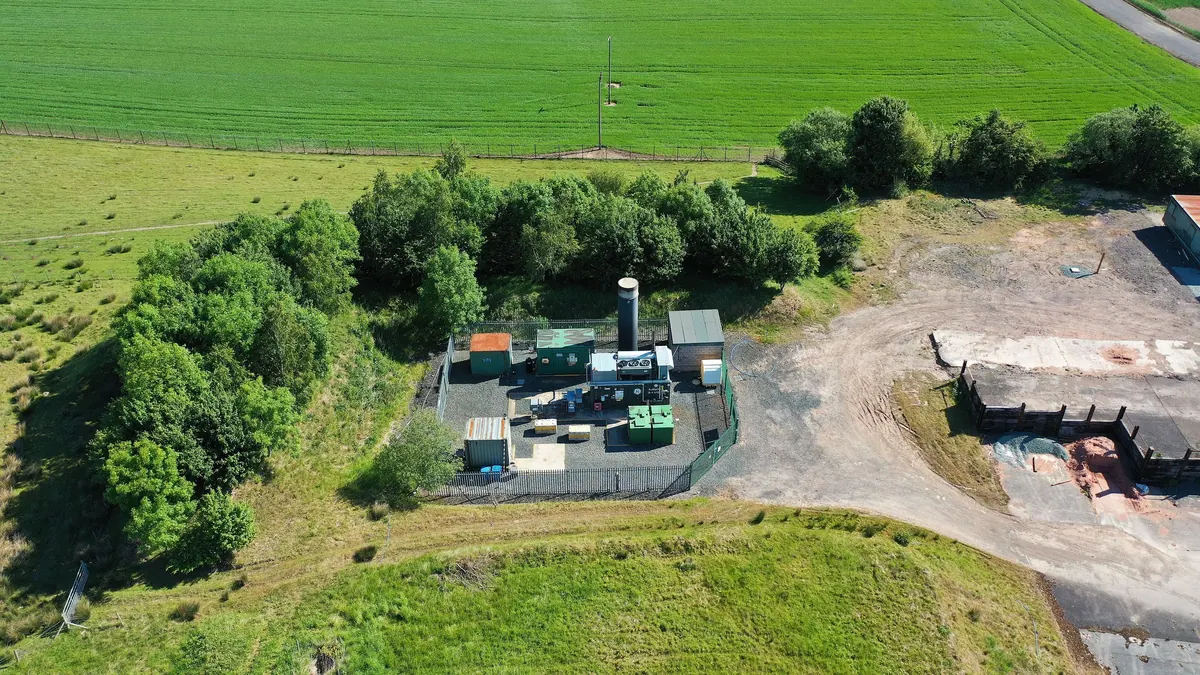
- Gas wells (vertical) or horizontal collectors in the waste body.
- A network of collecting pipelines with condensate and drainage.
- A suction station (blowers) maintaining negative pressure.
- A flare — a device for controlled burning of the gas at high temperature.
- A utilisation system — a gas engine, boiler or cogeneration system (discussed in a separate article).
- Monitoring — measurements of gas composition, pressures and concentrations in the surroundings of the landfill.
Capture efficiency never reaches 100%: part of the gas escapes through the cover, especially while the landfill is active and does not yet have a tight cover. That is why what counts is good sealing quality, control of negative pressure (too much draws in air, too little leaves gas behind) and rapid extension of the system with successive cells.
Common mistakes
- Postponing construction of the degassing installation until the landfill closes.
- Too strong suction, which draws air into the waste body, lowers the methane concentration and may cause underground fires.
- No periodic inspections of wells and drainage, leading to a fall in yield.
- Planning gas utilisation without verifying whether its quantity and quality will suffice for the whole operating life of the engine.
What to do first
- Collect data on the quantity and composition of the waste deposited and on its age.
- Make a forecast of gas production (first-order models) and verify it with measurements.
- Ensure formal compliance: permits, a monitoring plan, an operating manual.
- Only then assess the profitability of energy use.
What happens after the landfill closes
Closure and reclamation do not end the obligations. Gas continues to be produced for many years, so the degassing system must operate in the post-closure period, and monitoring of gas and water remains the responsibility of the site manager. Over time there is less and less methane and its share in the mixture falls, which makes burning in a flare harder and calls for low-concentration flares or biological methods of methane oxidation in the cover. For municipalities and municipal companies this means a cost that must be included in financial plans while the landfill is still in operation.
This text is for information only and does not constitute legal advice; before an investment or formal decision, check the current wording of the regulations and consult a lawyer or the competent authority.
Sources
Questions and answers
How much methane does landfill gas contain?
Usually several dozen per cent (in the order of 40–60%) by volume; the rest is mainly CO₂ plus trace amounts of H₂S, organic compounds and siloxanes. The composition changes with the age of the landfill and the quality of gas extraction.
What happens to gas when it is not worth using it?
If it cannot be used for energy, it must be flared. Simply venting it freely into the atmosphere does not meet the requirements of the Landfill Directive.
Related articles