BiohydrogenAnalysis
Hydrogen at a biogas plant: local use scenarios and whether they make sense
Should a biogas plant produce hydrogen? We assess five scenarios: electrolysis from CHP electricity, biomethane reforming, hydrogen-assisted digestion, hydrogen for farm machinery and supply to industry.
Other language versions: polski.
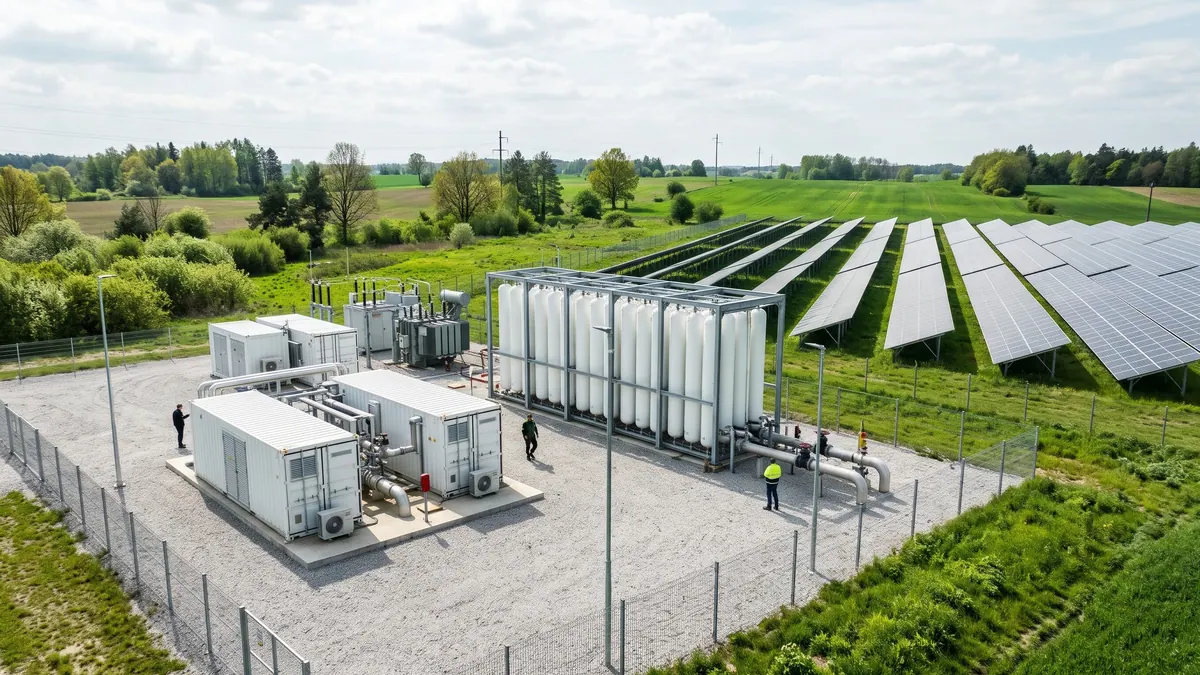
A biogas plant can be a starting point for hydrogen production, but in most cases selling biomethane, bioCNG or electricity gives a better economic result than producing hydrogen on site, because every energy conversion carries losses and costs. Electrolysis powered by biogas electricity consumes 50–55 kWh/kg H₂, and the energy of 1 kg of hydrogen (33.3 kWh by calorific value) is therefore about 60–65% of the energy drawn as electricity. Converting gas into electricity in a CHP engine with 40% efficiency further lowers the efficiency of the chain. Hydrogen at a biogas plant makes sense in niches: where there is a steady local customer, when hydrogen is used to support a biological process, or when it is combined with surplus energy from other sources.
Scenario 1: electrolysis from biogas electricity
A CHP engine generates electricity that powers an electrolyser. Chain efficiency: biogas → electricity 40% → hydrogen (33.3/52 = 64%) = about 26% of the biogas energy in hydrogen (LHV). By comparison, biomethane from upgrading retains about 90–95% of the biogas energy. It is therefore the worst route in terms of efficiency. In addition, hydrogen from biogas electricity is not RFNBO (energy from biomass), and its status requires a separate assessment. Application: only if hydrogen is absolutely needed and the biogas electricity cannot be sold at a lower price.
Scenario 2: biomethane reforming
Biomethane is converted into hydrogen (see the entry on reforming). Consumption of about 3.4 kg CH₄ per kg H₂ means an efficiency of about 70% relative to the energy of the biomethane. It has value with local industrial demand and the availability of a reforming plant; on a small scale it is expensive.
Scenario 3: hydrogen to support methanogenesis
Adding hydrogen to the digester or a separate reactor makes it possible to convert the CO₂ in the biogas into additional methane (biological methanation in situ or ex situ). The advantage is the use of CO₂ and tolerance of impurities; the disadvantages are limits on gas-to-liquid transfer and small scale. The economics depend on the electricity price (see the entry on methanation).
Scenario 4: fuel for farm machinery
Hydrogen as a fuel for tractors and machinery is at an early stage of development. A tractor's energy requirement is several hundred kWh a day in season, so a plant of suitable capacity and a hydrogen refuelling station (compression to several hundred bar) are required. At present a more practical and cheaper solution for farm machinery is bioCNG/bioLNG or biodiesel, and in future electric solutions.
Scenario 5: supply to industry or transport
If a plant consuming hydrogen operates nearby (chemicals, refinery, glass), and the plant is looking for hydrogen with a low carbon footprint, the biogas plant can become a supplier. This requires large scale, certification and hydrogen transport infrastructure (pipeline, trailers). For a single agricultural plant the scale is usually too small.
Comparative example
Assumptions: 1000 MWh of chemical energy in biogas a year (at 55% CH₄).
| Route | Final energy of the product | Notes |
|---|---|---|
| Upgrading to biomethane (5–10% energy losses in the process) | approx. 900–950 MWh of biomethane | product compatible with the grid |
| CHP: electricity 40% | 400 MWh of electricity (+ heat approx. 40–45%) | heat requires a customer |
| CHP → electrolysis | 400 × 0.64 ≈ 256 MWh of hydrogen (LHV) | lowest efficiency |
| Biomethane → reforming (70%) | 630–665 MWh of hydrogen (LHV) | assumes industrial scale |
The differences are enormous. Hydrogen makes sense only if its value to the customer per MWh is much higher than the value of biomethane or electricity.
Decision criteria
- Is there a steady hydrogen customer with a contract?
- What is the cost of the whole chain (production, purification, compression, storage, transport)?
- Does the hydrogen qualify for support or a premium, and what regulatory requirements does it meet?
- Does the alternative (biomethane, bioCNG) not give a better result?
- Is technical competence available, and willingness to accept the risk (ATEX, hydrogen)?
Safety and formalities
Hydrogen has a wide flammability range (about 4–75% by volume in air) and very low ignition energy, so hydrogen installations require a separate hazard assessment, Ex zones, detection and procedures. A biogas plant that already manages ATEX zones for biogas has a certain competence advantage, but adding hydrogen means new requirements for equipment, high-pressure storage and operation. Permits, insurance and training should be added to the costs, and their scope depends on scale.
Summary
For most biogas plants hydrogen is not a natural product. Sensible niches exist, but every project should start with an energy balance and a contract with a customer, not with the technology.
Sources
Related articles