Waste and circular economyEvent
New requirements for municipal sewage sludge: regulation published, key provisions in 4 years
A regulation changing the rules for applying municipal sewage sludge has been published in the Journal of Laws: required treatment processes, accredited testing and new deadlines. The main part will enter into force after 48 months.
Other language versions: polski.

The Journal of Laws has published a regulation of the Minister of Climate and Environment amending the regulation on the use of municipal sewage sludge (Dz.U. 2022, item 89). The new provisions clarify how sludge must be treated before it goes onto land, how often it must be tested and by what methods heavy metals are to be determined. Most of the requirements will begin to apply only after 48 months, which gives treatment plants time to adapt.
What changes
The regulation introduces an obligation to subject sludge to at least one of the specified treatment processes:
- anaerobic – reduction of organic matter by at least 38%, or running the process above 34°C for at least 12 days,
- aerobic – at least 25 days,
- aerobic at high temperature – at least 10 days above 40°C,
- chemical – a lime dose of at least 0.25 kg per kilogram of dry matter,
- humification – storage for at least 90 days or drying to below 30% moisture.
The scope of testing also changes. Measurements of heavy metals (Pb, Cd, Hg, Ni, Zn, Cu, Cr) are to be carried out by the indicated methods (atomic absorption spectrometry or ICP-OES/ICP-MS), and the laboratory must be accredited or hold a certified quality management system. The frequency of testing depends on the load on the plant:
| Plant size (population equivalent, RLM) | Testing frequency |
|---|---|
| up to 2000 | every 6 months |
| over 2000 up to 10,000 | every 3 months |
| over 10,000 up to 100,000 | every 2 months |
| over 100,000 | every month |
Sludge in paste and soil-like form is to be spread evenly and mixed with the soil no later than the day after delivery to the field.
Significance for the industry in Poland
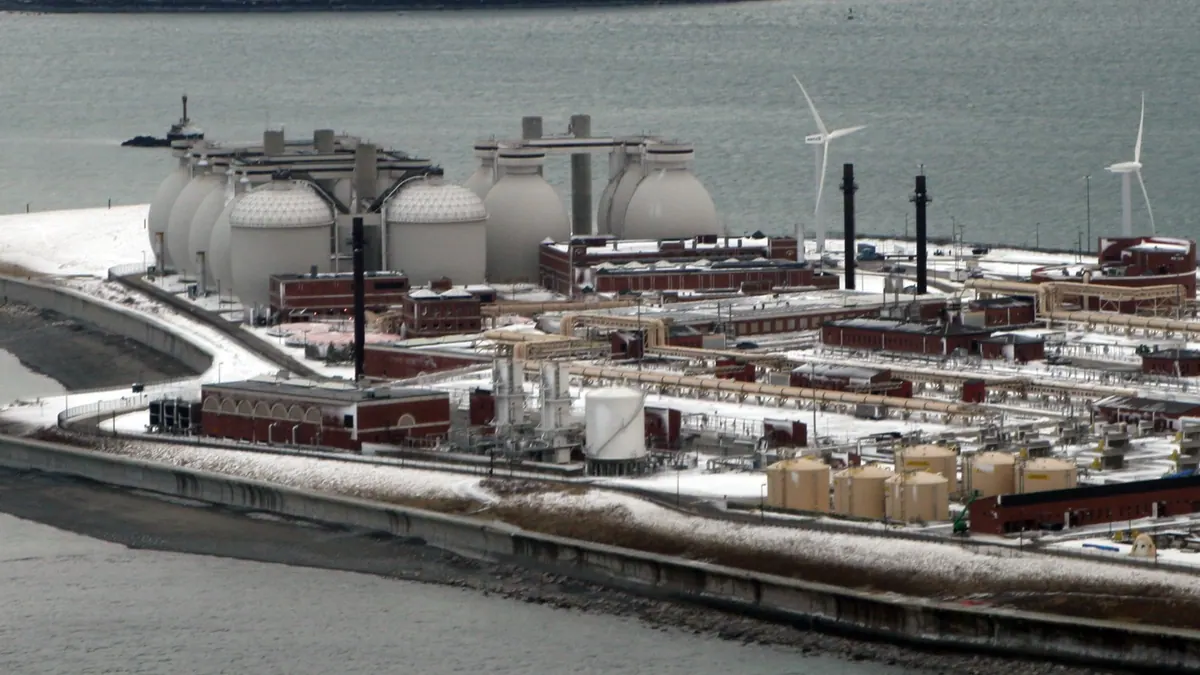
For wastewater treatment plants with sludge digestion, the anaerobic process is a natural way of meeting the requirement – and at the same time a source of biogas. The criteria refer directly to parameters known from operating digesters (temperature, retention time, reduction of volatile solids). Plants without digestion will have to choose another path, such as composting or lime stabilisation, which changes costs and logistics.
The regulation does not change the limits on metal content here, but raises the requirements for the quality and documentation of testing, which may increase costs for small facilities. It is also important that digestate from municipal sludge remains a waste material, so its agricultural use is subject to the rules on waste and fertilisers.
What to note in investment plans
The process requirements are worth reading together with the intended use of the sludge. Where agricultural application is planned, anaerobic, aerobic or chemical stabilisation must be documented with process parameters, not merely a declaration. For plants considering building a digester, an additional argument is the possibility of recovering biogas and heat; at an appropriate scale, the biogas can be used to power the plant's own processes.
What next
The changes will apply in stages: some provisions after 14 days from publication, and the rest (process requirements, laboratories, frequencies, the new annex) after 48 months. Until then, plant managers should analyse the route for managing sludge and possible investments – from modernising digesters to drying – and also check whether their laboratories will meet the new requirements.
Sources
Related articles