Waste and circular economyExplainer
Water in waste streams: reuse of wastewater, rainwater and digestate
Municipal wastewater, process wastewater and rainwater are potential sources of water. We discuss recovery technologies, examples from Singapore, Namibia and Israel, the "Moja Woda" programme and the role of digestate.
Other language versions: polski.
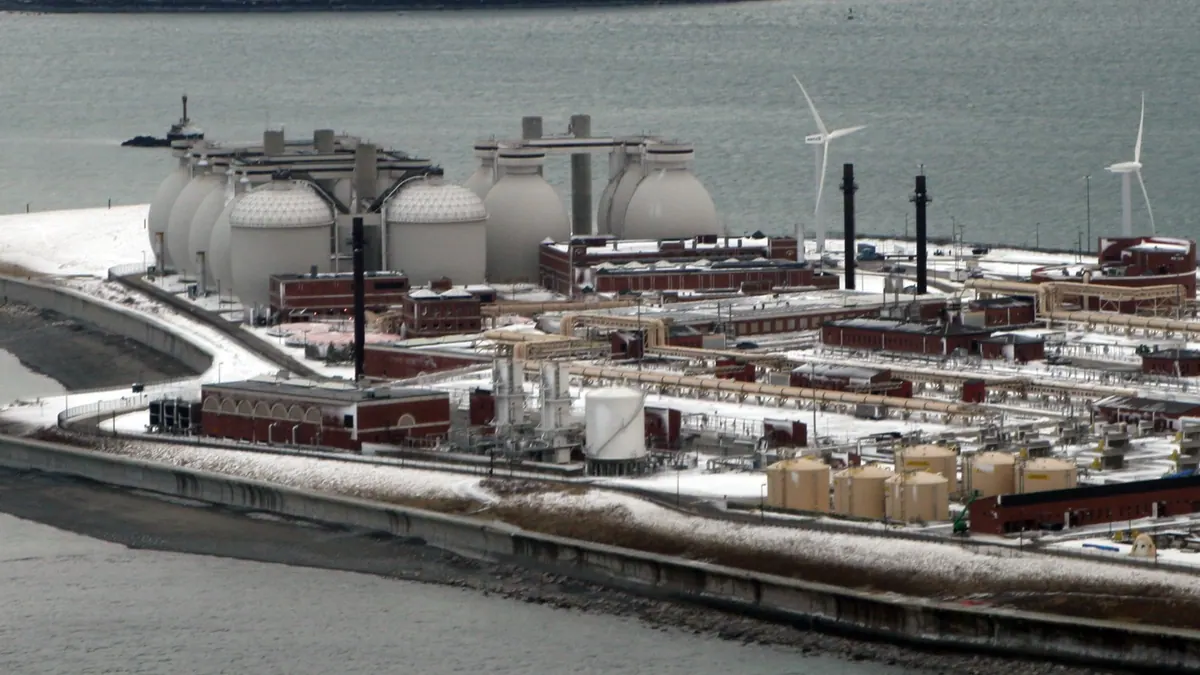

Water contained in wastewater, stormwater and industrial waste can be recovered and reused, and technologies such as ultrafiltration or reverse osmosis make it possible to obtain from treated wastewater water of a quality close to drinking water; however, this requires energy, regulation and public acceptance. The topic is increasingly linked to waste management, because the same facilities (treatment plants, biogas plants) are at once a source of energy, fertilisers and water.
Sources of water in waste streams
Municipal wastewater
This is the most obvious source. After treatment the water can be used to irrigate green areas, wash streets and for cooling in industry, and after advanced treatment also for drinking purposes. Examples of direct or indirect reuse for drinking are Singapore (NEWater) and Windhoek in Namibia, where wastewater has been treated to drinking-water quality for many decades. Israel is regarded as a leader in water recycling, reusing more than 80% of its treated municipal wastewater, mainly in agriculture (the value depends on the year and the method of calculation).
Industrial waste
The food industry (breweries, dairies, meat plants) uses a great deal of water for washing and cooling. Closed water loops make it possible to reduce the withdrawal of fresh water, and wastewater with a high content of organic matter can at the same time feed a biogas plant.
Stormwater
Rainwater running off impermeable surfaces usually ends up in the sewer system. Retention tanks, rain gardens and permeable surfaces make it possible to retain it locally. The national "Moja Woda" co-financing programme (National Fund for Environmental Protection and Water Management (NFOŚiGW)) supports domestic retention systems; details of the application rounds and conditions should be checked in the programme's current announcements.
Why it matters
According to UN reports, the number of people living in areas with seasonal water scarcity is set to grow, and agriculture accounts for about 70% of global freshwater withdrawals (FAO data). Water recovery can reduce pressure on resources, but it will not replace water saving.
Recovery technologies
Conventional treatment plants have three stages: mechanical (screens, grit chambers, settling tanks), biological (activated sludge, filter beds) and chemical (phosphorus precipitation, disinfection). The fourth stage comprises membrane technologies: ultrafiltration, nanofiltration and reverse osmosis, which remove fine particles and pathogens (ultrafiltration) and dissolved compounds (nanofiltration and reverse osmosis). The drawbacks are the energy costs and the need to manage the concentrate of salts and contaminants. Similarly, desalination of seawater by reverse osmosis uses in the order of a few kWh per cubic metre, and the energy can come from biogas or other renewable sources.
Digestate and water
Liquid digestate from a biogas plant consists of more than 90% water, but it also contains fertiliser components (nitrogen, phosphorus, potassium), so its main use is fertilisation, not water recovery. Mechanical separation yields a solid and a liquid fraction; water from further treatment (for example ammonia stripping, membranes) can return to the process or be used for irrigation. The technologies are described in the article Digestate separation, and the removal of ammonia from digestate in Ammonia stripping from digestate. The water content of substrates and its influence on the process are in turn described in the article on dry matter (TS and VS in BMP tests).
Benefits and barriers
- Environment: advanced-level treatment limits eutrophication of rivers and lakes; lower water withdrawal maintains ecological flows.
- Economics: closed loops reduce water and sewage bills, and retention reduces the costs of storm sewers and flood damage.
- Barriers: investment and energy costs, the lack of a legal framework in some countries, limited public acceptance of drinking-water reuse.
Water recovery is therefore an element of the circular economy, complementing the recovery of energy and raw materials from waste.
Conclusion for biogas plants
Biogas plants are one of the places where water and waste meet most directly: liquid substrates supply water to the process, and digestate carries it away. When planning a facility it is therefore worth drawing up a water balance: how much is introduced with the substrate, how much evaporates, how much leaves the facility with the digestate and how it can be managed. Such a balance helps avoid excessive digestate storage costs and to plan separation.
It is also worth remembering that, in Polish conditions, reuse of treated wastewater in agriculture and industry requires compliance with national and EU rules on water quality for such purposes, which must be checked before the project.
Sources
Questions and answers
Can digestate be used as a source of water?
Digestate consists mostly of water, but it also contains fertilising components and contaminants. Recovering water requires separation and advanced treatment; more often the water from separation is returned to the process or used for irrigation.
Related articles