Law and regulationExplainer
National Indicative Target (NCW): who it applies to and where biomethane fits
The NCW is a statutory obligation of fuel companies: a minimum share of biocomponents and other renewable fuels in transport. We explain the rules of settlement and how biomethane fits into it.
Other language versions: polski.
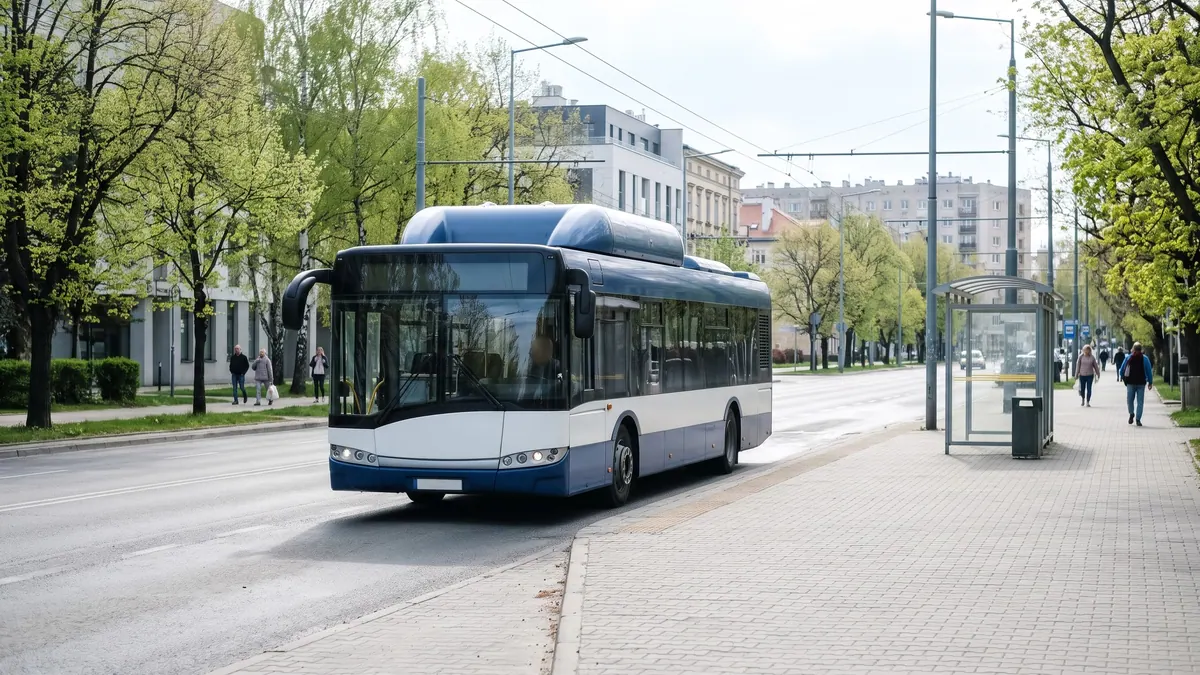
The National Indicative Target (NCW) is a statutory obligation of fuel companies, not of biogas plants: in liquid fuels and liquid biofuels consumed in road and rail transport, there must in a given year be at least a specified share of biocomponents or other renewable fuels, calculated by calorific value. For the biogas industry this matters because in the Act a biocomponent also includes compressed and liquefied biomethane — that is, bioCNG and bioLNG.
Where the NCW comes from and who fulfils it
The basis is the Act of 25 August 2006 on Biocomponents and Liquid Biofuels (consolidated text of May 2019). The Act implements Directive 2009/28/EC only in part, and the EU framework after 2020 is already set by Directive (EU) 2018/2001 (RED II), which Poland is to implement by mid-2021.
The NCW is defined as the minimum share of other renewable fuels and biocomponents contained in liquid fuels or liquid biofuels used in all types of transport, in the total quantity of liquid fuels and liquid biofuels consumed in a year in road and rail transport. It is fulfilled by the "entity fulfilling the NCW", that is, any entity (including a foreign one) that:
- produces, imports or acquires intra-Community liquid fuels or liquid biofuels, and
- disposes of them in Poland in a way that results in permanent divestment or consumes them for its own needs.
In practice these are refineries, importers and large fuel distributors. The level of the target for subsequent years is set by the Council of Ministers by regulation — every four years, eight years ahead; in the event of extraordinary events on the feedstock market it may lower it.
How the obligation is settled
- The measure. The share is calculated by the calorific value of the individual biocomponents; these values are set by the minister in a regulation.
- Feedstocks from Annex 1. The share of biocomponents produced from the feedstocks listed in Annex 1 to the Act is treated as twice as high, but this share cannot exceed 1.5%.
- Reduction factor. If an entity documents that at least 70% of the biocomponents used come from agricultural raw materials from the EU, EFTA or Turkey (on the basis of contracting agreements) or from the producers' own production, its obligation is multiplied by a reduction factor set by the Council of Ministers.
- Substitute fee. It can be paid instead of fulfilling the target, provided that at least 85% of the obligation level has been achieved. It is calculated by the formula: the unit fee (PLN 0.01/MJ) × the energy value of the fuels sold × the difference between the target and the share achieved. The payment goes by 31 January of the following year to the Low-Emission Transport Fund.
- Inspection. Performance of the obligation is checked by the President of the Energy Regulatory Office (URE).
Where biomethane fits in
In the consolidated text of May 2019, the catalogue of biocomponents includes, among others, bioethanol, esters, pure vegetable oil, liquid biohydrocarbons, and also liquefied biomethane, compressed biomethane and biohydrogen — produced from biomass. When such products are standalone fuels, the Act classes them as liquid biofuels.
| Form | Place in the Act | Note |
|---|---|---|
| Compressed biomethane (bioCNG) | biocomponent / standalone biofuel | a mixture of compressed gases, mainly methane, produced from biomass |
| Liquefied biomethane (bioLNG) | biocomponent / standalone biofuel | liquefied methane produced from biomass |
| Biohydrogen | biocomponent | produced from biomass |
| Raw biogas | outside the catalogue | must be cleaned and upgraded to biomethane |
The Act also provides that the Low-Emission Transport Fund may support, among other things, CNG and LNG infrastructure, including fuel derived from biomethane.
What this means for a biogas plant
- Establish whether you produce biomethane. Biogas from cogeneration alone does not enter NCW settlements.
- Check the feedstocks and the sustainability criteria. A biocomponent counted towards the target must meet the Act's requirements on sustainable development and greenhouse gas emission reduction.
- Find a buyer. The off-takers are the entities fulfilling the NCW or the operators of bioCNG/bioLNG stations; the rules of trade are set by contract.
- Take care of the documentation. The quantity, the origin of the feedstock and the method of production must be documented.
- Compare with the alternatives. Grid injection or local sale may be simpler than transport.
Typical misconceptions
- The NCW is not an obligation of biogas producers — it is a target for sellers of liquid fuels.
- The NCW does not regulate the generation of electricity from biogas; that is dealt with by the Act on Renewable Energy Sources.
- The double counting of feedstocks from Annex 1 is restricted by a limit, so it does not create an unlimited market for one type of fuel.
The EU context: RED II
Directive (EU) 2018/2001 sets for 2030 a target of 14% renewable energy in transport, with a sub-target for advanced biofuels and biogas from the feedstocks listed in Part A of Annex IX to the Directive (0.2% in 2022, 1% in 2025 and 3.5% in 2030). Biofuels from food and feed crops are capped, and feedstocks from Part B of Annex IX have a separate ceiling. The double counting of selected feedstocks in the Polish Act has its counterpart in EU law, which is why the EU rules are a point of reference for national changes.
For biomethane this means that fuel from slurry, biodegradable waste or sludge has a better position in EU law than biomethane from crops. Because in the Polish system the basis of the calculations is liquid fuels and liquid biofuels, biomethane enters the settlements on the biocomponent side (bioCNG, bioLNG), and the buyer is an entity fulfilling the NCW or a station that sells it on.
Questions worth asking a potential biomethane buyer
- Does it buy biomethane as a biocomponent to fulfil the NCW, or as a fuel without counting it towards the target?
- What sustainability and feedstock origin documents does it expect (certificates, mass balance, supplier declarations)?
- At what stage of the chain is the biomethane counted — at production, at injection into the grid or at sale at the station?
- Who bears the risk of non-conformity of documents: the producer or the buyer?
- How long does the price apply and what happens when the regulation setting the target changes?
Limitations to bear in mind
- The catalogue of biocomponents is closed: raw biogas, heat or electricity from biogas do not enter these settlements.
- Counting towards the NCW requires meeting the sustainability and greenhouse gas emission reduction criteria for the whole life cycle of the biocomponent.
- Selling biomethane to CNG stations is not automatically a "delivery for the purposes of the NCW" — what decides is who is the entity fulfilling the obligation and how it documents the share.
- The level of the target and the coefficients change by regulations, so a business model based solely on the NCW is sensitive to changes in the law.
This text is for information purposes and does not constitute legal advice; before an investment or formal decision, check the current wording of the regulations and consult a lawyer or the competent authority.
Sources
Questions and answers
Must a biogas plant meet the National Indicative Target?
No. The obligation rests on entities that produce, import or acquire intra-Community liquid fuels and liquid biofuels and dispose of them in Poland. A biogas plant can be a biomethane supplier for such companies.
Related articles